Goldy Yadav, Pierre Vassiliadis, Cecile Dubuc, Friedhelm C Hummel, Gerard Derosiere, Julie Duque
{"title":"Effect of Extrinsic Reward on Motor Plasticity during Skill Learning.","authors":"Goldy Yadav, Pierre Vassiliadis, Cecile Dubuc, Friedhelm C Hummel, Gerard Derosiere, Julie Duque","doi":"10.1523/ENEURO.0410-24.2025","DOIUrl":null,"url":null,"abstract":"<p><p>Human motor skill acquisition is improved by performance feedback, and coupling such feedback with extrinsic reward (such as money) can enhance skill learning. However, the neurophysiology underlying such behavioral effect is unclear. To bridge this gap, we assessed the effects of reward on multiple forms of motor plasticity during skill learning. Sixty-five healthy participants divided into three groups performed a pinch-grip skill task with sensory feedback only, sensory and reinforcement feedback, or both feedback coupled with an extrinsic monetary reward during skill training. To probe motor plasticity, we applied transcranial magnetic stimulation at rest, on the left primary motor cortex before, at an early-training time point, and after training in the three groups and measured motor-evoked potentials from task-relevant muscle of the right arm. This allowed us to evaluate the amplitude and variability of corticospinal output, GABAergic short-intracortical inhibition, and use-dependent plasticity before training and at two additional time points (early and end training). At the behavioral level, monetary reward accelerated skill learning. In parallel, corticospinal output became less variable early on during training in the presence of extrinsic reward. Interestingly, this effect was particularly pronounced for participants who were more sensitive to reward, as evaluated in an independent questionnaire. Other measures of motor excitability remained comparable across groups. These findings highlight that a mechanism underlying the benefit of reward on motor skill learning is the fine-tuning of early-training resting-state corticospinal variability.</p>","PeriodicalId":11617,"journal":{"name":"eNeuro","volume":" ","pages":""},"PeriodicalIF":2.7000,"publicationDate":"2025-04-10","publicationTypes":"Journal Article","fieldsOfStudy":null,"isOpenAccess":false,"openAccessPdf":"https://www.ncbi.nlm.nih.gov/pmc/articles/PMC11984755/pdf/","citationCount":"0","resultStr":null,"platform":"Semanticscholar","paperid":null,"PeriodicalName":"eNeuro","FirstCategoryId":"3","ListUrlMain":"https://doi.org/10.1523/ENEURO.0410-24.2025","RegionNum":3,"RegionCategory":"医学","ArticlePicture":[],"TitleCN":null,"AbstractTextCN":null,"PMCID":null,"EPubDate":"2025/4/1 0:00:00","PubModel":"Print","JCR":"Q3","JCRName":"NEUROSCIENCES","Score":null,"Total":0}
引用次数: 0
Abstract
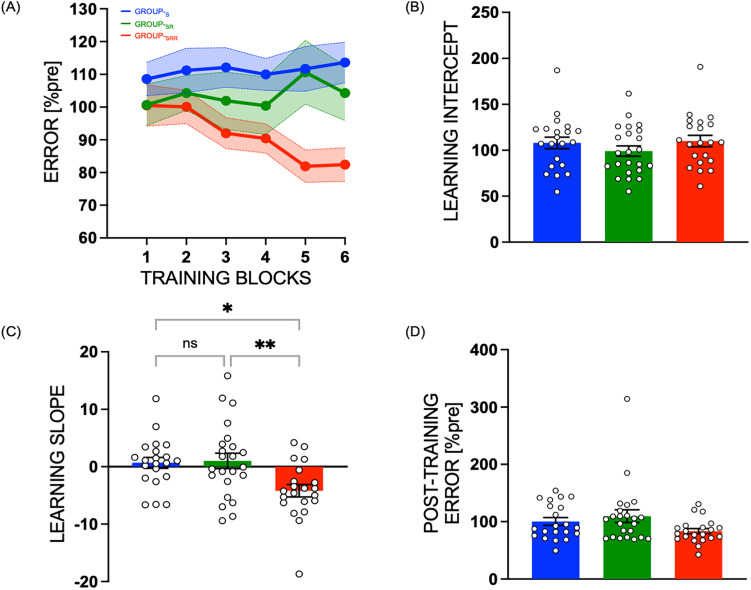
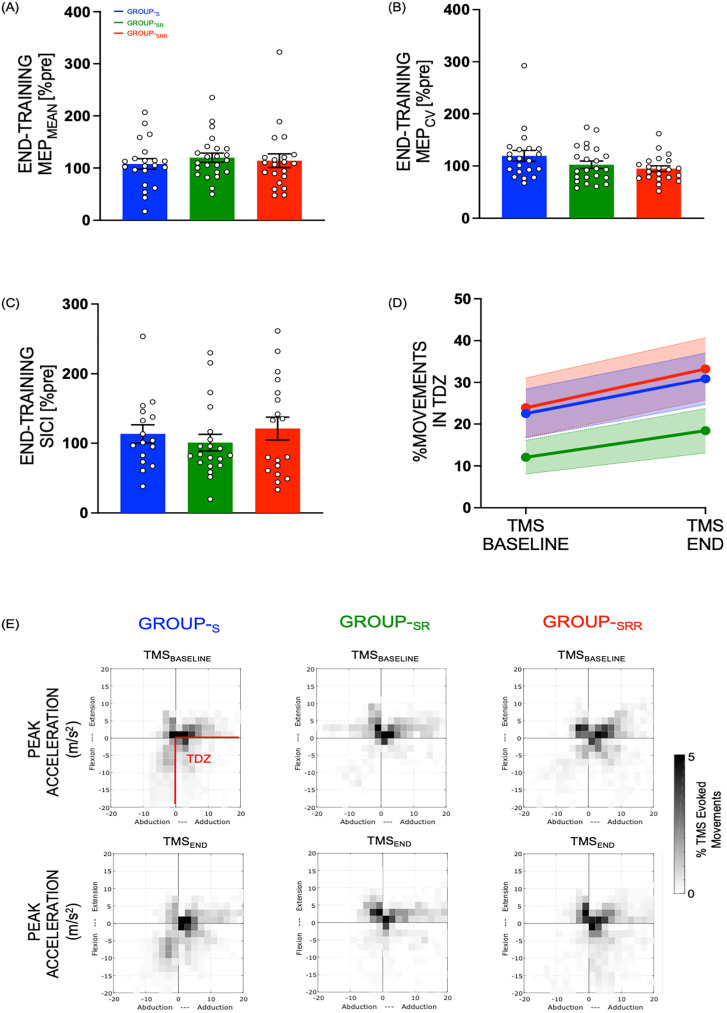
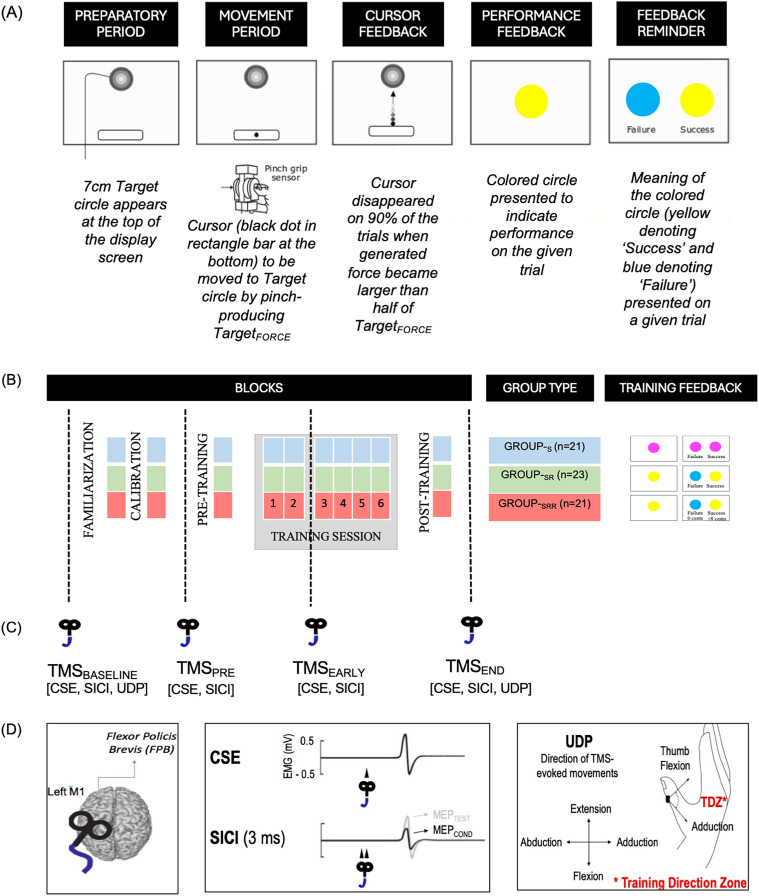
Human motor skill acquisition is improved by performance feedback, and coupling such feedback with extrinsic reward (such as money) can enhance skill learning. However, the neurophysiology underlying such behavioral effect is unclear. To bridge this gap, we assessed the effects of reward on multiple forms of motor plasticity during skill learning. Sixty-five healthy participants divided into three groups performed a pinch-grip skill task with sensory feedback only, sensory and reinforcement feedback, or both feedback coupled with an extrinsic monetary reward during skill training. To probe motor plasticity, we applied transcranial magnetic stimulation at rest, on the left primary motor cortex before, at an early-training time point, and after training in the three groups and measured motor-evoked potentials from task-relevant muscle of the right arm. This allowed us to evaluate the amplitude and variability of corticospinal output, GABAergic short-intracortical inhibition, and use-dependent plasticity before training and at two additional time points (early and end training). At the behavioral level, monetary reward accelerated skill learning. In parallel, corticospinal output became less variable early on during training in the presence of extrinsic reward. Interestingly, this effect was particularly pronounced for participants who were more sensitive to reward, as evaluated in an independent questionnaire. Other measures of motor excitability remained comparable across groups. These findings highlight that a mechanism underlying the benefit of reward on motor skill learning is the fine-tuning of early-training resting-state corticospinal variability.
期刊介绍:
An open-access journal from the Society for Neuroscience, eNeuro publishes high-quality, broad-based, peer-reviewed research focused solely on the field of neuroscience. eNeuro embodies an emerging scientific vision that offers a new experience for authors and readers, all in support of the Society’s mission to advance understanding of the brain and nervous system.




 京公网安备 11010802042870号
京ICP备2023020795号-1
京公网安备 11010802042870号
京ICP备2023020795号-1

 分享
分享
 求助内容:
求助内容: 应助结果提醒方式:
 扫码关注我们
