Herma C. Pierre , Devyani J. Patel , Huzefa A. Raja , Blaise A. Darveaux , Krupa I. Patel , Lina Mardiana , Alexandra Longcake , Michael J. Hall , Michael R. Probert , Cedric J. Pearce , Nicholas H. Oberlies
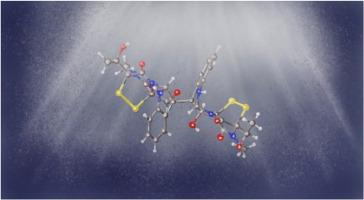
{"title":"Studies on the epipolythiodioxopiperazine alkaloid verticillin D: Scaled production, streamlined purification, and absolute configuration","authors":"Herma C. Pierre , Devyani J. Patel , Huzefa A. Raja , Blaise A. Darveaux , Krupa I. Patel , Lina Mardiana , Alexandra Longcake , Michael J. Hall , Michael R. Probert , Cedric J. Pearce , Nicholas H. Oberlies","doi":"10.1016/j.phytochem.2025.114492","DOIUrl":null,"url":null,"abstract":"<div><div>Verticillins, epipolythiodioxopiperazine alkaloids that were first described over 50 years ago, have undergone extensive cytotoxic and pharmacological evaluations over the last decade. However, of the 27 verticillin analogues in the literature, the chemistry of verticillin D, which has two additional secondary hydroxy moieties, relative to verticillin A, has remained largely unexplored since its discovery in 1999. With the goal of advancing our understanding of verticillin D, there were three main objectives with this study: improving production, streamlining purification, and assigning absolute configuration via X-ray crystallography. To begin, the production of verticillin D was analyzed across seven fungal strains, and the top producer was further assessed under two fermentation conditions. <em>Clonostachys rosea</em> (strain MSX51257) biosynthesized the highest amount of verticillin D, with production peaking between 15 and 25 days on rice media. Interestingly, in contrast to similar studies that yield verticillin A, the biosynthesis of verticillin D was not accompanied by a suite of structurally related verticillin analogues. As such, the purification of verticillin D was more rapid and could be accomplished without the use of HPLC. These materials were used, in part, to determine the absolute configuration of verticillin D via X-ray crystallography, allowing for assignment of the asymmetric centers at both the 13 and 13′ positions as <em>R</em>, which has never been accomplished. This is only the third report of an X-ray structure of a verticillin analogue.</div></div>","PeriodicalId":20170,"journal":{"name":"Phytochemistry","volume":"236 ","pages":"Article 114492"},"PeriodicalIF":3.4000,"publicationDate":"2025-08-01","publicationTypes":"Journal Article","fieldsOfStudy":null,"isOpenAccess":false,"openAccessPdf":"","citationCount":"0","resultStr":null,"platform":"Semanticscholar","paperid":null,"PeriodicalName":"Phytochemistry","FirstCategoryId":"99","ListUrlMain":"https://www.sciencedirect.com/science/article/pii/S0031942225001153","RegionNum":2,"RegionCategory":"生物学","ArticlePicture":[],"TitleCN":null,"AbstractTextCN":null,"PMCID":null,"EPubDate":"2025/3/25 0:00:00","PubModel":"Epub","JCR":"Q2","JCRName":"BIOCHEMISTRY & MOLECULAR BIOLOGY","Score":null,"Total":0}
引用次数: 0
Abstract
Verticillins, epipolythiodioxopiperazine alkaloids that were first described over 50 years ago, have undergone extensive cytotoxic and pharmacological evaluations over the last decade. However, of the 27 verticillin analogues in the literature, the chemistry of verticillin D, which has two additional secondary hydroxy moieties, relative to verticillin A, has remained largely unexplored since its discovery in 1999. With the goal of advancing our understanding of verticillin D, there were three main objectives with this study: improving production, streamlining purification, and assigning absolute configuration via X-ray crystallography. To begin, the production of verticillin D was analyzed across seven fungal strains, and the top producer was further assessed under two fermentation conditions. Clonostachys rosea (strain MSX51257) biosynthesized the highest amount of verticillin D, with production peaking between 15 and 25 days on rice media. Interestingly, in contrast to similar studies that yield verticillin A, the biosynthesis of verticillin D was not accompanied by a suite of structurally related verticillin analogues. As such, the purification of verticillin D was more rapid and could be accomplished without the use of HPLC. These materials were used, in part, to determine the absolute configuration of verticillin D via X-ray crystallography, allowing for assignment of the asymmetric centers at both the 13 and 13′ positions as R, which has never been accomplished. This is only the third report of an X-ray structure of a verticillin analogue.
眩晕西林是 50 多年前首次被描述的表聚硫酮哌嗪生物碱,在过去的十年中经历了广泛的细胞毒性和药理学评估。然而,在文献记载的 27 种蚯蚓青霉素类似物中,与蚯蚓青霉素 A 相比多了两个仲羟基的蚯蚓青霉素 D 自 1999 年发现以来,其化学性质在很大程度上仍未得到研究。为了加深我们对霉素 D 的了解,这项研究有三个主要目标:改进生产、简化纯化和通过 X 射线晶体学确定绝对构型。首先,我们分析了七种真菌菌株的霉素 D 产量,并在两种发酵条件下进一步评估了产量最高的菌株。Clonostachys rosea(菌株 MSX51257)生物合成的霉素 D 量最高,在水稻培养基上 15-25 天的产量达到峰值。有趣的是,与产生蚯蚓青霉素 A 的类似研究不同,蚯蚓青霉素 D 的生物合成并没有伴随一系列结构相关的蚯蚓青霉素类似物。因此,蚯蚓青霉素 D 的纯化更为迅速,无需使用 HPLC 即可完成。这些材料的部分用途是通过 X 射线晶体学确定霉素 D 的绝对构型,从而将 13 和 13'位置上的不对称中心指定为 R,这是从未实现过的。这是第三份关于霉素类似物 X 射线结构的报告。
期刊介绍:
Phytochemistry is a leading international journal publishing studies of plant chemistry, biochemistry, molecular biology and genetics, structure and bioactivities of phytochemicals, including ''-omics'' and bioinformatics/computational biology approaches. Phytochemistry is a primary source for papers dealing with phytochemicals, especially reports concerning their biosynthesis, regulation, and biological properties both in planta and as bioactive principles. Articles are published online as soon as possible as Articles-in-Press and in 12 volumes per year. Occasional topic-focussed special issues are published composed of papers from invited authors.




 京公网安备 11010802042870号
京ICP备2023020795号-1
京公网安备 11010802042870号
京ICP备2023020795号-1

 分享
分享
 求助内容:
求助内容: 应助结果提醒方式:
 扫码关注我们
