{"title":"The Completeness of the Operating Room Data.","authors":"Päivi Nurmela, Minna Mykkänen, Ulla-Mari Kinnunen","doi":"10.1055/a-2566-7958","DOIUrl":null,"url":null,"abstract":"<p><p>In the operating theater, a large collection of data are collected at each surgical visit. Some of these data are patient information, some is related to resource management, which is linked to hospital finances. Poor quality data lead to poor decisions, impacting patient safety and the continuity of care.The study aimed at evaluating the completeness of the data documented within surgical operations. Based on the results, the goal is to improve data quality and to identify improvement ideas of data management.The study was a quantitative evaluation of 33,684 surgical visits, focusing on data omissions. The organization identified 58 operating room data variables related to visits, procedures, resources, and personnel. Data completeness was evaluated for 36 variables, excluding 47 visits that were missing the \"Complete\" flag. Data preprocessing was done using Python and Pandas, with pseudonymization of personnel names. Data were analyzed using the R programming language. Data omissions were coded as \"1\" for missing values and \"0\" for others. Summary variables were created to indicate the number of personnel and procedure and data omissions per visit.The average completeness of the operating room data was 98%, which is considered excellent. However, seven variables-the start and end date and time of anesthesia, the type of treatment, personnel group, and assistant information-had completeness below the 95% target level. A total of 34% of the surgical visits contained at least one data omission. In the yearly comparison, the completeness values of variables were statistically significantly higher in 2022 compared with 2023.By ensuring existing quality assurance practices, verifying internal data maintenance and verifying and standardizing documenting practices the organization can achieve net benefits through improved data completeness, thus enhancing patient records, financial information, and management. Improved data quality will also benefit national and international registers.</p>","PeriodicalId":49822,"journal":{"name":"Methods of Information in Medicine","volume":" ","pages":"137-144"},"PeriodicalIF":2.4000,"publicationDate":"2024-09-01","publicationTypes":"Journal Article","fieldsOfStudy":null,"isOpenAccess":false,"openAccessPdf":"https://www.ncbi.nlm.nih.gov/pmc/articles/PMC12133324/pdf/","citationCount":"0","resultStr":null,"platform":"Semanticscholar","paperid":null,"PeriodicalName":"Methods of Information in Medicine","FirstCategoryId":"3","ListUrlMain":"https://doi.org/10.1055/a-2566-7958","RegionNum":4,"RegionCategory":"医学","ArticlePicture":[],"TitleCN":null,"AbstractTextCN":null,"PMCID":null,"EPubDate":"2025/3/26 0:00:00","PubModel":"Epub","JCR":"Q3","JCRName":"COMPUTER SCIENCE, INFORMATION SYSTEMS","Score":null,"Total":0}
引用次数: 0
Abstract
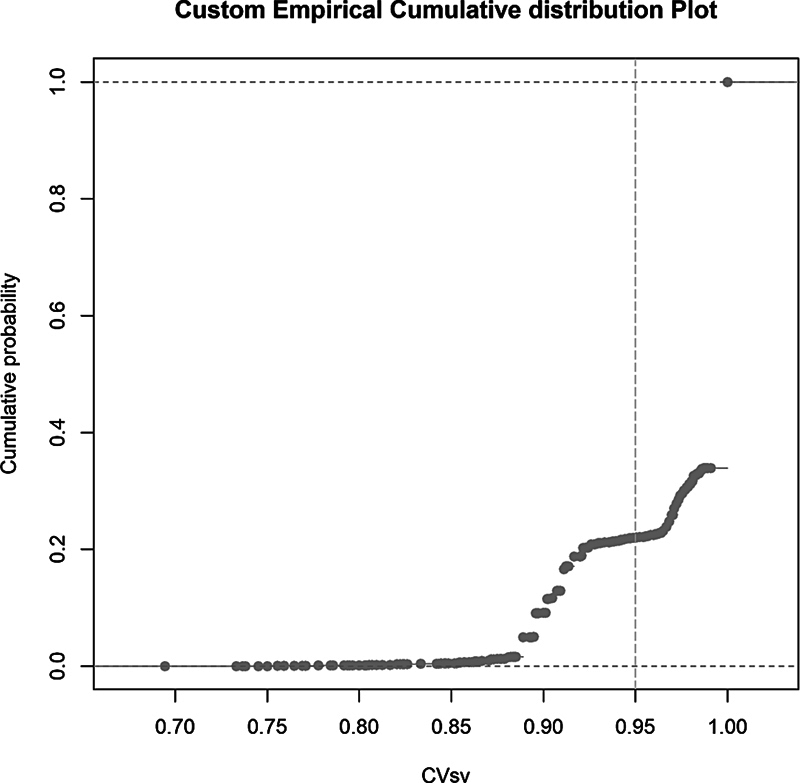
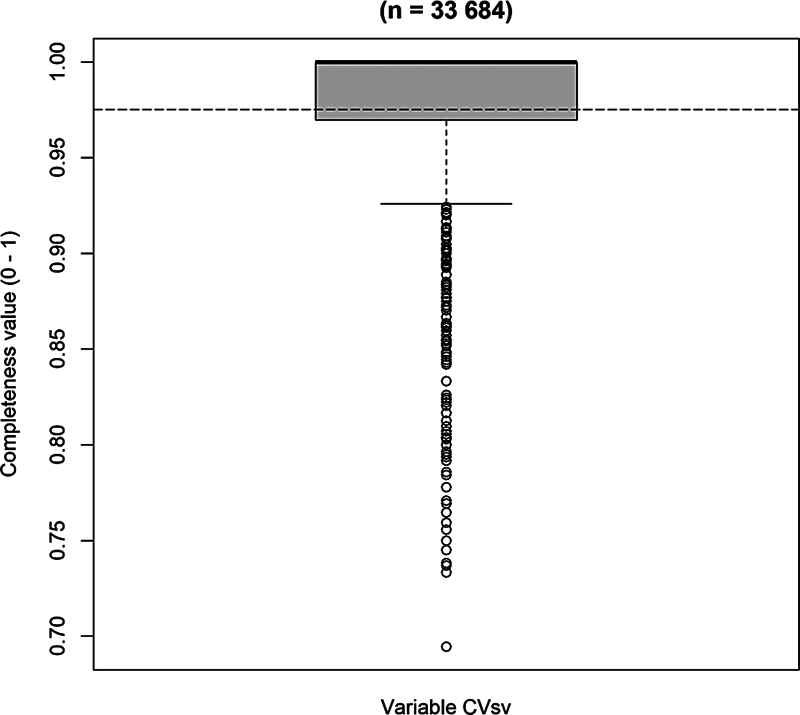
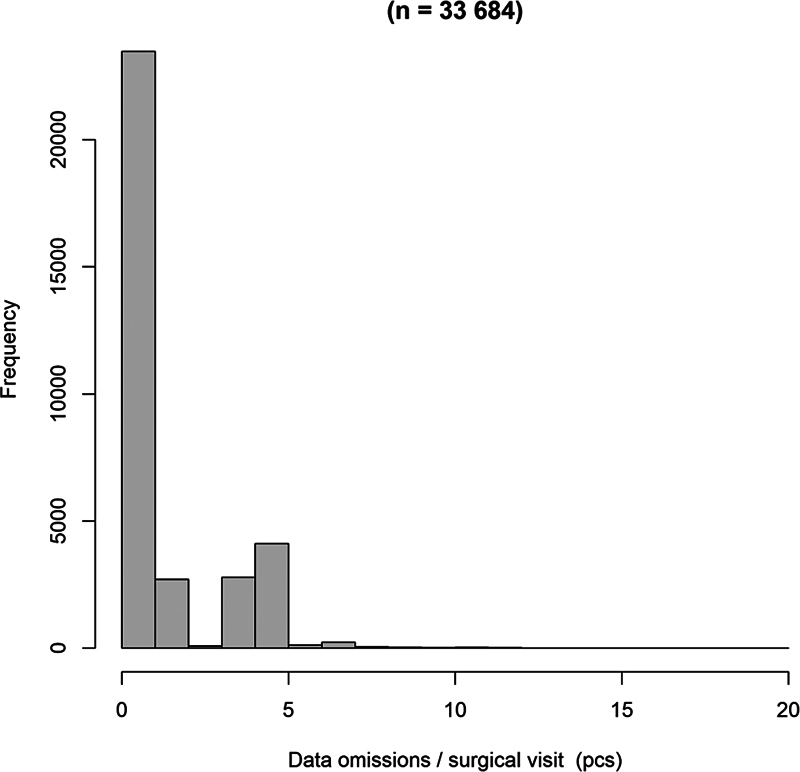
In the operating theater, a large collection of data are collected at each surgical visit. Some of these data are patient information, some is related to resource management, which is linked to hospital finances. Poor quality data lead to poor decisions, impacting patient safety and the continuity of care.The study aimed at evaluating the completeness of the data documented within surgical operations. Based on the results, the goal is to improve data quality and to identify improvement ideas of data management.The study was a quantitative evaluation of 33,684 surgical visits, focusing on data omissions. The organization identified 58 operating room data variables related to visits, procedures, resources, and personnel. Data completeness was evaluated for 36 variables, excluding 47 visits that were missing the "Complete" flag. Data preprocessing was done using Python and Pandas, with pseudonymization of personnel names. Data were analyzed using the R programming language. Data omissions were coded as "1" for missing values and "0" for others. Summary variables were created to indicate the number of personnel and procedure and data omissions per visit.The average completeness of the operating room data was 98%, which is considered excellent. However, seven variables-the start and end date and time of anesthesia, the type of treatment, personnel group, and assistant information-had completeness below the 95% target level. A total of 34% of the surgical visits contained at least one data omission. In the yearly comparison, the completeness values of variables were statistically significantly higher in 2022 compared with 2023.By ensuring existing quality assurance practices, verifying internal data maintenance and verifying and standardizing documenting practices the organization can achieve net benefits through improved data completeness, thus enhancing patient records, financial information, and management. Improved data quality will also benefit national and international registers.
期刊介绍:
Good medicine and good healthcare demand good information. Since the journal''s founding in 1962, Methods of Information in Medicine has stressed the methodology and scientific fundamentals of organizing, representing and analyzing data, information and knowledge in biomedicine and health care. Covering publications in the fields of biomedical and health informatics, medical biometry, and epidemiology, the journal publishes original papers, reviews, reports, opinion papers, editorials, and letters to the editor. From time to time, the journal publishes articles on particular focus themes as part of a journal''s issue.




 京公网安备 11010802042870号
京ICP备2023020795号-1
京公网安备 11010802042870号
京ICP备2023020795号-1

 分享
分享
 求助内容:
求助内容: 应助结果提醒方式:
 扫码关注我们
