Mathilde Carminati, Frédéric Isel, Josselin Houenou, Michèle Wessa, Chantal Henry
{"title":"Impaired Regulation of Emotion in Bipolar I Disorder: Behavioral and Neurophysiological Signatures.","authors":"Mathilde Carminati, Frédéric Isel, Josselin Houenou, Michèle Wessa, Chantal Henry","doi":"10.3390/neurosci6010020","DOIUrl":null,"url":null,"abstract":"<p><p>People with bipolar disorder (BD) present with mood instability resulting from more frequent and intense emotions in response to environmental conditions relative to healthy subjects. The aim of this study was to investigate the time course of emotion regulation strategies, distraction, and reappraisal in euthymic BD patients (i.e., normal mood range) using electroencephalography (EEG). Fourteen BD patients and 13 matched healthy controls took part in an experiment constituting three conditions, i.e., a passive viewing of positive, negative, and neutral pictures, and two regulation conditions, one with a reappraisal strategy and the other with a distraction strategy. Critically, the ERP results indicated that during passive viewing, the Late Positive Potential (LPP) was larger in BD patients compared with healthy controls, but only for neutral pictures. During emotion regulation, LPP amplitude was reduced in distraction conditions compared with viewing ones, especially for negative emotions in both patients and controls. Importantly, LPP was reduced in reappraisal conditions compared with passive viewing in an early time window for negative emotions and in a later time window for positive emotions in controls but not in patients. Our findings showed that the temporal dynamics of emotion regulation by reappraisal are faster for negative than for positive emotions in controls but not in BD patients.</p>","PeriodicalId":74294,"journal":{"name":"NeuroSci","volume":"6 1","pages":""},"PeriodicalIF":2.0000,"publicationDate":"2025-03-03","publicationTypes":"Journal Article","fieldsOfStudy":null,"isOpenAccess":false,"openAccessPdf":"https://www.ncbi.nlm.nih.gov/pmc/articles/PMC11944531/pdf/","citationCount":"0","resultStr":null,"platform":"Semanticscholar","paperid":null,"PeriodicalName":"NeuroSci","FirstCategoryId":"1085","ListUrlMain":"https://doi.org/10.3390/neurosci6010020","RegionNum":0,"RegionCategory":null,"ArticlePicture":[],"TitleCN":null,"AbstractTextCN":null,"PMCID":null,"EPubDate":"","PubModel":"","JCR":"Q3","JCRName":"CLINICAL NEUROLOGY","Score":null,"Total":0}
引用次数: 0
Abstract
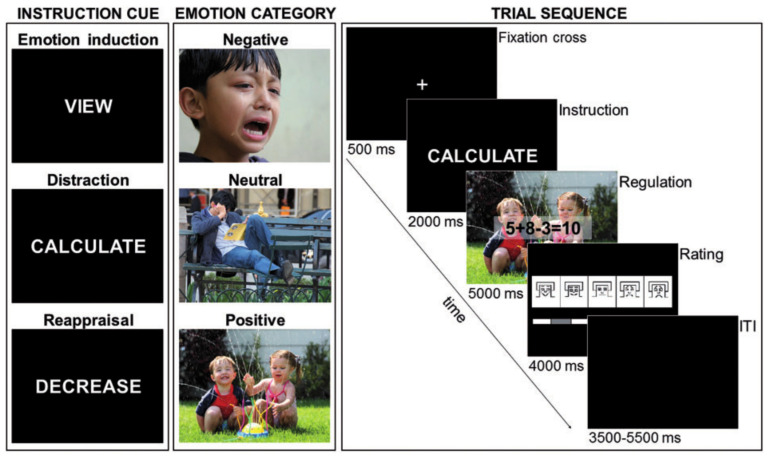
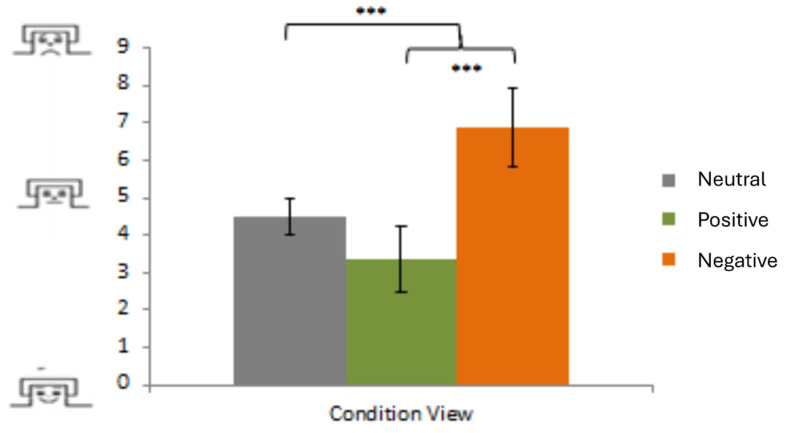
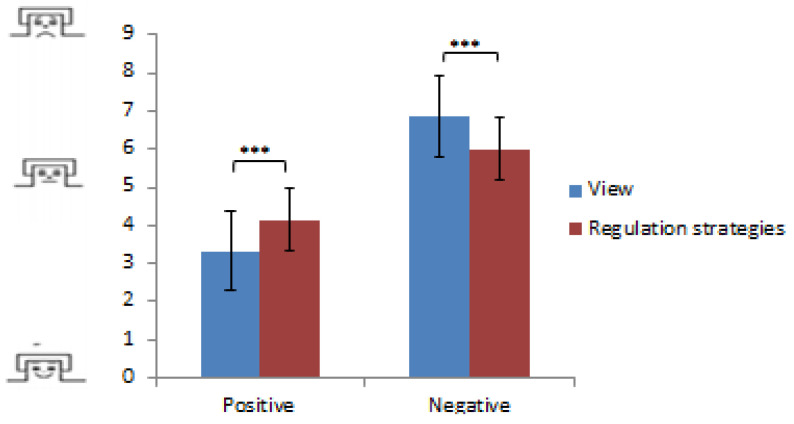
People with bipolar disorder (BD) present with mood instability resulting from more frequent and intense emotions in response to environmental conditions relative to healthy subjects. The aim of this study was to investigate the time course of emotion regulation strategies, distraction, and reappraisal in euthymic BD patients (i.e., normal mood range) using electroencephalography (EEG). Fourteen BD patients and 13 matched healthy controls took part in an experiment constituting three conditions, i.e., a passive viewing of positive, negative, and neutral pictures, and two regulation conditions, one with a reappraisal strategy and the other with a distraction strategy. Critically, the ERP results indicated that during passive viewing, the Late Positive Potential (LPP) was larger in BD patients compared with healthy controls, but only for neutral pictures. During emotion regulation, LPP amplitude was reduced in distraction conditions compared with viewing ones, especially for negative emotions in both patients and controls. Importantly, LPP was reduced in reappraisal conditions compared with passive viewing in an early time window for negative emotions and in a later time window for positive emotions in controls but not in patients. Our findings showed that the temporal dynamics of emotion regulation by reappraisal are faster for negative than for positive emotions in controls but not in BD patients.



 京公网安备 11010802042870号
京ICP备2023020795号-1
京公网安备 11010802042870号
京ICP备2023020795号-1

 分享
分享

 求助内容:
求助内容: 应助结果提醒方式:
 扫码关注我们
