{"title":"Plants can directly absorb carbon derived from deposition of wildfire smoke","authors":"Xiaoyu Zhan, Ziyan Huang, Mulualem Tigabu, Pingxin Zhao, Yan He, Futao Guo","doi":"10.1007/s11104-025-07213-z","DOIUrl":null,"url":null,"abstract":"<h3 data-test=\"abstract-sub-heading\">Aims</h3><p>Wildfires produce large amounts of smoke and carbon emissions. The carbon-containing gases in the smoke combine with atmospheric water vapor and droplets to form wet deposition of smoke, which then settles into forest ecosystems. However, the impact of smoke-derived carbon on plant carbon absorption and allocation is still unclear. Understanding this phenomenon is of great significance for revealing the impact of forest fires on carbon input in forest ecosystems.</p><h3 data-test=\"abstract-sub-heading\">Methods</h3><p>This study utilized <sup>13</sup>C pulse-labeling technology to deposit <sup>13</sup>C-containing smoke around the plant rhizosphere, investigated the absorption and allocation of smoke-derived carbon by <i>Cunninghamia lanceolata</i> seedlings under different concentrations of smoke deposition treatments.</p><h3 data-test=\"abstract-sub-heading\">Results</h3><p>The results showed that low smoke concentration deposition significantly (<i>P</i> < 0.001) promoted biomass production. The aeroponic-system was more conducive to underground growth, while the soil-culture system was more conducive to aboveground growth. Similarly, low smoke concentration deposition significantly (<i>P</i> < 0.001) increased the total carbon content. The wildfire-derived <sup>13</sup>C content of various plant organs were higher for low than high smoke concentration treatment. Both the total carbon and wildfire-derived carbon contents of rhizosphere and non-rhizosphere soils were nearly equal. This indicates that plant roots directly absorb and allocate carbon from wildfires and transport it to the aboveground parts for internal cycling.</p><h3 data-test=\"abstract-sub-heading\">Conclusions</h3><p>Plant growth and absorption of smoke derived carbon exhibited a concentration-dependent response to wildfire smoke deposition, with rhizosphere soils playing a minor role in carbon sequestration under wet smoke deposition. In summary, studying the absorption and allocation of smoke-derived carbon by plant roots is of great significance for understanding the function of forest ecosystems. In this context, our results provide valuable insights into the relationship between carbon cycling in forest ecosystems and wildfires.</p><h3 data-test=\"abstract-sub-heading\">Graphical abstract</h3>\n","PeriodicalId":20223,"journal":{"name":"Plant and Soil","volume":"8 1","pages":""},"PeriodicalIF":4.1000,"publicationDate":"2025-03-29","publicationTypes":"Journal Article","fieldsOfStudy":null,"isOpenAccess":false,"openAccessPdf":"","citationCount":"0","resultStr":null,"platform":"Semanticscholar","paperid":null,"PeriodicalName":"Plant and Soil","FirstCategoryId":"97","ListUrlMain":"https://doi.org/10.1007/s11104-025-07213-z","RegionNum":2,"RegionCategory":"农林科学","ArticlePicture":[],"TitleCN":null,"AbstractTextCN":null,"PMCID":null,"EPubDate":"","PubModel":"","JCR":"Q1","JCRName":"AGRONOMY","Score":null,"Total":0}
引用次数: 0
Abstract
Aims
Wildfires produce large amounts of smoke and carbon emissions. The carbon-containing gases in the smoke combine with atmospheric water vapor and droplets to form wet deposition of smoke, which then settles into forest ecosystems. However, the impact of smoke-derived carbon on plant carbon absorption and allocation is still unclear. Understanding this phenomenon is of great significance for revealing the impact of forest fires on carbon input in forest ecosystems.
Methods
This study utilized 13C pulse-labeling technology to deposit 13C-containing smoke around the plant rhizosphere, investigated the absorption and allocation of smoke-derived carbon by Cunninghamia lanceolata seedlings under different concentrations of smoke deposition treatments.
Results
The results showed that low smoke concentration deposition significantly (P < 0.001) promoted biomass production. The aeroponic-system was more conducive to underground growth, while the soil-culture system was more conducive to aboveground growth. Similarly, low smoke concentration deposition significantly (P < 0.001) increased the total carbon content. The wildfire-derived 13C content of various plant organs were higher for low than high smoke concentration treatment. Both the total carbon and wildfire-derived carbon contents of rhizosphere and non-rhizosphere soils were nearly equal. This indicates that plant roots directly absorb and allocate carbon from wildfires and transport it to the aboveground parts for internal cycling.
Conclusions
Plant growth and absorption of smoke derived carbon exhibited a concentration-dependent response to wildfire smoke deposition, with rhizosphere soils playing a minor role in carbon sequestration under wet smoke deposition. In summary, studying the absorption and allocation of smoke-derived carbon by plant roots is of great significance for understanding the function of forest ecosystems. In this context, our results provide valuable insights into the relationship between carbon cycling in forest ecosystems and wildfires.
期刊介绍:
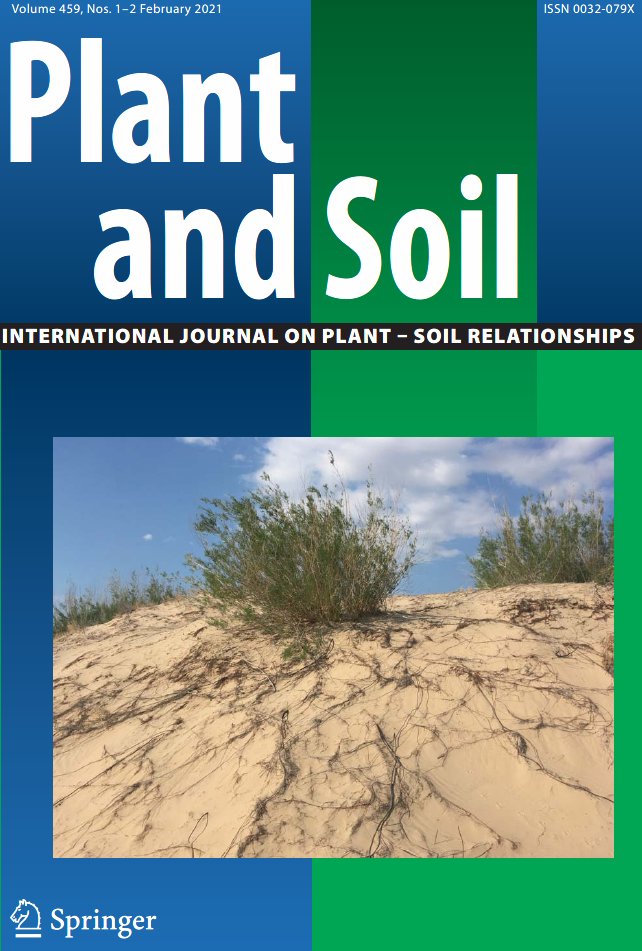
Plant and Soil publishes original papers and review articles exploring the interface of plant biology and soil sciences, and that enhance our mechanistic understanding of plant-soil interactions. We focus on the interface of plant biology and soil sciences, and seek those manuscripts with a strong mechanistic component which develop and test hypotheses aimed at understanding underlying mechanisms of plant-soil interactions. Manuscripts can include both fundamental and applied aspects of mineral nutrition, plant water relations, symbiotic and pathogenic plant-microbe interactions, root anatomy and morphology, soil biology, ecology, agrochemistry and agrophysics, as long as they are hypothesis-driven and enhance our mechanistic understanding. Articles including a major molecular or modelling component also fall within the scope of the journal. All contributions appear in the English language, with consistent spelling, using either American or British English.



 京公网安备 11010802042870号
京ICP备2023020795号-1
京公网安备 11010802042870号
京ICP备2023020795号-1

 分享
分享
 求助内容:
求助内容: 应助结果提醒方式:
 扫码关注我们
