Soo Lin Goh , Ken Shaun Yap , Edward Ren Kai Neo , Chia Wei Koo , Umesh Madhavan , Nurul Aisyah Suwandi , Juline Lew , Hsien Hui Khoo , Daren Zong Loong Tan
{"title":"Life cycle assessment of plastic waste end-of-life scenarios in South and South East Asia","authors":"Soo Lin Goh , Ken Shaun Yap , Edward Ren Kai Neo , Chia Wei Koo , Umesh Madhavan , Nurul Aisyah Suwandi , Juline Lew , Hsien Hui Khoo , Daren Zong Loong Tan","doi":"10.1016/j.wasman.2025.114760","DOIUrl":null,"url":null,"abstract":"<div><div>Plastic waste has a significant environmental impact when mismanaged. The study quantifies the environmental impact of plastic waste management systems using consequential life cycle assessments in selected countries in Asia, including India, Indonesia, Malaysia, the Philippines, Thailand, and Vietnam. The scope covers from plastic waste generation to end-of-life treatments, including environmental impact avoided from not producing raw materials due to plastic waste utilization. Eleven environmental impacts were considered, including global warming potential (GWP100) and carcinogenic human toxicity (HTPc). India has the lowest net GWP100 (−0.648 kg CO<sub>2</sub>-eq) per kg of plastic waste while Indonesia has the highest (1.128 kg CO<sub>2</sub>-eq). Future scenario analyses showed that increasing recycling can reduce the GWP100 of plastic waste management systems by up to 611 % by 2030. Policymakers and investors can use these results to focus their efforts on waste management methods which reduce the impact of plastic waste on the environment and human health.</div></div>","PeriodicalId":23969,"journal":{"name":"Waste management","volume":"200 ","pages":"Article 114760"},"PeriodicalIF":7.1000,"publicationDate":"2025-03-30","publicationTypes":"Journal Article","fieldsOfStudy":null,"isOpenAccess":false,"openAccessPdf":"","citationCount":"0","resultStr":null,"platform":"Semanticscholar","paperid":null,"PeriodicalName":"Waste management","FirstCategoryId":"93","ListUrlMain":"https://www.sciencedirect.com/science/article/pii/S0956053X25001655","RegionNum":2,"RegionCategory":"环境科学与生态学","ArticlePicture":[],"TitleCN":null,"AbstractTextCN":null,"PMCID":null,"EPubDate":"","PubModel":"","JCR":"Q1","JCRName":"ENGINEERING, ENVIRONMENTAL","Score":null,"Total":0}
引用次数: 0
Abstract
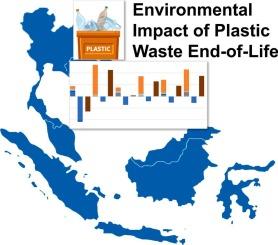
Plastic waste has a significant environmental impact when mismanaged. The study quantifies the environmental impact of plastic waste management systems using consequential life cycle assessments in selected countries in Asia, including India, Indonesia, Malaysia, the Philippines, Thailand, and Vietnam. The scope covers from plastic waste generation to end-of-life treatments, including environmental impact avoided from not producing raw materials due to plastic waste utilization. Eleven environmental impacts were considered, including global warming potential (GWP100) and carcinogenic human toxicity (HTPc). India has the lowest net GWP100 (−0.648 kg CO2-eq) per kg of plastic waste while Indonesia has the highest (1.128 kg CO2-eq). Future scenario analyses showed that increasing recycling can reduce the GWP100 of plastic waste management systems by up to 611 % by 2030. Policymakers and investors can use these results to focus their efforts on waste management methods which reduce the impact of plastic waste on the environment and human health.
期刊介绍:
Waste Management is devoted to the presentation and discussion of information on solid wastes,it covers the entire lifecycle of solid. wastes.
Scope:
Addresses solid wastes in both industrialized and economically developing countries
Covers various types of solid wastes, including:
Municipal (e.g., residential, institutional, commercial, light industrial)
Agricultural
Special (e.g., C and D, healthcare, household hazardous wastes, sewage sludge)



 京公网安备 11010802042870号
京ICP备2023020795号-1
京公网安备 11010802042870号
京ICP备2023020795号-1

 分享
分享
 求助内容:
求助内容: 应助结果提醒方式:
 扫码关注我们
