Treatment options of nitrogen heterocyclic compounds in industrial wastewater: From fundamental technologies to energy valorization applications and future process design strategies
Chao Ma , Huiqin Zhang , Ziwei Liu , Xinran Meng , Sijia Chen , Jingsong Zhang , Yeqiang Li , Xia Huang
{"title":"Treatment options of nitrogen heterocyclic compounds in industrial wastewater: From fundamental technologies to energy valorization applications and future process design strategies","authors":"Chao Ma , Huiqin Zhang , Ziwei Liu , Xinran Meng , Sijia Chen , Jingsong Zhang , Yeqiang Li , Xia Huang","doi":"10.1016/j.watres.2025.123575","DOIUrl":null,"url":null,"abstract":"<div><div>Nitrogen heterocyclic compounds (NHCs) widely exist in industrial wastewater and presented significant environmental and health risks due to their toxicity and persistence. This review addressed the challenges in treating NHCs in industrial wastewater, focusing on developing sustainable and efficient treatment processes. While various technologies, including adsorption, advanced oxidation/reduction processes (AOPs/ARPs), and microbial treatments, have been studied at the experimental stage of treating synthetic wastewater, scale-up for industrial applications is imperative. After analyzing the characteristics of NHCs and evaluating different treatment methods with the aid of efficiency and cost-benefit analysis, efficient detoxification while maximizing energy recovery constitutes a critical requirement in treating NHC-containing wastewater. Hence, we proposed a comprehensive strategy combining hydrolysis-acidification pretreatment enhanced by electro-assisted micro-aeration with methanogenic anaerobic digestion as core treatment units. The process design for NHC-containing wastewater treatment should consider the dynamic balance between removal efficiency, energy consumption, and ammonia recovery, incorporating environmental and economic impacts through life cycle assessment and technical-economic analysis. The potential of machine learning in optimizing operational parameters, predicting effluent quality, and supporting process design decisions is promising. To develop interpretable and practical solutions, the integration of data-driven approaches with mechanistic understanding and prior knowledge is indispensable. This review provided novel insights into sustainable NHC treatment strategies in the context of energy valorization and artificial intelligence advancement, offering guidance for future research and industrial applications.</div></div>","PeriodicalId":443,"journal":{"name":"Water Research","volume":"281 ","pages":"Article 123575"},"PeriodicalIF":12.4000,"publicationDate":"2025-08-01","publicationTypes":"Journal Article","fieldsOfStudy":null,"isOpenAccess":false,"openAccessPdf":"","citationCount":"0","resultStr":null,"platform":"Semanticscholar","paperid":null,"PeriodicalName":"Water Research","FirstCategoryId":"93","ListUrlMain":"https://www.sciencedirect.com/science/article/pii/S0043135425004889","RegionNum":1,"RegionCategory":"环境科学与生态学","ArticlePicture":[],"TitleCN":null,"AbstractTextCN":null,"PMCID":null,"EPubDate":"2025/3/29 0:00:00","PubModel":"Epub","JCR":"Q1","JCRName":"ENGINEERING, ENVIRONMENTAL","Score":null,"Total":0}
引用次数: 0
Abstract
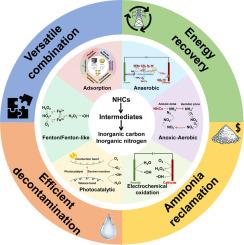
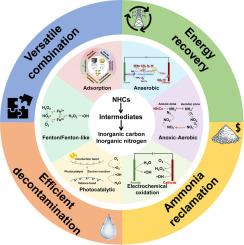
Nitrogen heterocyclic compounds (NHCs) widely exist in industrial wastewater and presented significant environmental and health risks due to their toxicity and persistence. This review addressed the challenges in treating NHCs in industrial wastewater, focusing on developing sustainable and efficient treatment processes. While various technologies, including adsorption, advanced oxidation/reduction processes (AOPs/ARPs), and microbial treatments, have been studied at the experimental stage of treating synthetic wastewater, scale-up for industrial applications is imperative. After analyzing the characteristics of NHCs and evaluating different treatment methods with the aid of efficiency and cost-benefit analysis, efficient detoxification while maximizing energy recovery constitutes a critical requirement in treating NHC-containing wastewater. Hence, we proposed a comprehensive strategy combining hydrolysis-acidification pretreatment enhanced by electro-assisted micro-aeration with methanogenic anaerobic digestion as core treatment units. The process design for NHC-containing wastewater treatment should consider the dynamic balance between removal efficiency, energy consumption, and ammonia recovery, incorporating environmental and economic impacts through life cycle assessment and technical-economic analysis. The potential of machine learning in optimizing operational parameters, predicting effluent quality, and supporting process design decisions is promising. To develop interpretable and practical solutions, the integration of data-driven approaches with mechanistic understanding and prior knowledge is indispensable. This review provided novel insights into sustainable NHC treatment strategies in the context of energy valorization and artificial intelligence advancement, offering guidance for future research and industrial applications.
期刊介绍:
Water Research, along with its open access companion journal Water Research X, serves as a platform for publishing original research papers covering various aspects of the science and technology related to the anthropogenic water cycle, water quality, and its management worldwide. The audience targeted by the journal comprises biologists, chemical engineers, chemists, civil engineers, environmental engineers, limnologists, and microbiologists. The scope of the journal include:
•Treatment processes for water and wastewaters (municipal, agricultural, industrial, and on-site treatment), including resource recovery and residuals management;
•Urban hydrology including sewer systems, stormwater management, and green infrastructure;
•Drinking water treatment and distribution;
•Potable and non-potable water reuse;
•Sanitation, public health, and risk assessment;
•Anaerobic digestion, solid and hazardous waste management, including source characterization and the effects and control of leachates and gaseous emissions;
•Contaminants (chemical, microbial, anthropogenic particles such as nanoparticles or microplastics) and related water quality sensing, monitoring, fate, and assessment;
•Anthropogenic impacts on inland, tidal, coastal and urban waters, focusing on surface and ground waters, and point and non-point sources of pollution;
•Environmental restoration, linked to surface water, groundwater and groundwater remediation;
•Analysis of the interfaces between sediments and water, and between water and atmosphere, focusing specifically on anthropogenic impacts;
•Mathematical modelling, systems analysis, machine learning, and beneficial use of big data related to the anthropogenic water cycle;
•Socio-economic, policy, and regulations studies.




 京公网安备 11010802042870号
京ICP备2023020795号-1
京公网安备 11010802042870号
京ICP备2023020795号-1

 分享
分享
 求助内容:
求助内容: 应助结果提醒方式:
 扫码关注我们
