I Ketut Agus Somia, Made Lady Adelaida Purwanta, Ni Wayan Winarti, Ida Bagus Nyoman Putra Dwija, Desak Made Putri Pidari, Anak Agung Sagung Sawitri, Anak Agung Ayu Yuli Gayatri, I Nyoman Gede Budiana, Komang Januartha Putra Pinatih, Ketut Tuti Parwati Merati
{"title":"Prevalence and risk factors of high-risk HPV and cervical abnormalities in HIV-positive women in Bali, Indonesia.","authors":"I Ketut Agus Somia, Made Lady Adelaida Purwanta, Ni Wayan Winarti, Ida Bagus Nyoman Putra Dwija, Desak Made Putri Pidari, Anak Agung Sagung Sawitri, Anak Agung Ayu Yuli Gayatri, I Nyoman Gede Budiana, Komang Januartha Putra Pinatih, Ketut Tuti Parwati Merati","doi":"10.1186/s12879-025-10827-4","DOIUrl":null,"url":null,"abstract":"<p><strong>Background: </strong>Women living with Human Immunodeficiency Virus (HIV) are at higher risk of cervical cancer, particularly in regions like Indonesia where cervical cancer screening programs are limited. Bali has seen a rise in both HIV and cervical cancer cases, prompting the need for targeted interventions. This study investigates the prevalence of cervical cytological abnormalities and associated risk factors among women with HIV in Bali, focusing on their relationship with high-risk Human Papillomavirus (HR-HPV) types.</p><p><strong>Methods: </strong>A cross-sectional study was conducted from July to December 2023, recruiting 245 women from HIV outpatient clinics in Bali. Demographic and clinical data were collected via interviews and physical examinations, including cervical swabs and blood samples. HPV genotyping was performed using ThinPrep cytology followed by a two-stage PCR process. The first stage utilized universal primers (MY09/11) for HPV detection, while the second stage employed type-specific primers to identify high-risk strains, (16,18,31,33,35,39,45,51,52,56,58,59,66 and 68. Blood samples were analyzed to determine CD4 and CD8 T-cell counts.</p><p><strong>Results: </strong>Of 239 participants, 26 (10.87%) had abnormal cytology (6 cases (2.5%) of atypical squamous cells with high risk (ASC-H), 9 cases (3.8%) of atypical squamous cells of undetermined significance (ASC-US), 4 cases (1.7%) of high-grade squamous intraepithelial lesions (H-SIL), and 7 cases (2.9%) of low-grade squamous intraepithelial lesions (L-SIL)). Furthermore, 58 participants (24%) were tested positive for HPV DNA, with HPV type 18 being the most prevalent (28% in all HPV-positive samples). HPV-positive women had a seven-fold higher risk of abnormal cytology (PR = 7.022, 95% CI = 3.223-15.295). Multivariate analysis revealed HPV 18 as an independent risk factor (ExpB = 9.029, p = 0.007) and a history of pap smear screening reduced HR-HPV risk (ExpB = 0.358, p = 0.013).</p><p><strong>Conclusion: </strong>This study highlights that 10.87% of HIV-positive women in Bali had abnormal cytology, with HPV 18 significantly linked to higher risk. A history of pap smear screening reduced HR-HPV risk. These findings underscore the need for robust cervical cancer screening and HPV vaccination, particularly for younger women, to improve health outcomes in Indonesia.</p>","PeriodicalId":8981,"journal":{"name":"BMC Infectious Diseases","volume":"25 1","pages":"432"},"PeriodicalIF":3.0000,"publicationDate":"2025-03-28","publicationTypes":"Journal Article","fieldsOfStudy":null,"isOpenAccess":false,"openAccessPdf":"https://www.ncbi.nlm.nih.gov/pmc/articles/PMC11951592/pdf/","citationCount":"0","resultStr":null,"platform":"Semanticscholar","paperid":null,"PeriodicalName":"BMC Infectious Diseases","FirstCategoryId":"3","ListUrlMain":"https://doi.org/10.1186/s12879-025-10827-4","RegionNum":3,"RegionCategory":"医学","ArticlePicture":[],"TitleCN":null,"AbstractTextCN":null,"PMCID":null,"EPubDate":"","PubModel":"","JCR":"Q2","JCRName":"INFECTIOUS DISEASES","Score":null,"Total":0}
引用次数: 0
Abstract
Background: Women living with Human Immunodeficiency Virus (HIV) are at higher risk of cervical cancer, particularly in regions like Indonesia where cervical cancer screening programs are limited. Bali has seen a rise in both HIV and cervical cancer cases, prompting the need for targeted interventions. This study investigates the prevalence of cervical cytological abnormalities and associated risk factors among women with HIV in Bali, focusing on their relationship with high-risk Human Papillomavirus (HR-HPV) types.
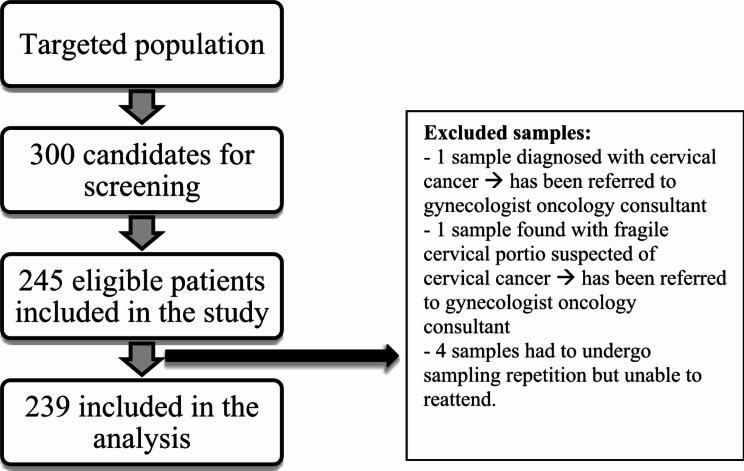
Methods: A cross-sectional study was conducted from July to December 2023, recruiting 245 women from HIV outpatient clinics in Bali. Demographic and clinical data were collected via interviews and physical examinations, including cervical swabs and blood samples. HPV genotyping was performed using ThinPrep cytology followed by a two-stage PCR process. The first stage utilized universal primers (MY09/11) for HPV detection, while the second stage employed type-specific primers to identify high-risk strains, (16,18,31,33,35,39,45,51,52,56,58,59,66 and 68. Blood samples were analyzed to determine CD4 and CD8 T-cell counts.
Results: Of 239 participants, 26 (10.87%) had abnormal cytology (6 cases (2.5%) of atypical squamous cells with high risk (ASC-H), 9 cases (3.8%) of atypical squamous cells of undetermined significance (ASC-US), 4 cases (1.7%) of high-grade squamous intraepithelial lesions (H-SIL), and 7 cases (2.9%) of low-grade squamous intraepithelial lesions (L-SIL)). Furthermore, 58 participants (24%) were tested positive for HPV DNA, with HPV type 18 being the most prevalent (28% in all HPV-positive samples). HPV-positive women had a seven-fold higher risk of abnormal cytology (PR = 7.022, 95% CI = 3.223-15.295). Multivariate analysis revealed HPV 18 as an independent risk factor (ExpB = 9.029, p = 0.007) and a history of pap smear screening reduced HR-HPV risk (ExpB = 0.358, p = 0.013).
Conclusion: This study highlights that 10.87% of HIV-positive women in Bali had abnormal cytology, with HPV 18 significantly linked to higher risk. A history of pap smear screening reduced HR-HPV risk. These findings underscore the need for robust cervical cancer screening and HPV vaccination, particularly for younger women, to improve health outcomes in Indonesia.
期刊介绍:
BMC Infectious Diseases is an open access, peer-reviewed journal that considers articles on all aspects of the prevention, diagnosis and management of infectious and sexually transmitted diseases in humans, as well as related molecular genetics, pathophysiology, and epidemiology.



 京公网安备 11010802042870号
京ICP备2023020795号-1
京公网安备 11010802042870号
京ICP备2023020795号-1

 分享
分享
 求助内容:
求助内容: 应助结果提醒方式:
 扫码关注我们
