{"title":"Research developments in the neurovascular unit and the blood‑brain barrier (Review).","authors":"Yating Gong, Muyao Wu, Yaqian Huang, Xiaoyi He, Jiaqi Yuan, Baoqi Dang","doi":"10.3892/br.2025.1966","DOIUrl":null,"url":null,"abstract":"<p><p>The neurovascular unit (NVU) is composed of neurons, glial cells, brain microvascular endothelial cells (BMECs), pericytes, and the extracellular matrix. The NVU controls the permeability of the blood-brain barrier (BBB) and protects the brain from harmful blood-borne and endogenous and exogenous substances. Among these, neurons transmit signals, astrocytes provide nutrients, microglia regulate inflammation, and BMECs and pericytes strengthen barrier tightness and coverage. These cells, due to their physical structure, anatomical location, or physiological function, maintain the microenvironment required for normal brain function. In this review, the BBB structure and mechanisms are examined to obtain a better understanding of the factors that influence BBB permeability. The findings may aid in safeguarding the BBB and provide potential therapeutic targets for drugs affecting the central nervous system.</p>","PeriodicalId":8863,"journal":{"name":"Biomedical reports","volume":"22 5","pages":"88"},"PeriodicalIF":1.9000,"publicationDate":"2025-03-18","publicationTypes":"Journal Article","fieldsOfStudy":null,"isOpenAccess":false,"openAccessPdf":"https://www.ncbi.nlm.nih.gov/pmc/articles/PMC11956146/pdf/","citationCount":"0","resultStr":null,"platform":"Semanticscholar","paperid":null,"PeriodicalName":"Biomedical reports","FirstCategoryId":"1085","ListUrlMain":"https://doi.org/10.3892/br.2025.1966","RegionNum":0,"RegionCategory":null,"ArticlePicture":[],"TitleCN":null,"AbstractTextCN":null,"PMCID":null,"EPubDate":"2025/5/1 0:00:00","PubModel":"eCollection","JCR":"Q3","JCRName":"MEDICINE, RESEARCH & EXPERIMENTAL","Score":null,"Total":0}
引用次数: 0
Abstract
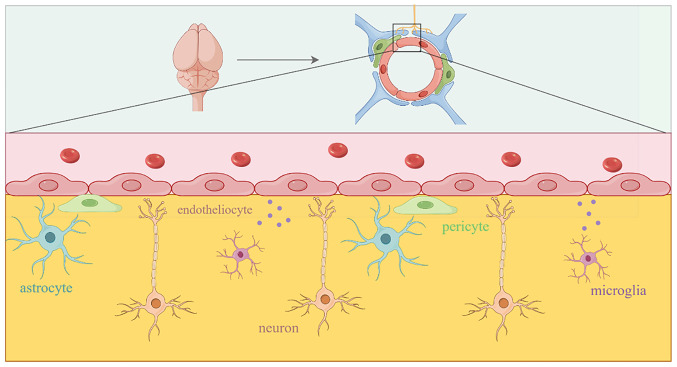
The neurovascular unit (NVU) is composed of neurons, glial cells, brain microvascular endothelial cells (BMECs), pericytes, and the extracellular matrix. The NVU controls the permeability of the blood-brain barrier (BBB) and protects the brain from harmful blood-borne and endogenous and exogenous substances. Among these, neurons transmit signals, astrocytes provide nutrients, microglia regulate inflammation, and BMECs and pericytes strengthen barrier tightness and coverage. These cells, due to their physical structure, anatomical location, or physiological function, maintain the microenvironment required for normal brain function. In this review, the BBB structure and mechanisms are examined to obtain a better understanding of the factors that influence BBB permeability. The findings may aid in safeguarding the BBB and provide potential therapeutic targets for drugs affecting the central nervous system.
期刊介绍:
Biomedical Reports is a monthly, peer-reviewed journal, dedicated to publishing research across all fields of biology and medicine, including pharmacology, pathology, gene therapy, genetics, microbiology, neurosciences, infectious diseases, molecular cardiology and molecular surgery. The journal provides a home for original research, case reports and review articles.




 京公网安备 11010802042870号
京ICP备2023020795号-1
京公网安备 11010802042870号
京ICP备2023020795号-1

 分享
分享
 求助内容:
求助内容: 应助结果提醒方式:
 扫码关注我们
