Potential impact of L-threonine and encapsulated butyric acid (ButiPEARL) on growth performance, serum biomarkers, intestinal histomorphometry and economic indices of Nile tilapia fingerlings.
Hadeer A Youssuf, Ahmed Shehab, Amira M Abd-El Hamed, Walaa S Raslan, Yasmeen Magdy, Mona Gamel Mohamed, Amgad Kadah, Aya F Matter
{"title":"Potential impact of L-threonine and encapsulated butyric acid (ButiPEARL) on growth performance, serum biomarkers, intestinal histomorphometry and economic indices of Nile tilapia fingerlings.","authors":"Hadeer A Youssuf, Ahmed Shehab, Amira M Abd-El Hamed, Walaa S Raslan, Yasmeen Magdy, Mona Gamel Mohamed, Amgad Kadah, Aya F Matter","doi":"10.1186/s12917-025-04590-6","DOIUrl":null,"url":null,"abstract":"<p><strong>Background: </strong>Numerous immunostimulants have been incorporated as additives in aquaculture feed due to their potential to improve growth and improve immune function. The present study investigated the effects of dietary L-threonine and an encapsulated butyric acid (ButiPEARL) on several parameters related to Nile tilapia, Oreochromis niloticus, specifically focusing on growth performance and immune response.</p><p><strong>Materials and methods: </strong>A total of 486 Nile tilapia fingerlings were divided into six experimental fish groups (n = 81). Each replicate consisted of 27 fish that were used, weighing approximately 15 ± 0.5 (g) and measuring 7 ± 0.5 (cm). The fish in the control group (G1) were fed a basal diet, while the fish in the other groups were fed experimental diets that included varying concentrations of butyric acid and L-threonine per kilogram of diet, as the second group (G2) fed on a basal diet supplemented with butyric acid 0.3 g/kg diet, the third group (G3) fed on a basal diet supplemented with L-threonine 0.24 g/kg diet, the fourth group (G4) fed on a basal diet supplemented with butyric 0.3 g/kg + L-threonine 0.24 g/kg diet, the fifth group (G5) fed on a basal diet supplemented with L-threonine 0.48 g/kg diet, and the sixth group (G6) fed on a basal diet supplemented with butyric 0.3 g/kg + L-threonine 0.48 g/kg. The feeding was done twice a day for 42 days, with the amount of food given being 5% of the fish's body weight. The water parameters were maintained at suitable levels.</p><p><strong>Results: </strong>The supplementation of these feed additives, particularly the group of fish fed a diet containing 0.3 g/kg of encapsulated butyric acid (ButiPEARL) mixed with 0.48 g/kg of L-threonine, exhibited the highest values throughout the experiment. This supplementation significantly enhanced growth performance indicators (P < 0.05), such as length gain, weight gain, weight gain rate (WGR), specific growth rate (SGR), and feed conversion ratio (FCR). Furthermore, it positively influenced immunological parameters (IgM, albumin, total protein in serum, and nitrous oxide in liver tissue), liver enzymes (ALT, AST in serum), antioxidants (superoxide dismutase and catalase) and malondialdehyde in liver), biochemical assays (plasma glucose concentrations), and digestive enzymes (lipase and amylase) in plasma (P < 0.05). In terms of fish farm profitability, a higher net profit can be achieved by maximizing returns while minimizing costs. The histology and scanning electron microscopy (SEM) analysis of the O. niloticus intestines revealed significant improvements in the length and width of intestinal villi (P < 0.05).</p><p><strong>Discussion and conclusion: </strong>The inclusion of L-threonine (0.48g/kg) and encapsulated butyric acid (ButiPEARL) (0.3g/kg) in fish diets can serve as safe, natural, and cost-effective feed additives. It is recommended to use a combined inclusion level of these additives to enhance growth, boost immunity, support liver function, and promote intestinal development. Future research to evaluate the advantages of a dietary combination of encapsulated butyric acid and L-threonine at varying doses in aquaculture is encouraged by the findings of this investigation. However, additional research is required to ascertain these compounds' potential impact on other fish species.</p>","PeriodicalId":9041,"journal":{"name":"BMC Veterinary Research","volume":"21 1","pages":"222"},"PeriodicalIF":2.6000,"publicationDate":"2025-03-31","publicationTypes":"Journal Article","fieldsOfStudy":null,"isOpenAccess":false,"openAccessPdf":"https://www.ncbi.nlm.nih.gov/pmc/articles/PMC11956424/pdf/","citationCount":"0","resultStr":null,"platform":"Semanticscholar","paperid":null,"PeriodicalName":"BMC Veterinary Research","FirstCategoryId":"97","ListUrlMain":"https://doi.org/10.1186/s12917-025-04590-6","RegionNum":2,"RegionCategory":"农林科学","ArticlePicture":[],"TitleCN":null,"AbstractTextCN":null,"PMCID":null,"EPubDate":"","PubModel":"","JCR":"Q1","JCRName":"VETERINARY SCIENCES","Score":null,"Total":0}
引用次数: 0
Abstract
Background: Numerous immunostimulants have been incorporated as additives in aquaculture feed due to their potential to improve growth and improve immune function. The present study investigated the effects of dietary L-threonine and an encapsulated butyric acid (ButiPEARL) on several parameters related to Nile tilapia, Oreochromis niloticus, specifically focusing on growth performance and immune response.
Materials and methods: A total of 486 Nile tilapia fingerlings were divided into six experimental fish groups (n = 81). Each replicate consisted of 27 fish that were used, weighing approximately 15 ± 0.5 (g) and measuring 7 ± 0.5 (cm). The fish in the control group (G1) were fed a basal diet, while the fish in the other groups were fed experimental diets that included varying concentrations of butyric acid and L-threonine per kilogram of diet, as the second group (G2) fed on a basal diet supplemented with butyric acid 0.3 g/kg diet, the third group (G3) fed on a basal diet supplemented with L-threonine 0.24 g/kg diet, the fourth group (G4) fed on a basal diet supplemented with butyric 0.3 g/kg + L-threonine 0.24 g/kg diet, the fifth group (G5) fed on a basal diet supplemented with L-threonine 0.48 g/kg diet, and the sixth group (G6) fed on a basal diet supplemented with butyric 0.3 g/kg + L-threonine 0.48 g/kg. The feeding was done twice a day for 42 days, with the amount of food given being 5% of the fish's body weight. The water parameters were maintained at suitable levels.
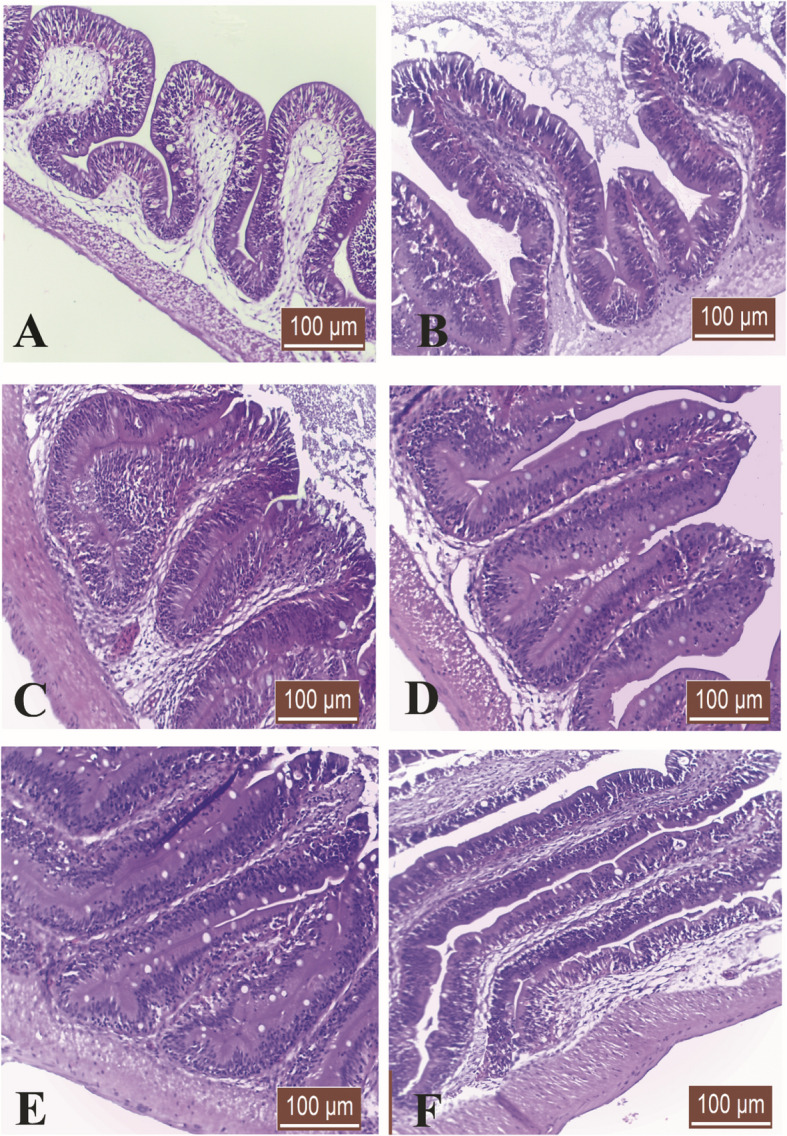
Results: The supplementation of these feed additives, particularly the group of fish fed a diet containing 0.3 g/kg of encapsulated butyric acid (ButiPEARL) mixed with 0.48 g/kg of L-threonine, exhibited the highest values throughout the experiment. This supplementation significantly enhanced growth performance indicators (P < 0.05), such as length gain, weight gain, weight gain rate (WGR), specific growth rate (SGR), and feed conversion ratio (FCR). Furthermore, it positively influenced immunological parameters (IgM, albumin, total protein in serum, and nitrous oxide in liver tissue), liver enzymes (ALT, AST in serum), antioxidants (superoxide dismutase and catalase) and malondialdehyde in liver), biochemical assays (plasma glucose concentrations), and digestive enzymes (lipase and amylase) in plasma (P < 0.05). In terms of fish farm profitability, a higher net profit can be achieved by maximizing returns while minimizing costs. The histology and scanning electron microscopy (SEM) analysis of the O. niloticus intestines revealed significant improvements in the length and width of intestinal villi (P < 0.05).
Discussion and conclusion: The inclusion of L-threonine (0.48g/kg) and encapsulated butyric acid (ButiPEARL) (0.3g/kg) in fish diets can serve as safe, natural, and cost-effective feed additives. It is recommended to use a combined inclusion level of these additives to enhance growth, boost immunity, support liver function, and promote intestinal development. Future research to evaluate the advantages of a dietary combination of encapsulated butyric acid and L-threonine at varying doses in aquaculture is encouraged by the findings of this investigation. However, additional research is required to ascertain these compounds' potential impact on other fish species.
期刊介绍:
BMC Veterinary Research is an open access, peer-reviewed journal that considers articles on all aspects of veterinary science and medicine, including the epidemiology, diagnosis, prevention and treatment of medical conditions of domestic, companion, farm and wild animals, as well as the biomedical processes that underlie their health.





 京公网安备 11010802042870号
京ICP备2023020795号-1
京公网安备 11010802042870号
京ICP备2023020795号-1

 分享
分享
 求助内容:
求助内容: 应助结果提醒方式:
 扫码关注我们
