{"title":"Awareness of Apitherapy: a study of healthcare professionals in Türkiye.","authors":"İçim Gökkaya, Gülin Renda, Fatma Ayhan, Nurdan Yazici","doi":"10.3831/KPI.2025.28.1.35","DOIUrl":null,"url":null,"abstract":"<p><strong>Objectives: </strong>Apitherapy is a part of traditional and complementary medicine (TCM) in Türkiye. It is defined as using bees and bee products as supplementation in the cure of several diseases. This study was conducted between 05.05.2023 and 05.06.2023 throughout Türkiye using an online survey to examine healthcare professionals' levels of knowledge concerning apitherapy and the factors affecting these.</p><p><strong>Methods: </strong>Seven hundred-three questionnaires of suitable data quality were included. SPSS 23.0 software was used in the data analysis. Binary logistic regression analysis was performed using the Backward LR elimination method to determine the factors with the most impact on awareness of apitherapy. Statistical significance was considered to be p < 0.05.</p><p><strong>Results: </strong>Analysis showed that 55.9% of healthcare professionals were aware of apitherapy. Educational attainment (p = 0.023), profession (p = 0.000), work experience (p = 0.017), and the presence of chronic disease (p = 0.012) all had an effect on awareness of the concept of apitherapy. It was determined that 60.8% of the participants were unaware that apitherapy is subject to certain regulation in Türkiye. Although apitherapy is practiced by a certified physician, 49.9% of respondents were unaware of this information. On the other hand, 87.5% of healthcare professionals thought that apitherapy should be applied by a physician. Social media was the main source of knowledge regarding apitherapy for healthcare professionals. Only 30.5% chose undergraduate courses as a source of information.</p><p><strong>Conclusion: </strong>The results highlighted that healthcare professionals had insufficient knowledge regarding apitherapy practices. Incorporating compulsory and/or elective courses on apitherapy into the curriculum of health education universities could improve knowledge and awareness of this topic.</p>","PeriodicalId":16769,"journal":{"name":"Journal of Pharmacopuncture","volume":"28 1","pages":"35-46"},"PeriodicalIF":1.8000,"publicationDate":"2025-03-31","publicationTypes":"Journal Article","fieldsOfStudy":null,"isOpenAccess":false,"openAccessPdf":"https://www.ncbi.nlm.nih.gov/pmc/articles/PMC11933912/pdf/","citationCount":"0","resultStr":null,"platform":"Semanticscholar","paperid":null,"PeriodicalName":"Journal of Pharmacopuncture","FirstCategoryId":"1085","ListUrlMain":"https://doi.org/10.3831/KPI.2025.28.1.35","RegionNum":0,"RegionCategory":null,"ArticlePicture":[],"TitleCN":null,"AbstractTextCN":null,"PMCID":null,"EPubDate":"","PubModel":"","JCR":"Q3","JCRName":"INTEGRATIVE & COMPLEMENTARY MEDICINE","Score":null,"Total":0}
引用次数: 0
Abstract
Objectives: Apitherapy is a part of traditional and complementary medicine (TCM) in Türkiye. It is defined as using bees and bee products as supplementation in the cure of several diseases. This study was conducted between 05.05.2023 and 05.06.2023 throughout Türkiye using an online survey to examine healthcare professionals' levels of knowledge concerning apitherapy and the factors affecting these.
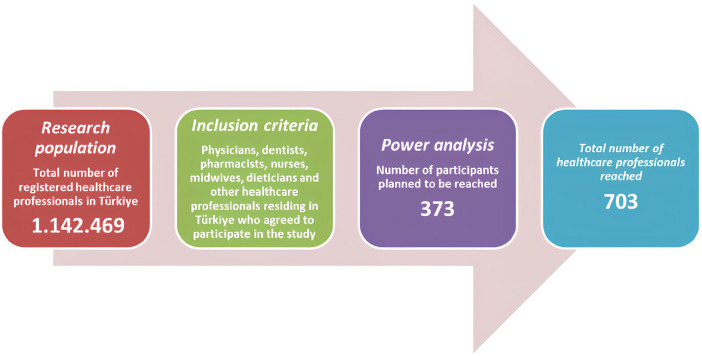
Methods: Seven hundred-three questionnaires of suitable data quality were included. SPSS 23.0 software was used in the data analysis. Binary logistic regression analysis was performed using the Backward LR elimination method to determine the factors with the most impact on awareness of apitherapy. Statistical significance was considered to be p < 0.05.
Results: Analysis showed that 55.9% of healthcare professionals were aware of apitherapy. Educational attainment (p = 0.023), profession (p = 0.000), work experience (p = 0.017), and the presence of chronic disease (p = 0.012) all had an effect on awareness of the concept of apitherapy. It was determined that 60.8% of the participants were unaware that apitherapy is subject to certain regulation in Türkiye. Although apitherapy is practiced by a certified physician, 49.9% of respondents were unaware of this information. On the other hand, 87.5% of healthcare professionals thought that apitherapy should be applied by a physician. Social media was the main source of knowledge regarding apitherapy for healthcare professionals. Only 30.5% chose undergraduate courses as a source of information.
Conclusion: The results highlighted that healthcare professionals had insufficient knowledge regarding apitherapy practices. Incorporating compulsory and/or elective courses on apitherapy into the curriculum of health education universities could improve knowledge and awareness of this topic.
期刊介绍:
The Journal of Pharmacopuncture covers a wide range of basic and clinical science research relevant to all aspects of the biotechnology of integrated approaches using both pharmacology and acupuncture therapeutics, including research involving pharmacology, acupuncture studies and pharmacopuncture studies. The subjects are mainly divided into three categories: pharmacology (applied phytomedicine, plant sciences, pharmacology, toxicology, medicinal plants, traditional medicines, herbal medicine, Sasang constitutional medicine, herbal formulae, foods, agricultural technologies, naturopathy, etc.), acupuncture (acupressure, electroacupuncture, laser acupuncture, moxibustion, cupping, etc.), and pharmacopuncture (aqua-acupuncture, meridian pharmacopuncture, eight-principles pharmacopuncture, animal-based pharmacopuncture, mountain ginseng pharmacopuncture, bee venom therapy, needle embedding therapy, implant therapy, etc.). Other categories include chuna treatment, veterinary acupuncture and related animal studies, alternative medicines for treating cancer and cancer-related symptoms, etc. Broader topical coverage on the effects of acupuncture, the medical plants used in traditional and alternative medicine, pharmacological action and other related modalities, such as anthroposophy, homeopathy, ayurveda, bioelectromagnetic therapy, chiropractic, neural therapy and meditation, can be considered to be within the journal’s scope if based on acupoints and meridians. Submissions of original articles, review articles, systematic reviews, case reports, brief reports, opinions, commentaries, medical lectures, letters to the editor, photo-essays, technical notes, and book reviews are encouraged. Providing free access to the full text of all current and archived articles on its website (www.journal.ac), also searchable through a Google Scholar search.




 京公网安备 11010802042870号
京ICP备2023020795号-1
京公网安备 11010802042870号
京ICP备2023020795号-1

 分享
分享
 求助内容:
求助内容: 应助结果提醒方式:
 扫码关注我们
