Juan Manuel Castillo, Raymundo Cruz Pérez, Daniel Talamás, Juan E Ludert
{"title":"Kinesin light chain 1 (KLC1) interacts with NS1 and is a susceptibility factor for dengue virus infection in mosquito cells.","authors":"Juan Manuel Castillo, Raymundo Cruz Pérez, Daniel Talamás, Juan E Ludert","doi":"10.1101/2025.03.20.644413","DOIUrl":null,"url":null,"abstract":"<p><p>A hallmark of the dengue virus (DENV) infection is the manipulation of host cell membranes, lipid trafficking and lipid droplets (LDs), all cellular functions that depend on the cytoskeleton and the cytoplasmatic streaming system. We previously reported the interaction between DENV NS1 protein and members of the kinesin motor complex in the <i>Aedes albopictus</i> cell line C6/36. In this work, we present evidence indicating that the protein kinesin light chain 1 (KLC1) is indeed a susceptibility factor for DENV replicative cycle in mosquito cells. The interaction between NS1 and KLC1 was confirmed by proximity ligation and co-immunoprecipitation assays in cells harvested 24 hpi. In addition, transmission immunoelectron microscopy showed KLC1 decorating the surface of vacuoles in association with NS1. Increased levels of KLC1 were observed starting at 6 hpi, suggesting that virus infection stimulates KLC1 synthesis. Silencing KLC1 expression results in a reduction in viral genome synthesis, decreased secretion of NS1, and a reduction of virus progeny by nearly 1 log. In agreement, similar affectations were observed in infected cells transfected with a peptide that competes and interferes with the interaction between KLC1 and its cargo molecules. Of note, both silencing the expression or interfering with the function of KLC1 resulted in a disorganization of LDs, which decreased in number and increased in area, in mock or infected cells. These results, taken together, suggest that KLC1 is a host susceptibility factor for DENV in mosquito cells, necessary for the proper transport and homeostasis of LDs required for flavivirus replication. However, modest colocalization was observed between NS1 and LDs, and the significance of the KLC1 and NS1 interactions need to be further investigated.</p>","PeriodicalId":519960,"journal":{"name":"bioRxiv : the preprint server for biology","volume":" ","pages":""},"PeriodicalIF":0.0000,"publicationDate":"2025-03-20","publicationTypes":"Journal Article","fieldsOfStudy":null,"isOpenAccess":false,"openAccessPdf":"https://www.ncbi.nlm.nih.gov/pmc/articles/PMC11957137/pdf/","citationCount":"0","resultStr":null,"platform":"Semanticscholar","paperid":null,"PeriodicalName":"bioRxiv : the preprint server for biology","FirstCategoryId":"1085","ListUrlMain":"https://doi.org/10.1101/2025.03.20.644413","RegionNum":0,"RegionCategory":null,"ArticlePicture":[],"TitleCN":null,"AbstractTextCN":null,"PMCID":null,"EPubDate":"","PubModel":"","JCR":"","JCRName":"","Score":null,"Total":0}
引用次数: 0
Abstract
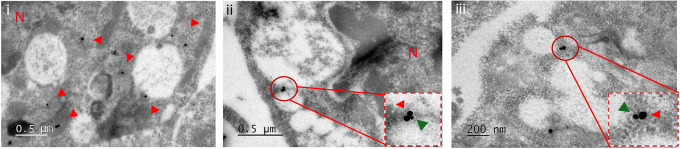
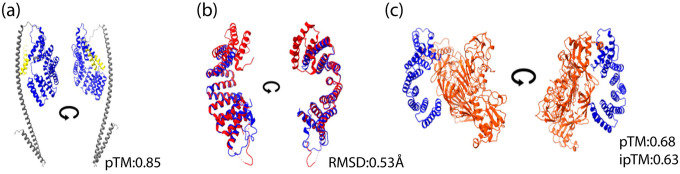
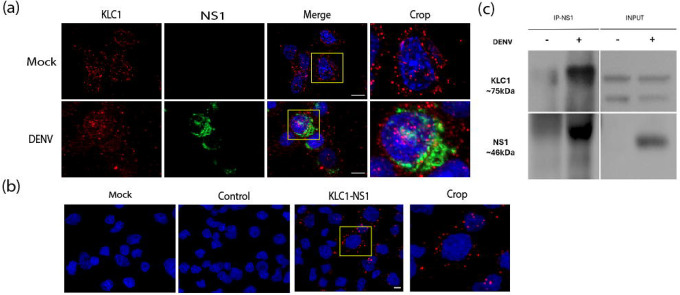
A hallmark of the dengue virus (DENV) infection is the manipulation of host cell membranes, lipid trafficking and lipid droplets (LDs), all cellular functions that depend on the cytoskeleton and the cytoplasmatic streaming system. We previously reported the interaction between DENV NS1 protein and members of the kinesin motor complex in the Aedes albopictus cell line C6/36. In this work, we present evidence indicating that the protein kinesin light chain 1 (KLC1) is indeed a susceptibility factor for DENV replicative cycle in mosquito cells. The interaction between NS1 and KLC1 was confirmed by proximity ligation and co-immunoprecipitation assays in cells harvested 24 hpi. In addition, transmission immunoelectron microscopy showed KLC1 decorating the surface of vacuoles in association with NS1. Increased levels of KLC1 were observed starting at 6 hpi, suggesting that virus infection stimulates KLC1 synthesis. Silencing KLC1 expression results in a reduction in viral genome synthesis, decreased secretion of NS1, and a reduction of virus progeny by nearly 1 log. In agreement, similar affectations were observed in infected cells transfected with a peptide that competes and interferes with the interaction between KLC1 and its cargo molecules. Of note, both silencing the expression or interfering with the function of KLC1 resulted in a disorganization of LDs, which decreased in number and increased in area, in mock or infected cells. These results, taken together, suggest that KLC1 is a host susceptibility factor for DENV in mosquito cells, necessary for the proper transport and homeostasis of LDs required for flavivirus replication. However, modest colocalization was observed between NS1 and LDs, and the significance of the KLC1 and NS1 interactions need to be further investigated.



 京公网安备 11010802042870号
京ICP备2023020795号-1
京公网安备 11010802042870号
京ICP备2023020795号-1

 分享
分享

 求助内容:
求助内容: 应助结果提醒方式:
 扫码关注我们
