{"title":"Systematic characterisation of microplastics released from disposable medical devices using laser direct infrared spectroscopy","authors":"Chuanfeng Chen, Shanshan Du, Ziyan Liu, Wenfei Li, Fangbiao Tao, Xuejiao Qie","doi":"10.1016/j.aca.2025.343982","DOIUrl":null,"url":null,"abstract":"<div><h3>Background</h3><div>Human exposure to microplastics (MPs) is widespread, attracting significant attention from both the public and the scientific community. Although several direct and indirect exposure pathways have been investigated, the extent of MP exposure from disposable medical devices remains poorly understood and warrants further research.</div></div><div><h3>Results</h3><div>This work indicates that many MPs (10-30 μm) were released during the simulated use of disposable medical devices. Two common medical devices–disposable infusion tubes and blood needles–were selected as the research subjects. Analysis utilizing laser direct infrared (LDIR) revealed that plastic released from infusion tubes primarily consisted of polyamide (PA), polyvinyl chloride (PVC), and polyethene terephthalate (PET), with an average total number (ATN) of 11.8 particles/mL. MPs released from blood collection needles mainly consisted of polyurethane (PU) and PET, with an ATN of 82.7 particles/mL. For a 0.9% normal saline, the ATN released from the infusion tubes during the stimulating infusion scenario at room temperature (4 h) was approximately 16 particles/mL, primarily consisting of PA, PVC, and PET. Additionally, the release of MPs increased with rising temperatures. Under the same conditions, ATN release from the blood collection needles was approximately 84.4 particles/mL, mainly from PA, PVC, and PU.</div></div><div><h3>Significance</h3><div>This implies that MPs can enter the bloodstream directly through infusion tubes and blood collection needles, highlighting the need for greater attention to the risk of patient exposure.</div></div>","PeriodicalId":240,"journal":{"name":"Analytica Chimica Acta","volume":"1355 ","pages":"Article 343982"},"PeriodicalIF":6.0000,"publicationDate":"2025-04-02","publicationTypes":"Journal Article","fieldsOfStudy":null,"isOpenAccess":false,"openAccessPdf":"","citationCount":"0","resultStr":null,"platform":"Semanticscholar","paperid":null,"PeriodicalName":"Analytica Chimica Acta","FirstCategoryId":"92","ListUrlMain":"https://www.sciencedirect.com/science/article/pii/S0003267025003769","RegionNum":2,"RegionCategory":"化学","ArticlePicture":[],"TitleCN":null,"AbstractTextCN":null,"PMCID":null,"EPubDate":"","PubModel":"","JCR":"Q1","JCRName":"CHEMISTRY, ANALYTICAL","Score":null,"Total":0}
引用次数: 0
Abstract
Background
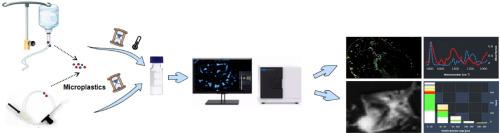
Human exposure to microplastics (MPs) is widespread, attracting significant attention from both the public and the scientific community. Although several direct and indirect exposure pathways have been investigated, the extent of MP exposure from disposable medical devices remains poorly understood and warrants further research.
Results
This work indicates that many MPs (10-30 μm) were released during the simulated use of disposable medical devices. Two common medical devices–disposable infusion tubes and blood needles–were selected as the research subjects. Analysis utilizing laser direct infrared (LDIR) revealed that plastic released from infusion tubes primarily consisted of polyamide (PA), polyvinyl chloride (PVC), and polyethene terephthalate (PET), with an average total number (ATN) of 11.8 particles/mL. MPs released from blood collection needles mainly consisted of polyurethane (PU) and PET, with an ATN of 82.7 particles/mL. For a 0.9% normal saline, the ATN released from the infusion tubes during the stimulating infusion scenario at room temperature (4 h) was approximately 16 particles/mL, primarily consisting of PA, PVC, and PET. Additionally, the release of MPs increased with rising temperatures. Under the same conditions, ATN release from the blood collection needles was approximately 84.4 particles/mL, mainly from PA, PVC, and PU.
Significance
This implies that MPs can enter the bloodstream directly through infusion tubes and blood collection needles, highlighting the need for greater attention to the risk of patient exposure.
期刊介绍:
Analytica Chimica Acta has an open access mirror journal Analytica Chimica Acta: X, sharing the same aims and scope, editorial team, submission system and rigorous peer review.
Analytica Chimica Acta provides a forum for the rapid publication of original research, and critical, comprehensive reviews dealing with all aspects of fundamental and applied modern analytical chemistry. The journal welcomes the submission of research papers which report studies concerning the development of new and significant analytical methodologies. In determining the suitability of submitted articles for publication, particular scrutiny will be placed on the degree of novelty and impact of the research and the extent to which it adds to the existing body of knowledge in analytical chemistry.




 京公网安备 11010802042870号
京ICP备2023020795号-1
京公网安备 11010802042870号
京ICP备2023020795号-1

 分享
分享
 求助内容:
求助内容: 应助结果提醒方式:
 扫码关注我们
