{"title":"Worse health quality outcomes found with endocrine therapy after breast-conserving surgery","authors":"Mary Beth Nierengarten","doi":"10.1002/cncr.35791","DOIUrl":null,"url":null,"abstract":"<p>Endocrine therapy following breast-conserving surgery in older women with low-risk, early-stage breast cancer was associated with a greater reduction in health-related quality of life (HRQOL) than radiation therapy according to the interim analysis of the EUROPA trial presented at the San Antonio Breast Cancer Symposium<span><sup>1</sup></span> and published in <i>The Lancet Oncology</i>.<span><sup>2</sup></span></p><p>The EUROPA trial is a noninferiority, phase 3 study in which 731 women (with a final accrual target of 926 patients) aged 70 years or older with stage I, luminal A–like breast cancer were randomized to a single-modality treatment with either radiotherapy (<i>n</i> = 365) or endocrine therapy (<i>n</i> = 366). The study compared the effects on HRQOL and ipsilateral breast tumor recurrence. Changes in HRQOL from the baseline to 2 years were assessed with the global health status scale of the 30-item European Organisation for Research and Treatment of Cancer Quality of Life Questionnaire.</p><p>Results of the preplanned interim analysis, which included 207 patients (104 received radiotherapy, and 103 received endocrine therapy), showed a significant reduction in HRQOL in the patients treated with endocrine therapy versus radiotherapy.</p><p>At 2 years, patients treated with endocrine therapy had a mean change from the baseline in global health status of –9.79 (95% CI, –14.45 to –5.13; <i>p</i> < .0001), whereas the mean change for those treated with radiotherapy was –3.40 (95% CI, –7.82 to 1.03; <i>p</i> = .13). The adjusted mean difference between the treatments was 6.39 (95% CI, 0.14–12.65; <i>p</i> = .04), with radiotherapy favored.</p><p>Patients treated with radiotherapy also had less frequent treatment-related adverse events than those treated with endocrine therapy (67% vs. 85%). The most common grade 3–4 adverse events were experienced by patients in the endocrinology group (none in the radiotherapy group) and included arthralgia (7%), pelvic organ prolapse (3%), fatigue/hot flashes/myalgia (2%), and bone pain/fractures (2%). Serious adverse events were similar between the two treatment groups.</p><p>The lead author of the study, Icro Meattini, MD, an associate professor in the Department of Experimental and Clinical Biomedical Sciences “M. Serio” at the University of Florence in Italy, says that the study shows that single-modality therapy has promise as a noninferior alternative to endocrine therapy for improved HRQOL.</p><p>“These findings highlight the potential for personalized treatment approaches that align with patient preferences, comorbidities, and treatment tolerability,” he says, adding that the findings “could influence shared decision-making and reduce overtreatment in a subset of older patients with favorable tumor biology.”</p><p>Although the interim results are encouraging, he says that the trial will continue as planned to ensure a robust data set for the final analysis.</p>","PeriodicalId":138,"journal":{"name":"Cancer","volume":"131 7","pages":""},"PeriodicalIF":5.1000,"publicationDate":"2025-04-03","publicationTypes":"Journal Article","fieldsOfStudy":null,"isOpenAccess":false,"openAccessPdf":"https://onlinelibrary.wiley.com/doi/epdf/10.1002/cncr.35791","citationCount":"0","resultStr":null,"platform":"Semanticscholar","paperid":null,"PeriodicalName":"Cancer","FirstCategoryId":"3","ListUrlMain":"https://acsjournals.onlinelibrary.wiley.com/doi/10.1002/cncr.35791","RegionNum":2,"RegionCategory":"医学","ArticlePicture":[],"TitleCN":null,"AbstractTextCN":null,"PMCID":null,"EPubDate":"","PubModel":"","JCR":"Q1","JCRName":"ONCOLOGY","Score":null,"Total":0}
引用次数: 0
Abstract
Endocrine therapy following breast-conserving surgery in older women with low-risk, early-stage breast cancer was associated with a greater reduction in health-related quality of life (HRQOL) than radiation therapy according to the interim analysis of the EUROPA trial presented at the San Antonio Breast Cancer Symposium1 and published in The Lancet Oncology.2
The EUROPA trial is a noninferiority, phase 3 study in which 731 women (with a final accrual target of 926 patients) aged 70 years or older with stage I, luminal A–like breast cancer were randomized to a single-modality treatment with either radiotherapy (n = 365) or endocrine therapy (n = 366). The study compared the effects on HRQOL and ipsilateral breast tumor recurrence. Changes in HRQOL from the baseline to 2 years were assessed with the global health status scale of the 30-item European Organisation for Research and Treatment of Cancer Quality of Life Questionnaire.
Results of the preplanned interim analysis, which included 207 patients (104 received radiotherapy, and 103 received endocrine therapy), showed a significant reduction in HRQOL in the patients treated with endocrine therapy versus radiotherapy.
At 2 years, patients treated with endocrine therapy had a mean change from the baseline in global health status of –9.79 (95% CI, –14.45 to –5.13; p < .0001), whereas the mean change for those treated with radiotherapy was –3.40 (95% CI, –7.82 to 1.03; p = .13). The adjusted mean difference between the treatments was 6.39 (95% CI, 0.14–12.65; p = .04), with radiotherapy favored.
Patients treated with radiotherapy also had less frequent treatment-related adverse events than those treated with endocrine therapy (67% vs. 85%). The most common grade 3–4 adverse events were experienced by patients in the endocrinology group (none in the radiotherapy group) and included arthralgia (7%), pelvic organ prolapse (3%), fatigue/hot flashes/myalgia (2%), and bone pain/fractures (2%). Serious adverse events were similar between the two treatment groups.
The lead author of the study, Icro Meattini, MD, an associate professor in the Department of Experimental and Clinical Biomedical Sciences “M. Serio” at the University of Florence in Italy, says that the study shows that single-modality therapy has promise as a noninferior alternative to endocrine therapy for improved HRQOL.
“These findings highlight the potential for personalized treatment approaches that align with patient preferences, comorbidities, and treatment tolerability,” he says, adding that the findings “could influence shared decision-making and reduce overtreatment in a subset of older patients with favorable tumor biology.”
Although the interim results are encouraging, he says that the trial will continue as planned to ensure a robust data set for the final analysis.
期刊介绍:
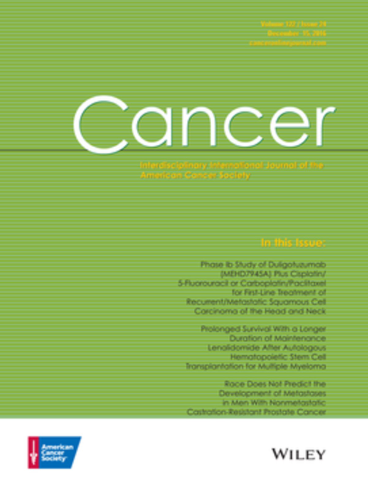
The CANCER site is a full-text, electronic implementation of CANCER, an Interdisciplinary International Journal of the American Cancer Society, and CANCER CYTOPATHOLOGY, a Journal of the American Cancer Society.
CANCER publishes interdisciplinary oncologic information according to, but not limited to, the following disease sites and disciplines: blood/bone marrow; breast disease; endocrine disorders; epidemiology; gastrointestinal tract; genitourinary disease; gynecologic oncology; head and neck disease; hepatobiliary tract; integrated medicine; lung disease; medical oncology; neuro-oncology; pathology radiation oncology; translational research



 京公网安备 11010802042870号
京ICP备2023020795号-1
京公网安备 11010802042870号
京ICP备2023020795号-1

 分享
分享
 求助内容:
求助内容: 应助结果提醒方式:
 扫码关注我们
