Bandar Nasser Aljafen, Narmeen Shaikh, Joud Mohammed AlKhalifah, Sultan Ayoub Meo
{"title":"Effect of environmental pollutants particulate matter (PM<sub>2.5</sub>, PM<sub>10</sub>), nitrogen dioxide (NO<sub>2</sub>), sulfur dioxide (SO<sub>2</sub>), carbon monoxide (NO) and ground level ozone (O<sub>3</sub>) on epilepsy.","authors":"Bandar Nasser Aljafen, Narmeen Shaikh, Joud Mohammed AlKhalifah, Sultan Ayoub Meo","doi":"10.1186/s12883-025-04142-3","DOIUrl":null,"url":null,"abstract":"<p><strong>Background: </strong>Epilepsy is a common condition that affects the brain and causes frequent seizures. Impaired brain biology is the world's fastest-growing brain disorder, and exposure to environmental pollutants is the leading cause of mental health impairment. The growing literature suggests that air pollution is an emerging cause of neurological diseases. However, the existing evidence on air pollution and epilepsy is inadequate. This study aimed to investigate the effect of environmental pollutants particulate matter (PM<sub>2.5</sub>, PM<sub>10</sub>), nitrogen dioxide (NO<sub>2</sub>), sulfur dioxide (SO<sub>2</sub>), carbon monoxide (NO) and ground-level ozone (O<sub>3</sub>) on epilepsy.</p><p><strong>Methods: </strong>This study recorded data on air pollutants and epilepsy using the electronic platforms Pub Med, Web of Science, Scopus, and Google Scholar. The keywords included for the literature search were based on two main aspects: exposure (air pollutants) and outcome (epilepsy). Initially, 78 articles and reports were identified, and after revising the abstracts and full articles, 06 studies were selected for a detailed analysis and discussion. The Odds Ratio (OR) and 95% confidence intervals (CIs) were extracted to investigate the impact between air pollutants and epilepsy. The effect of air pollution on epilepsy has been investigated through a compilation of six studies encompassing 371,515 individuals. The Cochrane chi-squared test (Chi<sup>2</sup>), fixed-effects design was used when I<sup>2</sup> < 50% and P > 0.05; otherwise, a random-effects model was adopted.</p><p><strong>Results: </strong>The results revealed that exposure to PM<sub>2.5</sub> and NO<sub>2</sub> were positively and significantly associated with epilepsy (RR = 1.00; 95% CI: 1.00-1.01; p = 0.03), NO<sub>2</sub> (RR = 1.03; 95% CI: 1.02-1.03; p < 0.01). However, no association was identified between PM<sub>10</sub>, SO<sub>2</sub>, CO, and O<sub>3</sub> with epilepsy. The results suggest a potential association between air pollution exposure and epilepsy.</p><p><strong>Conclusions: </strong>Air pollutants PM<sub>2.5</sub> and NO<sub>2</sub> increase the risk of epilepsy. The findings suggest that reducing levels of these pollutants could be a strategic approach to mitigate neurological health risks in populations worldwide. Further research is warranted to elucidate the mechanisms and causal relationships between air pollutants and epilepsy. Public health initiatives aimed at reducing air pollution levels and targeted interventions to protect vulnerable populations hold promise for alleviating the burden of epilepsy associated with environmental exposures.</p>","PeriodicalId":9170,"journal":{"name":"BMC Neurology","volume":"25 1","pages":"133"},"PeriodicalIF":2.2000,"publicationDate":"2025-04-01","publicationTypes":"Journal Article","fieldsOfStudy":null,"isOpenAccess":false,"openAccessPdf":"https://www.ncbi.nlm.nih.gov/pmc/articles/PMC11959772/pdf/","citationCount":"0","resultStr":null,"platform":"Semanticscholar","paperid":null,"PeriodicalName":"BMC Neurology","FirstCategoryId":"3","ListUrlMain":"https://doi.org/10.1186/s12883-025-04142-3","RegionNum":3,"RegionCategory":"医学","ArticlePicture":[],"TitleCN":null,"AbstractTextCN":null,"PMCID":null,"EPubDate":"","PubModel":"","JCR":"Q3","JCRName":"CLINICAL NEUROLOGY","Score":null,"Total":0}
引用次数: 0
Abstract
Background: Epilepsy is a common condition that affects the brain and causes frequent seizures. Impaired brain biology is the world's fastest-growing brain disorder, and exposure to environmental pollutants is the leading cause of mental health impairment. The growing literature suggests that air pollution is an emerging cause of neurological diseases. However, the existing evidence on air pollution and epilepsy is inadequate. This study aimed to investigate the effect of environmental pollutants particulate matter (PM2.5, PM10), nitrogen dioxide (NO2), sulfur dioxide (SO2), carbon monoxide (NO) and ground-level ozone (O3) on epilepsy.
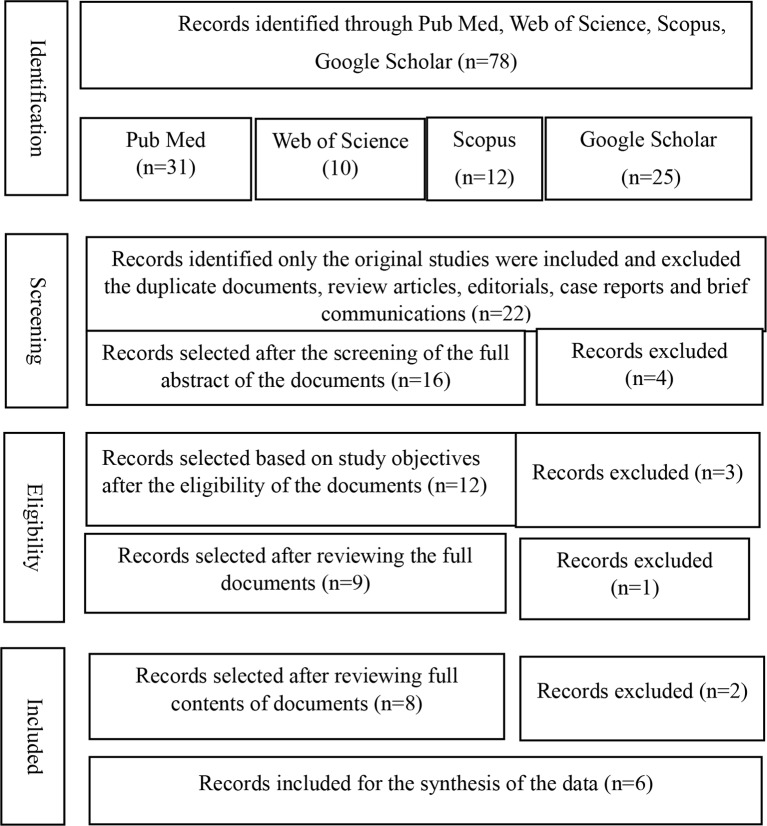
Methods: This study recorded data on air pollutants and epilepsy using the electronic platforms Pub Med, Web of Science, Scopus, and Google Scholar. The keywords included for the literature search were based on two main aspects: exposure (air pollutants) and outcome (epilepsy). Initially, 78 articles and reports were identified, and after revising the abstracts and full articles, 06 studies were selected for a detailed analysis and discussion. The Odds Ratio (OR) and 95% confidence intervals (CIs) were extracted to investigate the impact between air pollutants and epilepsy. The effect of air pollution on epilepsy has been investigated through a compilation of six studies encompassing 371,515 individuals. The Cochrane chi-squared test (Chi2), fixed-effects design was used when I2 < 50% and P > 0.05; otherwise, a random-effects model was adopted.
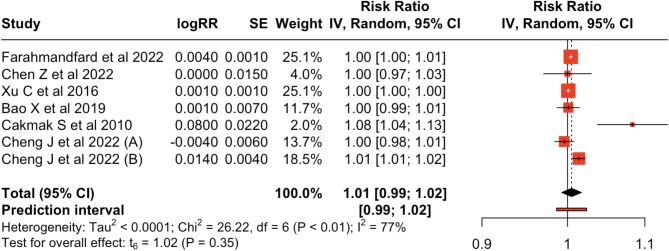
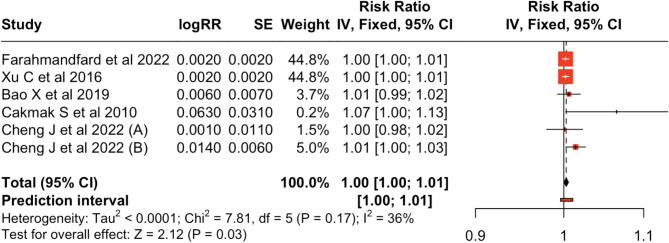
Results: The results revealed that exposure to PM2.5 and NO2 were positively and significantly associated with epilepsy (RR = 1.00; 95% CI: 1.00-1.01; p = 0.03), NO2 (RR = 1.03; 95% CI: 1.02-1.03; p < 0.01). However, no association was identified between PM10, SO2, CO, and O3 with epilepsy. The results suggest a potential association between air pollution exposure and epilepsy.
Conclusions: Air pollutants PM2.5 and NO2 increase the risk of epilepsy. The findings suggest that reducing levels of these pollutants could be a strategic approach to mitigate neurological health risks in populations worldwide. Further research is warranted to elucidate the mechanisms and causal relationships between air pollutants and epilepsy. Public health initiatives aimed at reducing air pollution levels and targeted interventions to protect vulnerable populations hold promise for alleviating the burden of epilepsy associated with environmental exposures.
期刊介绍:
BMC Neurology is an open access, peer-reviewed journal that considers articles on all aspects of the prevention, diagnosis and management of neurological disorders, as well as related molecular genetics, pathophysiology, and epidemiology.



 京公网安备 11010802042870号
京ICP备2023020795号-1
京公网安备 11010802042870号
京ICP备2023020795号-1

 分享
分享
 求助内容:
求助内容: 应助结果提醒方式:
 扫码关注我们
