{"title":"Medical Device Based on a Virtual Reality-Based Upper Limb Rehabilitation Software: Usability Evaluation Through Cognitive Walkthrough.","authors":"Seojin Hong, Hyun Choi, Hyosun Kweon","doi":"10.2196/68149","DOIUrl":null,"url":null,"abstract":"<p><strong>Background: </strong>The use of virtual reality (VR) technology in rehabilitation therapy has been growing, leading to the development of VR-based upper-limb rehabilitation softwares. To ensure the effective use of such software, usability evaluations are critical to enhance user satisfaction and identify potential usability issues.</p><p><strong>Objective: </strong>This study aims to evaluate the usability of a VR-based upper-limb rehabilitation software from the perspective of occupational therapists. Specifically, the study seeks to identify usability challenges and provide insights to improve user satisfaction.</p><p><strong>Methods: </strong>The VR-based upper-limb rehabilitation software was tailored for therapists to operate while delivering therapy to patients. Usability testing was conducted with occupational therapists from the Korean National Rehabilitation Center using cognitive walkthroughs and surveys. Participants performed tasks that simulated real clinical scenarios, including turning the device on, assisting patients with wearing the device, and shutting it down. Observers recorded user reactions during task performance, and participants completed surveys to assess the ease of use of the user interface. This mixed-methods approach provided qualitative insights into user difficulties and their root causes.</p><p><strong>Results: </strong>Usability evaluations were conducted with 6 participants. Cognitive walkthroughs revealed potential areas for improvement in the software, including (1) enhancements to the graphical user interface for ease of use, (2) refinements in the natural user interface, and (3) better user manuals for clearer product instructions. The ease-of-use score for the user interface averaged 1.58 on a 5-point scale (1=very easy to 5=very difficult).</p><p><strong>Conclusions: </strong>This study provides valuable insights into improving user satisfaction by focusing on the needs of occupational therapists who operate a VR-based rehabilitation software. Future research should explore software refinement and clinical efficacy to maximize the therapeutic potential of such technologies.</p>","PeriodicalId":14841,"journal":{"name":"JMIR Formative Research","volume":"9 ","pages":"e68149"},"PeriodicalIF":2.0000,"publicationDate":"2025-04-01","publicationTypes":"Journal Article","fieldsOfStudy":null,"isOpenAccess":false,"openAccessPdf":"https://www.ncbi.nlm.nih.gov/pmc/articles/PMC11978233/pdf/","citationCount":"0","resultStr":null,"platform":"Semanticscholar","paperid":null,"PeriodicalName":"JMIR Formative Research","FirstCategoryId":"1085","ListUrlMain":"https://doi.org/10.2196/68149","RegionNum":0,"RegionCategory":null,"ArticlePicture":[],"TitleCN":null,"AbstractTextCN":null,"PMCID":null,"EPubDate":"","PubModel":"","JCR":"Q3","JCRName":"HEALTH CARE SCIENCES & SERVICES","Score":null,"Total":0}
引用次数: 0
Abstract
Background: The use of virtual reality (VR) technology in rehabilitation therapy has been growing, leading to the development of VR-based upper-limb rehabilitation softwares. To ensure the effective use of such software, usability evaluations are critical to enhance user satisfaction and identify potential usability issues.
Objective: This study aims to evaluate the usability of a VR-based upper-limb rehabilitation software from the perspective of occupational therapists. Specifically, the study seeks to identify usability challenges and provide insights to improve user satisfaction.
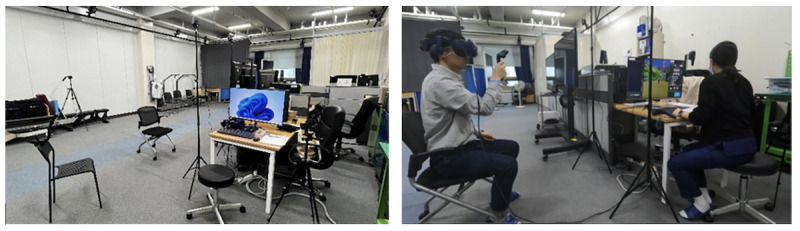
Methods: The VR-based upper-limb rehabilitation software was tailored for therapists to operate while delivering therapy to patients. Usability testing was conducted with occupational therapists from the Korean National Rehabilitation Center using cognitive walkthroughs and surveys. Participants performed tasks that simulated real clinical scenarios, including turning the device on, assisting patients with wearing the device, and shutting it down. Observers recorded user reactions during task performance, and participants completed surveys to assess the ease of use of the user interface. This mixed-methods approach provided qualitative insights into user difficulties and their root causes.
Results: Usability evaluations were conducted with 6 participants. Cognitive walkthroughs revealed potential areas for improvement in the software, including (1) enhancements to the graphical user interface for ease of use, (2) refinements in the natural user interface, and (3) better user manuals for clearer product instructions. The ease-of-use score for the user interface averaged 1.58 on a 5-point scale (1=very easy to 5=very difficult).
Conclusions: This study provides valuable insights into improving user satisfaction by focusing on the needs of occupational therapists who operate a VR-based rehabilitation software. Future research should explore software refinement and clinical efficacy to maximize the therapeutic potential of such technologies.






 京公网安备 11010802042870号
京ICP备2023020795号-1
京公网安备 11010802042870号
京ICP备2023020795号-1

 分享
分享
 求助内容:
求助内容: 应助结果提醒方式:
 扫码关注我们
