Xuan Wang, Jun Li, Xiaomeng Wu, Sai Fan, Zhu Wang, Yunfeng Zhao, Jingguang Li, Dawei Chen
{"title":"A comparative analysis of nutritional content changes in six Chinese cuisines prepared using industrial versus traditional hand-cooked modes.","authors":"Xuan Wang, Jun Li, Xiaomeng Wu, Sai Fan, Zhu Wang, Yunfeng Zhao, Jingguang Li, Dawei Chen","doi":"10.3389/fnut.2025.1567196","DOIUrl":null,"url":null,"abstract":"<p><strong>Objective: </strong>With the rise of industrialized dishes, the quality differences between industrial and traditional hand-cooked modes are a major concern for the food industry and consumers. This study examined the nutrient content variations in Chinese cuisines between these two cooking modes, addressing a crucial research gap.</p><p><strong>Methods: </strong>To account for moisture changes during cooking, water content in both raw ingredients and cooked dishes was adjusted, and nutrients were reported on a dry matter basis. The changes in nutrient content pre- and post-cooking were assessed by calculating the relative percentage of nutrient content in the cooked dishes in comparison to their levels in the raw ingredients. An independent <i>t</i>-test was employed to assess the significance of differences in the changes in nutrient content between industrial and traditional hand-cooked modes.</p><p><strong>Results: </strong>Macronutrient levels remained relatively stable, with changes of less than 20% across most dishes for both cooking methods, with some exceptions noted. Fat-soluble vitamins A and D exhibited minor fluctuations, ranging from 2.6 to 39.4%, while vitamin E levels consistently increased. In contrast, water-soluble vitamins, specifically B1, B2, B3, and B6, experienced substantial decreases across all examined dishes. The fatty acid profiles were consistent with the fat content, and mineral content demonstrated a moderate increase under both cooking conditions. An inter-group <i>t</i>-test indicated no significant differences in nutrient content changes between the two cooking modes (<i>p</i> > 0.05), except for vitamin B6 retention, which was significantly lower in traditional hand-cooked modes compared to industrial modes (<i>p</i> < 0.05).</p><p><strong>Conclusion: </strong>Among the six Chinese cuisines analyzed, the changes in nutrient content did not significantly differ between industrial and traditional cooking methods, with the notable exception of vitamin B6 retention. These findings contribute to a deeper understanding of how different cooking techniques impact the nutritional value of food, providing valuable insights for dietary decision-making and food processing technologies.</p>","PeriodicalId":12473,"journal":{"name":"Frontiers in Nutrition","volume":"12 ","pages":"1567196"},"PeriodicalIF":5.5000,"publicationDate":"2025-03-19","publicationTypes":"Journal Article","fieldsOfStudy":null,"isOpenAccess":false,"openAccessPdf":"https://www.ncbi.nlm.nih.gov/pmc/articles/PMC11961429/pdf/","citationCount":"0","resultStr":null,"platform":"Semanticscholar","paperid":null,"PeriodicalName":"Frontiers in Nutrition","FirstCategoryId":"97","ListUrlMain":"https://doi.org/10.3389/fnut.2025.1567196","RegionNum":2,"RegionCategory":"农林科学","ArticlePicture":[],"TitleCN":null,"AbstractTextCN":null,"PMCID":null,"EPubDate":"2025/1/1 0:00:00","PubModel":"eCollection","JCR":"Q2","JCRName":"NUTRITION & DIETETICS","Score":null,"Total":0}
引用次数: 0
Abstract
Objective: With the rise of industrialized dishes, the quality differences between industrial and traditional hand-cooked modes are a major concern for the food industry and consumers. This study examined the nutrient content variations in Chinese cuisines between these two cooking modes, addressing a crucial research gap.
Methods: To account for moisture changes during cooking, water content in both raw ingredients and cooked dishes was adjusted, and nutrients were reported on a dry matter basis. The changes in nutrient content pre- and post-cooking were assessed by calculating the relative percentage of nutrient content in the cooked dishes in comparison to their levels in the raw ingredients. An independent t-test was employed to assess the significance of differences in the changes in nutrient content between industrial and traditional hand-cooked modes.
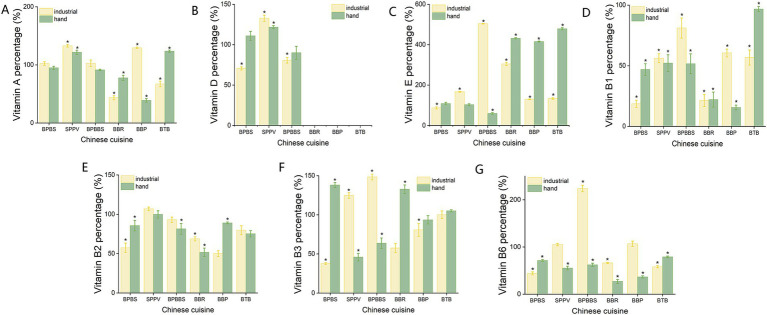
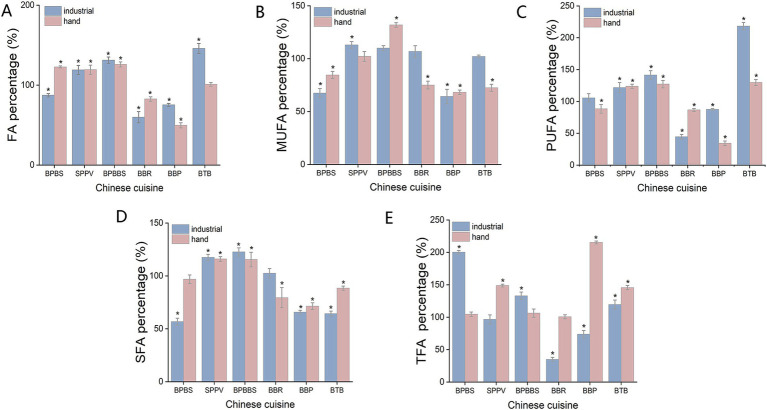
Results: Macronutrient levels remained relatively stable, with changes of less than 20% across most dishes for both cooking methods, with some exceptions noted. Fat-soluble vitamins A and D exhibited minor fluctuations, ranging from 2.6 to 39.4%, while vitamin E levels consistently increased. In contrast, water-soluble vitamins, specifically B1, B2, B3, and B6, experienced substantial decreases across all examined dishes. The fatty acid profiles were consistent with the fat content, and mineral content demonstrated a moderate increase under both cooking conditions. An inter-group t-test indicated no significant differences in nutrient content changes between the two cooking modes (p > 0.05), except for vitamin B6 retention, which was significantly lower in traditional hand-cooked modes compared to industrial modes (p < 0.05).
Conclusion: Among the six Chinese cuisines analyzed, the changes in nutrient content did not significantly differ between industrial and traditional cooking methods, with the notable exception of vitamin B6 retention. These findings contribute to a deeper understanding of how different cooking techniques impact the nutritional value of food, providing valuable insights for dietary decision-making and food processing technologies.
期刊介绍:
No subject pertains more to human life than nutrition. The aim of Frontiers in Nutrition is to integrate major scientific disciplines in this vast field in order to address the most relevant and pertinent questions and developments. Our ambition is to create an integrated podium based on original research, clinical trials, and contemporary reviews to build a reputable knowledge forum in the domains of human health, dietary behaviors, agronomy & 21st century food science. Through the recognized open-access Frontiers platform we welcome manuscripts to our dedicated sections relating to different areas in the field of nutrition with a focus on human health.
Specialty sections in Frontiers in Nutrition include, for example, Clinical Nutrition, Nutrition & Sustainable Diets, Nutrition and Food Science Technology, Nutrition Methodology, Sport & Exercise Nutrition, Food Chemistry, and Nutritional Immunology. Based on the publication of rigorous scientific research, we thrive to achieve a visible impact on the global nutrition agenda addressing the grand challenges of our time, including obesity, malnutrition, hunger, food waste, sustainability and consumer health.





 京公网安备 11010802042870号
京ICP备2023020795号-1
京公网安备 11010802042870号
京ICP备2023020795号-1

 分享
分享
 求助内容:
求助内容: 应助结果提醒方式:
 扫码关注我们
