Somatic embryogenetic receptor kinase TaSERL2 regulates heat stress tolerance in wheat by influencing TaBZR2 protein stability and transcriptional activity
{"title":"Somatic embryogenetic receptor kinase TaSERL2 regulates heat stress tolerance in wheat by influencing TaBZR2 protein stability and transcriptional activity","authors":"Xiang-Yang Hao, Tai-Fei Yu, Chao-Jun Peng, Yi-Han Fu, Yu-Hui Fang, Yan Li, Zhao-Shi Xu, Jun Chen, Hai-Bin Dong, You-Zhi Ma, Wei-Gang Xu","doi":"10.1111/pbi.70045","DOIUrl":null,"url":null,"abstract":"<p>Heat stress is a major factor limiting crop yield, a challenge intensified by climate change. Initial findings indicate that BES1/BZR1 may use heat shock to regulate plant thermal adaptability independently of BIN2-mediated brassinosteroid signalling, although the exact molecular mechanism remains unclear. In this study, we identified <i>TaBZR2</i>, a wheat gene whose expression showed a strong positive correlation with heat stress tolerance, based on transcriptome analysis of heat-tolerant wheat cultivars. Overexpression of <i>TaBZR2</i> enhanced heat stress tolerance, while RNA interference of <i>TaBZR2</i> reduced it. Further analysis revealed that TaBZR2 interacts with and is phosphorylated by wheat somatic embryogenesis receptor-like kinase 2 (TaSERL2). Overexpression of <i>TaSERL2</i> reduced heat stress tolerance by promoting TaBZR2 degradation and inhibiting its regulation of wheat heat stress response genes. However, heat stress reduced the phosphorylation levels of both <i>TaSERL2</i> and <i>TaBZR2</i>, lessening <i>TaSERL2</i>'s inhibitory effect on <i>TaBZR2</i> and enhancing the stability of TaBZR2. These results reveal that the TaSERL2-TaBZR2 module negatively regulates plant heat stress tolerance. This study expands the current model of heat stress responses and provides evidence for the role of BES1/BZR1 in heat stress regulation independent of brassinosteroid signalling.</p>","PeriodicalId":221,"journal":{"name":"Plant Biotechnology Journal","volume":"23 7","pages":"2537-2553"},"PeriodicalIF":10.5000,"publicationDate":"2025-04-04","publicationTypes":"Journal Article","fieldsOfStudy":null,"isOpenAccess":false,"openAccessPdf":"https://onlinelibrary.wiley.com/doi/epdf/10.1111/pbi.70045","citationCount":"0","resultStr":null,"platform":"Semanticscholar","paperid":null,"PeriodicalName":"Plant Biotechnology Journal","FirstCategoryId":"5","ListUrlMain":"https://onlinelibrary.wiley.com/doi/10.1111/pbi.70045","RegionNum":1,"RegionCategory":"生物学","ArticlePicture":[],"TitleCN":null,"AbstractTextCN":null,"PMCID":null,"EPubDate":"","PubModel":"","JCR":"Q1","JCRName":"BIOTECHNOLOGY & APPLIED MICROBIOLOGY","Score":null,"Total":0}
引用次数: 0
Abstract
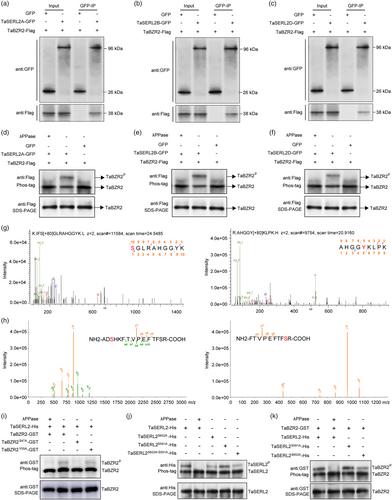
Heat stress is a major factor limiting crop yield, a challenge intensified by climate change. Initial findings indicate that BES1/BZR1 may use heat shock to regulate plant thermal adaptability independently of BIN2-mediated brassinosteroid signalling, although the exact molecular mechanism remains unclear. In this study, we identified TaBZR2, a wheat gene whose expression showed a strong positive correlation with heat stress tolerance, based on transcriptome analysis of heat-tolerant wheat cultivars. Overexpression of TaBZR2 enhanced heat stress tolerance, while RNA interference of TaBZR2 reduced it. Further analysis revealed that TaBZR2 interacts with and is phosphorylated by wheat somatic embryogenesis receptor-like kinase 2 (TaSERL2). Overexpression of TaSERL2 reduced heat stress tolerance by promoting TaBZR2 degradation and inhibiting its regulation of wheat heat stress response genes. However, heat stress reduced the phosphorylation levels of both TaSERL2 and TaBZR2, lessening TaSERL2's inhibitory effect on TaBZR2 and enhancing the stability of TaBZR2. These results reveal that the TaSERL2-TaBZR2 module negatively regulates plant heat stress tolerance. This study expands the current model of heat stress responses and provides evidence for the role of BES1/BZR1 in heat stress regulation independent of brassinosteroid signalling.
期刊介绍:
Plant Biotechnology Journal aspires to publish original research and insightful reviews of high impact, authored by prominent researchers in applied plant science. The journal places a special emphasis on molecular plant sciences and their practical applications through plant biotechnology. Our goal is to establish a platform for showcasing significant advances in the field, encompassing curiosity-driven studies with potential applications, strategic research in plant biotechnology, scientific analysis of crucial issues for the beneficial utilization of plant sciences, and assessments of the performance of plant biotechnology products in practical applications.



 京公网安备 11010802042870号
京ICP备2023020795号-1
京公网安备 11010802042870号
京ICP备2023020795号-1

 分享
分享
 求助内容:
求助内容: 应助结果提醒方式:
 扫码关注我们
