Simultaneous magnetic purification and detection of transferrin in human serum using an imprinting-based fluorescence sensor by boronate affinity and secondary signal amplification assay†
Yuanxia Xu, Yanqiao Zhu, Jinyu Cao, Yanting Wang, Xueping Hu, Xiaohua Zhao, Xingliang Song and Lingxin Chen
{"title":"Simultaneous magnetic purification and detection of transferrin in human serum using an imprinting-based fluorescence sensor by boronate affinity and secondary signal amplification assay†","authors":"Yuanxia Xu, Yanqiao Zhu, Jinyu Cao, Yanting Wang, Xueping Hu, Xiaohua Zhao, Xingliang Song and Lingxin Chen","doi":"10.1039/D5AN00291E","DOIUrl":null,"url":null,"abstract":"<p >Transferrin (TRF) is an important glycoprotein for the early detection of disease. However, its rapid isolation and detection are challenging due to its complex structure, composition, and susceptibility to denaturation. Herein, a novel imprinting-based sensor was introduced to purify and detect TRF in human serum simultaneously. A magnetic molecularly imprinted sensor was developed by integrating boronate affinity-based MIPs with a boric acid-functionalized rod-like fluorescent porphyrin (TCPP) aggregate (A-TCPP-BA) to form a sandwich structure. When an alkaline solution (pH 10) was added, the TCPP was re-released due to disruption in the structure of the A-TCPP-BA, leading to a second “explosive” amplification of fluorescence signals. Therefore, sensitive detection of TRF was realized with a good linear range from 2–50 μg mL<small><sup>−1</sup></small> and a detection limit of 0.74 μg mL<small><sup>−1</sup></small>. Furthermore, five pre-diagnosed serum samples were analyzed using this approach, obtaining recoveries in the range of 97.4% to 104.4%. In addition, the results of the significance tests (<em>p</em>-values of all five samples are greater than 0.05) were satisfactory compared with those of electrochemiluminescence (ECL). Therefore, this method shows great potential for the point-of-care testing of TRF and other glycoproteins in the future.</p>","PeriodicalId":63,"journal":{"name":"Analyst","volume":" 11","pages":" 2410-2419"},"PeriodicalIF":3.3000,"publicationDate":"2025-04-05","publicationTypes":"Journal Article","fieldsOfStudy":null,"isOpenAccess":false,"openAccessPdf":"","citationCount":"0","resultStr":null,"platform":"Semanticscholar","paperid":null,"PeriodicalName":"Analyst","FirstCategoryId":"92","ListUrlMain":"https://pubs.rsc.org/en/content/articlelanding/2025/an/d5an00291e","RegionNum":3,"RegionCategory":"化学","ArticlePicture":[],"TitleCN":null,"AbstractTextCN":null,"PMCID":null,"EPubDate":"","PubModel":"","JCR":"Q2","JCRName":"CHEMISTRY, ANALYTICAL","Score":null,"Total":0}
引用次数: 0
Abstract
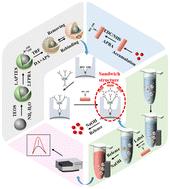
Transferrin (TRF) is an important glycoprotein for the early detection of disease. However, its rapid isolation and detection are challenging due to its complex structure, composition, and susceptibility to denaturation. Herein, a novel imprinting-based sensor was introduced to purify and detect TRF in human serum simultaneously. A magnetic molecularly imprinted sensor was developed by integrating boronate affinity-based MIPs with a boric acid-functionalized rod-like fluorescent porphyrin (TCPP) aggregate (A-TCPP-BA) to form a sandwich structure. When an alkaline solution (pH 10) was added, the TCPP was re-released due to disruption in the structure of the A-TCPP-BA, leading to a second “explosive” amplification of fluorescence signals. Therefore, sensitive detection of TRF was realized with a good linear range from 2–50 μg mL−1 and a detection limit of 0.74 μg mL−1. Furthermore, five pre-diagnosed serum samples were analyzed using this approach, obtaining recoveries in the range of 97.4% to 104.4%. In addition, the results of the significance tests (p-values of all five samples are greater than 0.05) were satisfactory compared with those of electrochemiluminescence (ECL). Therefore, this method shows great potential for the point-of-care testing of TRF and other glycoproteins in the future.



 京公网安备 11010802042870号
京ICP备2023020795号-1
京公网安备 11010802042870号
京ICP备2023020795号-1

 分享
分享
 求助内容:
求助内容: 应助结果提醒方式:
 扫码关注我们
