Meicen Liu , Isamu Umeda , Sandeep Kumar , Zhiwu Wang , Yi Zheng
{"title":"Impact of corn stover hydrothermal liquefaction conditions on the chemical composition and aerobic fermentation of the aqueous phase","authors":"Meicen Liu , Isamu Umeda , Sandeep Kumar , Zhiwu Wang , Yi Zheng","doi":"10.1016/j.watres.2025.123604","DOIUrl":null,"url":null,"abstract":"<div><div>Aerobic fermentation is a simple and environmentally friendly method to treat and recover nutrients from hydrothermal liquefaction aqueous phase (HTLAP). This study evaluated the chemical composition and aerobic biodegradability of HTLAP derived from corn stover under different hydrothermal liquefaction (HTL) conditions. The compositions of HTLAP followed specific patterns corresponding to HTL reaction severity, with high severity leading to increased concentrations of certain phenolic compounds. The elevated phenolics contributed to stronger inhibition of HTLAP on <em>Aspergillus niger</em> and <em>Rhodococcus jostii</em>. The half-maximal inhibitory concentration (IC<sub>50</sub>) of HTLAP for both microbes can be well predicted by linear regression models with HTL reaction temperature and time as the input variables, while corn stover solid loading showed no significant effect on IC<sub>50</sub> and was not included in the models. Furthermore, aerobic fermentation with <em>A. niger</em> followed by <em>R. jostii</em> was demonstrated to be a versatile treatment process for corn stover HTLAP derived from a broad range of HTL conditions, achieving 45–70 % of COD removal. This research provides a quantitative understanding of the relationships between HTL reaction conditions, HTLAP composition, and aerobic biodegradability via <em>A. niger</em> and <em>R. jostii</em>, laying the foundation for integrating HTLAP aerobic fermentation into the HTL system, potentially enhancing its overall cost-efficiency and sustainability.</div></div>","PeriodicalId":443,"journal":{"name":"Water Research","volume":"281 ","pages":"Article 123604"},"PeriodicalIF":12.4000,"publicationDate":"2025-08-01","publicationTypes":"Journal Article","fieldsOfStudy":null,"isOpenAccess":false,"openAccessPdf":"","citationCount":"0","resultStr":null,"platform":"Semanticscholar","paperid":null,"PeriodicalName":"Water Research","FirstCategoryId":"93","ListUrlMain":"https://www.sciencedirect.com/science/article/pii/S0043135425005159","RegionNum":1,"RegionCategory":"环境科学与生态学","ArticlePicture":[],"TitleCN":null,"AbstractTextCN":null,"PMCID":null,"EPubDate":"2025/4/6 0:00:00","PubModel":"Epub","JCR":"Q1","JCRName":"ENGINEERING, ENVIRONMENTAL","Score":null,"Total":0}
引用次数: 0
Abstract
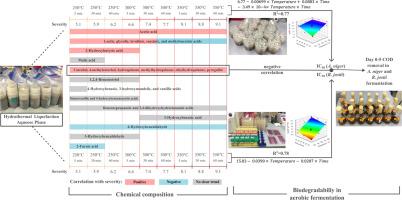
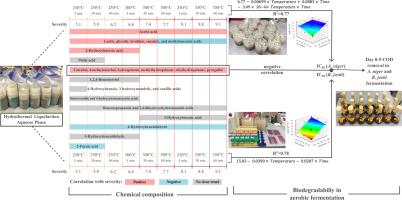
Aerobic fermentation is a simple and environmentally friendly method to treat and recover nutrients from hydrothermal liquefaction aqueous phase (HTLAP). This study evaluated the chemical composition and aerobic biodegradability of HTLAP derived from corn stover under different hydrothermal liquefaction (HTL) conditions. The compositions of HTLAP followed specific patterns corresponding to HTL reaction severity, with high severity leading to increased concentrations of certain phenolic compounds. The elevated phenolics contributed to stronger inhibition of HTLAP on Aspergillus niger and Rhodococcus jostii. The half-maximal inhibitory concentration (IC50) of HTLAP for both microbes can be well predicted by linear regression models with HTL reaction temperature and time as the input variables, while corn stover solid loading showed no significant effect on IC50 and was not included in the models. Furthermore, aerobic fermentation with A. niger followed by R. jostii was demonstrated to be a versatile treatment process for corn stover HTLAP derived from a broad range of HTL conditions, achieving 45–70 % of COD removal. This research provides a quantitative understanding of the relationships between HTL reaction conditions, HTLAP composition, and aerobic biodegradability via A. niger and R. jostii, laying the foundation for integrating HTLAP aerobic fermentation into the HTL system, potentially enhancing its overall cost-efficiency and sustainability.
期刊介绍:
Water Research, along with its open access companion journal Water Research X, serves as a platform for publishing original research papers covering various aspects of the science and technology related to the anthropogenic water cycle, water quality, and its management worldwide. The audience targeted by the journal comprises biologists, chemical engineers, chemists, civil engineers, environmental engineers, limnologists, and microbiologists. The scope of the journal include:
•Treatment processes for water and wastewaters (municipal, agricultural, industrial, and on-site treatment), including resource recovery and residuals management;
•Urban hydrology including sewer systems, stormwater management, and green infrastructure;
•Drinking water treatment and distribution;
•Potable and non-potable water reuse;
•Sanitation, public health, and risk assessment;
•Anaerobic digestion, solid and hazardous waste management, including source characterization and the effects and control of leachates and gaseous emissions;
•Contaminants (chemical, microbial, anthropogenic particles such as nanoparticles or microplastics) and related water quality sensing, monitoring, fate, and assessment;
•Anthropogenic impacts on inland, tidal, coastal and urban waters, focusing on surface and ground waters, and point and non-point sources of pollution;
•Environmental restoration, linked to surface water, groundwater and groundwater remediation;
•Analysis of the interfaces between sediments and water, and between water and atmosphere, focusing specifically on anthropogenic impacts;
•Mathematical modelling, systems analysis, machine learning, and beneficial use of big data related to the anthropogenic water cycle;
•Socio-economic, policy, and regulations studies.



 京公网安备 11010802042870号
京ICP备2023020795号-1
京公网安备 11010802042870号
京ICP备2023020795号-1

 分享
分享
 求助内容:
求助内容: 应助结果提醒方式:
 扫码关注我们
