Jianyu Gan, Gengxin Dong, Yilin Xu, Yan Chen, Yunqing Zhang, Qi Gao, Dapeng Bao
{"title":"Establishing the minimal important difference of the visual analog scale for assessing exercise-induced fatigue.","authors":"Jianyu Gan, Gengxin Dong, Yilin Xu, Yan Chen, Yunqing Zhang, Qi Gao, Dapeng Bao","doi":"10.1186/s13102-025-01122-5","DOIUrl":null,"url":null,"abstract":"<p><strong>Background: </strong>Exercise-induced fatigue is a physiological state characterized by performance decline. The Visual Analog Scale (VAS) is one of the most commonly used subjective methods for evaluating exercise-induced fatigue. However, there is a limited interpretation of how much a change in this method indicates a fatigue status that matters to the exercise performance due to the lack of a well-established minimal important difference (MID).</p><p><strong>Methods: </strong>This study is a secondary analysis of data from three trials. We analyzed individual participant data before and after exercise-induced fatigue. Anchor-based methods were used to determine the MID of the VAS for fatigue, using Countermovement Jump (CMJ) height as an anchor. Specifically, the MID was calculated using mean change, receiver operating characteristic (ROC) curve analysis, and linear regression methods.</p><p><strong>Results: </strong>Data from 71 participants (80.28% male, 22.85 ± 2.51 years), corresponding to 230 person-time measurements, were included in this analysis. The CMJ height fulfilled the requirements to be used as an anchor. MIDs for mean change, ROC curve, and linear regression analysis were 48.51, 44.13, and 43.08, respectively. The Youden's Index indicated that the MID calculated by the mean change method was the most relevant and reliable in distinguishing between fatigued and non-fatigued states.</p><p><strong>Conclusions: </strong>This study establishes a MID (48.51) for interpreting changes in VAS scores. Future research utilizing VAS to assess exercise-induced fatigue should not only consider statistical differences but also examine whether the changes meet the MID threshold to interpret the actual impact of interventions.</p><p><strong>Trial registration: </strong>Chinese Clinical Trial Registry (ChiCTR), Registration Number: ChiCTR2500095599 (Retrospectively registered; registration date: 09/01/2025).</p>","PeriodicalId":48585,"journal":{"name":"BMC Sports Science Medicine and Rehabilitation","volume":"17 1","pages":"69"},"PeriodicalIF":2.8000,"publicationDate":"2025-04-04","publicationTypes":"Journal Article","fieldsOfStudy":null,"isOpenAccess":false,"openAccessPdf":"https://www.ncbi.nlm.nih.gov/pmc/articles/PMC11969829/pdf/","citationCount":"0","resultStr":null,"platform":"Semanticscholar","paperid":null,"PeriodicalName":"BMC Sports Science Medicine and Rehabilitation","FirstCategoryId":"3","ListUrlMain":"https://doi.org/10.1186/s13102-025-01122-5","RegionNum":3,"RegionCategory":"医学","ArticlePicture":[],"TitleCN":null,"AbstractTextCN":null,"PMCID":null,"EPubDate":"","PubModel":"","JCR":"Q1","JCRName":"REHABILITATION","Score":null,"Total":0}
引用次数: 0
Abstract
Background: Exercise-induced fatigue is a physiological state characterized by performance decline. The Visual Analog Scale (VAS) is one of the most commonly used subjective methods for evaluating exercise-induced fatigue. However, there is a limited interpretation of how much a change in this method indicates a fatigue status that matters to the exercise performance due to the lack of a well-established minimal important difference (MID).
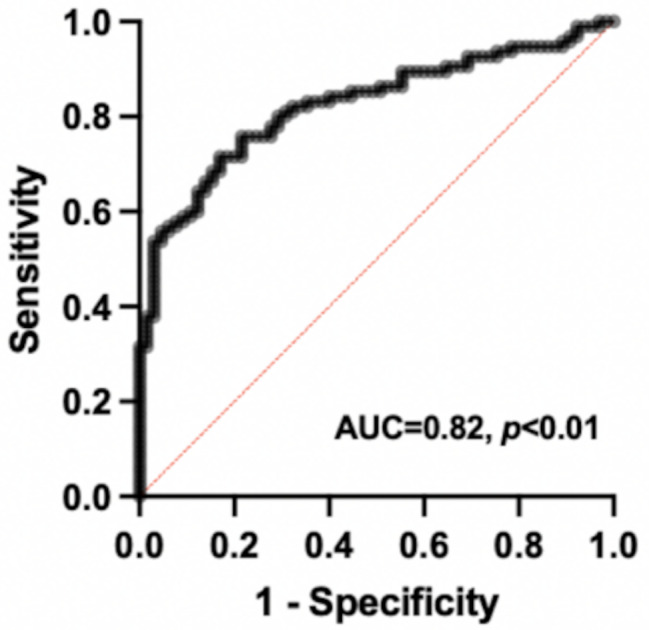
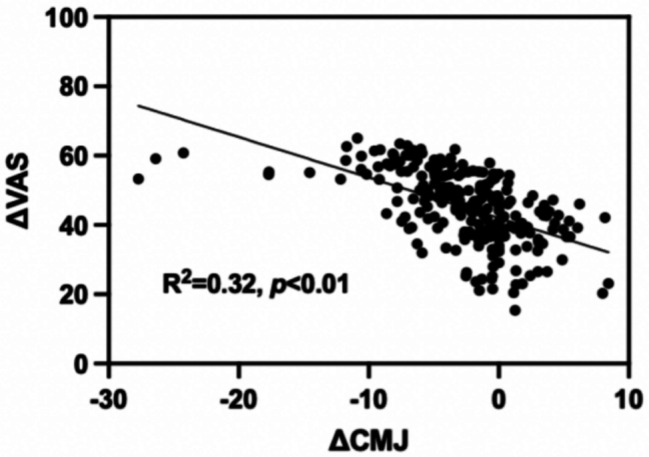
Methods: This study is a secondary analysis of data from three trials. We analyzed individual participant data before and after exercise-induced fatigue. Anchor-based methods were used to determine the MID of the VAS for fatigue, using Countermovement Jump (CMJ) height as an anchor. Specifically, the MID was calculated using mean change, receiver operating characteristic (ROC) curve analysis, and linear regression methods.
Results: Data from 71 participants (80.28% male, 22.85 ± 2.51 years), corresponding to 230 person-time measurements, were included in this analysis. The CMJ height fulfilled the requirements to be used as an anchor. MIDs for mean change, ROC curve, and linear regression analysis were 48.51, 44.13, and 43.08, respectively. The Youden's Index indicated that the MID calculated by the mean change method was the most relevant and reliable in distinguishing between fatigued and non-fatigued states.
Conclusions: This study establishes a MID (48.51) for interpreting changes in VAS scores. Future research utilizing VAS to assess exercise-induced fatigue should not only consider statistical differences but also examine whether the changes meet the MID threshold to interpret the actual impact of interventions.
期刊介绍:
BMC Sports Science, Medicine and Rehabilitation is an open access, peer reviewed journal that considers articles on all aspects of sports medicine and the exercise sciences, including rehabilitation, traumatology, cardiology, physiology, and nutrition.



 京公网安备 11010802042870号
京ICP备2023020795号-1
京公网安备 11010802042870号
京ICP备2023020795号-1

 分享
分享
 求助内容:
求助内容: 应助结果提醒方式:
 扫码关注我们
