Julie Beth Zimmerman, Gregory Lowry, Fernando Rosario-Ortiz, Paul Westerhoff, Daniel Alessi, Pedro Alvarez, Alexandra Boehm, Ian Cousins, Jordi Dachs, Matthew Eckelman, Imad El Haddad, Pablo Gago-Ferrero, Jorge Gardea-Torresdey, Jacqueline MacDonald Gibson, Keri Hornbuckle, Heileen Hsu-Kim, Juliane Hollender, Atsuko Ikeda, Frederic Leusch, Melissa Maurer-Jones, James Mihelcic, Shelly Miller, Lutgarde Raskin, Z. Jason Ren, Susan Richardson, Daniel Schlenk, Huahong Shi, Paul Tratnyek, David Waite, Shuxiao Wang, Zhanyun Wang, Michael Wong, Sukhwan Yoon
{"title":"Apolitical Science","authors":"Julie Beth Zimmerman, Gregory Lowry, Fernando Rosario-Ortiz, Paul Westerhoff, Daniel Alessi, Pedro Alvarez, Alexandra Boehm, Ian Cousins, Jordi Dachs, Matthew Eckelman, Imad El Haddad, Pablo Gago-Ferrero, Jorge Gardea-Torresdey, Jacqueline MacDonald Gibson, Keri Hornbuckle, Heileen Hsu-Kim, Juliane Hollender, Atsuko Ikeda, Frederic Leusch, Melissa Maurer-Jones, James Mihelcic, Shelly Miller, Lutgarde Raskin, Z. Jason Ren, Susan Richardson, Daniel Schlenk, Huahong Shi, Paul Tratnyek, David Waite, Shuxiao Wang, Zhanyun Wang, Michael Wong, Sukhwan Yoon","doi":"10.1021/acs.est.5c03696","DOIUrl":null,"url":null,"abstract":"There is an old saying that “facts do not need you to believe them to be true”. This has never been more relevant. In an era where scientific research, particularly in environmental, health, and climate science, faces mounting political challenges, we must reaffirm that our work is not contingent on ideology but on the immutable laws of nature. A molecule of carbon dioxide does not recognize political debates over international climate agreements. It will, however, contribute to climate change because of the fundamental physics governing the carbon–oxygen double bond. A molecule of methylene chloride does not consider economic arguments about regulatory limits, yet it will still be capable of causing cancer when it enters the human body. Per- and polyfluoroalkyl substances, PCBs, pesticides, and heavy metals do not change their toxicity based on geopolitical preferences. The virulence of a pathogen is not determined by socially acceptable risk standards. The dangers these and other substances and organisms pose are dictated by their physical and chemical properties, indifferent to political rhetoric, economic debates, or national borders. Science-based environmental policies have delivered tangible benefits. The United States’ Clean Water and Air Acts dramatically improved water and air quality, preventing disease and mortality while saving billions in healthcare costs. Many countries use the World Health Organization’s health-based drinking water quality standards as the basis for their own national standards, which have significantly reduced infant mortality from infectious diseases. The Montreal Protocol has meaningfully benefited the planet by protecting the ozone layer and mitigating climate change. Multilateral agreements such as the Stockholm Convention on Persistent Organic Pollutants and the Minamata Convention on mercury have curtailed our exposure to hazardous chemicals. China’s clean air action plans have achieved remarkable air quality improvements in record time, demonstrating that environmental progress is possible even amid rapid economic expansion. Today’s environmental crises continue to defy geopolitical boundaries and the politics that compound them. Mercury pollution in tuna, plastics in the ocean, and chemical contaminants in Arctic and Antarctic wildlife are a few examples illustrating that no single country or continent can confront these challenges alone. The increasing frequency and intensity of environmental disasters due to climate change, from record-breaking wildfires to catastrophic flooding, further underscore the urgency for global, coordinated actions. As environmental scientists and engineers, our mandate is clear: we must remain steadfast in our commitment to truth and scientific integrity. We must amplify our voices, educating, informing, and engaging with decision-makers and the public and insisting that scientific facts underpin policy decisions. More than ever, it is crucial to share our findings effectively, engaging with a wide variety of audiences. The future of our air, water, land, climate, ecosystems, and humanity itself relies on our science and our ability to inform the path forward. This requires researchers to communicate differently than how we are traditionally trained, demanding time and attention to learning to lead with the results and implications rather than the methods and data.<sup>a</sup> The challenges before us are immense, but so is our resolve. The substances and ecosystems we study will not alter their behavior to accommodate political agendas. Nor does the need for our work. While some of our colleagues are facing unjust consequences for simply doing their jobs, our collective environmental community remains steadfast in our shared mission. We recognize the urgent need to safeguard the well-being of our children, grandchildren, and all living beings and the planet for generations to come. Our passion fuels innovation in science, technology, and policy, tools that will shape a more sustainable future and protect the fragile world we all share. <sup>a</sup> To learn more, here is a free resource from the American Association for the Advancement of Science (https://www.aaas.org/resources/communication-toolkit). This article has not yet been cited by other publications.","PeriodicalId":36,"journal":{"name":"环境科学与技术","volume":"1 1","pages":""},"PeriodicalIF":11.3000,"publicationDate":"2025-04-08","publicationTypes":"Journal Article","fieldsOfStudy":null,"isOpenAccess":false,"openAccessPdf":"","citationCount":"0","resultStr":null,"platform":"Semanticscholar","paperid":null,"PeriodicalName":"环境科学与技术","FirstCategoryId":"1","ListUrlMain":"https://doi.org/10.1021/acs.est.5c03696","RegionNum":1,"RegionCategory":"环境科学与生态学","ArticlePicture":[],"TitleCN":null,"AbstractTextCN":null,"PMCID":null,"EPubDate":"","PubModel":"","JCR":"Q1","JCRName":"ENGINEERING, ENVIRONMENTAL","Score":null,"Total":0}
引用次数: 0
Abstract
There is an old saying that “facts do not need you to believe them to be true”. This has never been more relevant. In an era where scientific research, particularly in environmental, health, and climate science, faces mounting political challenges, we must reaffirm that our work is not contingent on ideology but on the immutable laws of nature. A molecule of carbon dioxide does not recognize political debates over international climate agreements. It will, however, contribute to climate change because of the fundamental physics governing the carbon–oxygen double bond. A molecule of methylene chloride does not consider economic arguments about regulatory limits, yet it will still be capable of causing cancer when it enters the human body. Per- and polyfluoroalkyl substances, PCBs, pesticides, and heavy metals do not change their toxicity based on geopolitical preferences. The virulence of a pathogen is not determined by socially acceptable risk standards. The dangers these and other substances and organisms pose are dictated by their physical and chemical properties, indifferent to political rhetoric, economic debates, or national borders. Science-based environmental policies have delivered tangible benefits. The United States’ Clean Water and Air Acts dramatically improved water and air quality, preventing disease and mortality while saving billions in healthcare costs. Many countries use the World Health Organization’s health-based drinking water quality standards as the basis for their own national standards, which have significantly reduced infant mortality from infectious diseases. The Montreal Protocol has meaningfully benefited the planet by protecting the ozone layer and mitigating climate change. Multilateral agreements such as the Stockholm Convention on Persistent Organic Pollutants and the Minamata Convention on mercury have curtailed our exposure to hazardous chemicals. China’s clean air action plans have achieved remarkable air quality improvements in record time, demonstrating that environmental progress is possible even amid rapid economic expansion. Today’s environmental crises continue to defy geopolitical boundaries and the politics that compound them. Mercury pollution in tuna, plastics in the ocean, and chemical contaminants in Arctic and Antarctic wildlife are a few examples illustrating that no single country or continent can confront these challenges alone. The increasing frequency and intensity of environmental disasters due to climate change, from record-breaking wildfires to catastrophic flooding, further underscore the urgency for global, coordinated actions. As environmental scientists and engineers, our mandate is clear: we must remain steadfast in our commitment to truth and scientific integrity. We must amplify our voices, educating, informing, and engaging with decision-makers and the public and insisting that scientific facts underpin policy decisions. More than ever, it is crucial to share our findings effectively, engaging with a wide variety of audiences. The future of our air, water, land, climate, ecosystems, and humanity itself relies on our science and our ability to inform the path forward. This requires researchers to communicate differently than how we are traditionally trained, demanding time and attention to learning to lead with the results and implications rather than the methods and data.a The challenges before us are immense, but so is our resolve. The substances and ecosystems we study will not alter their behavior to accommodate political agendas. Nor does the need for our work. While some of our colleagues are facing unjust consequences for simply doing their jobs, our collective environmental community remains steadfast in our shared mission. We recognize the urgent need to safeguard the well-being of our children, grandchildren, and all living beings and the planet for generations to come. Our passion fuels innovation in science, technology, and policy, tools that will shape a more sustainable future and protect the fragile world we all share. a To learn more, here is a free resource from the American Association for the Advancement of Science (https://www.aaas.org/resources/communication-toolkit). This article has not yet been cited by other publications.
期刊介绍:
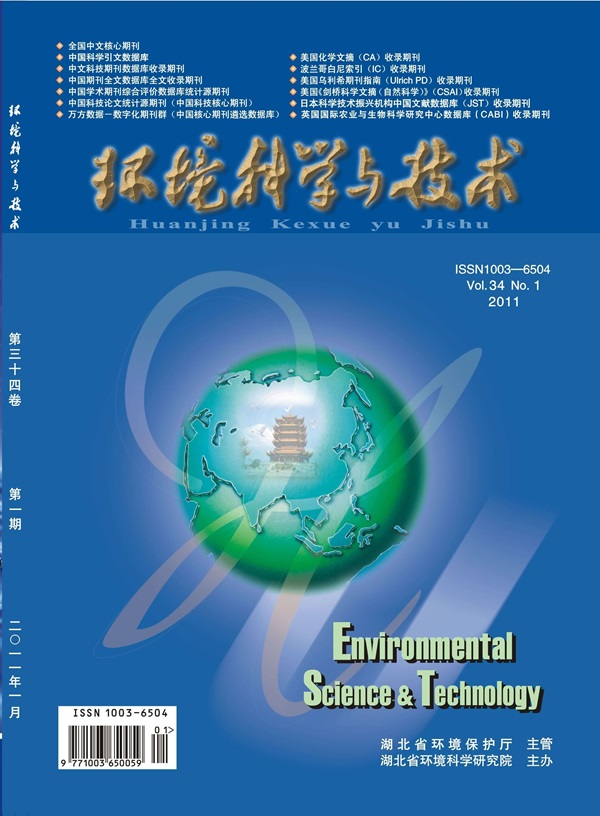
Environmental Science & Technology (ES&T) is a co-sponsored academic and technical magazine by the Hubei Provincial Environmental Protection Bureau and the Hubei Provincial Academy of Environmental Sciences.
Environmental Science & Technology (ES&T) holds the status of Chinese core journals, scientific papers source journals of China, Chinese Science Citation Database source journals, and Chinese Academic Journal Comprehensive Evaluation Database source journals. This publication focuses on the academic field of environmental protection, featuring articles related to environmental protection and technical advancements.



 京公网安备 11010802042870号
京ICP备2023020795号-1
京公网安备 11010802042870号
京ICP备2023020795号-1

 分享
分享
 求助内容:
求助内容: 应助结果提醒方式:
 扫码关注我们
