{"title":"Effects of sleep quality, anxiety, and depression on miscarriage among pregnant women: a multi-center prospective observational study.","authors":"Jinhua Pan, Xiaodan Zhu, Lei Xu, Linyu Zhou, Shanyu Yin, Xiajin Qi, Qiang Li, Jingqi Liu, Danlei Lu, Zihang Xu, Pingping Zhou, Jian Jiang, Xiaoyu Lin, Tian'an Jiang","doi":"10.1038/s41398-025-03363-x","DOIUrl":null,"url":null,"abstract":"<p><p>This study aims to uncover the mechanisms and quantitative dose response relationships among sleep quality, anxiety, depression and miscarriage, as well as develop a comprehensive predictive model for the miscarriage rate. In this study, 1058 pregnant women in mainland China were recruited. We utilized both univariate, multivariate analyses and sensitivity analysis to investigate the relationship between sleep quality, anxiety, depression, and miscarriage. Then, we used mediation analysis and directed acyclic graph to explore how anxiety and sleep quality mediate the relationship between depression and miscarriage. We employed restricted cubic spline (RCS) to examine the dose-response relationship between these variables and constructed a nomogram model for predicting the occurrence of miscarriages. During our investigation, 16.4% of the participant had a miscarriage. Our results showed a significant association between sleep quality, anxiety, depression and miscarriage both unadjusted and multivariable multinomial logistic regression. Dose-response relationships showed that the miscarriage rate slowly increases with increasing PSQI, SAS and SDS scores at first. However, when a certain threshold is reached, even slight increases in the scores will lead to a sharp rise in the miscarriage rate. Anxiety mediated the effect of depression on miscarriage by 44% and sleep quality had a similar mediation effect (16%). The quantitative dose response relationships between PSQI, SAS, SDS, and the miscarriage rate are all positive. In the impact of depression on the miscarriage rate, anxiety and sleep quality also play significant mediating roles. By revealing high-risk pregnant women, early intervention can be provided, aiming to reduce the miscarriage rate.</p>","PeriodicalId":23278,"journal":{"name":"Translational Psychiatry","volume":"15 1","pages":"131"},"PeriodicalIF":6.2000,"publicationDate":"2025-04-07","publicationTypes":"Journal Article","fieldsOfStudy":null,"isOpenAccess":false,"openAccessPdf":"https://www.ncbi.nlm.nih.gov/pmc/articles/PMC11977239/pdf/","citationCount":"0","resultStr":null,"platform":"Semanticscholar","paperid":null,"PeriodicalName":"Translational Psychiatry","FirstCategoryId":"3","ListUrlMain":"https://doi.org/10.1038/s41398-025-03363-x","RegionNum":1,"RegionCategory":"医学","ArticlePicture":[],"TitleCN":null,"AbstractTextCN":null,"PMCID":null,"EPubDate":"","PubModel":"","JCR":"Q1","JCRName":"PSYCHIATRY","Score":null,"Total":0}
引用次数: 0
Abstract
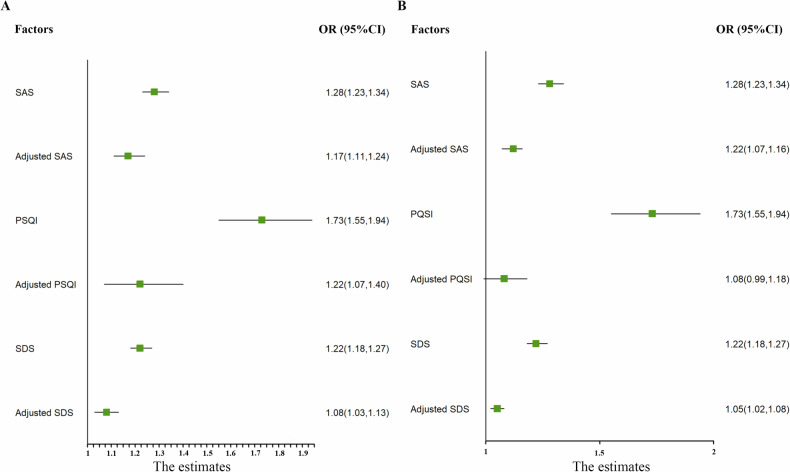
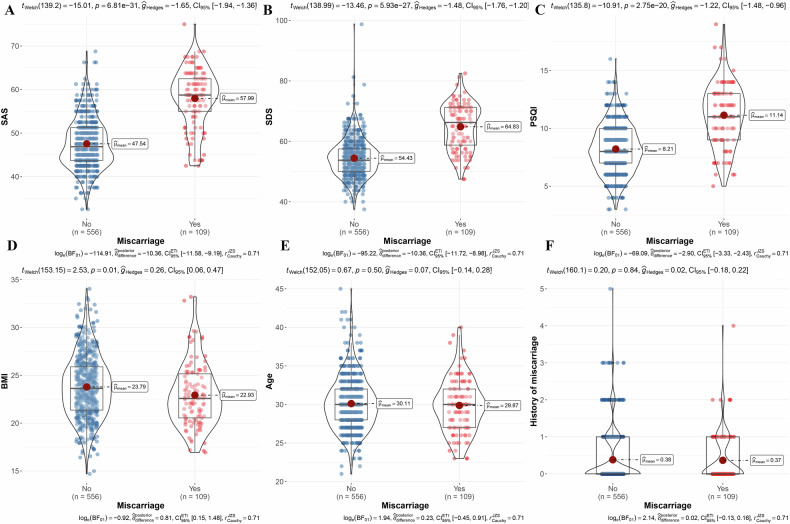
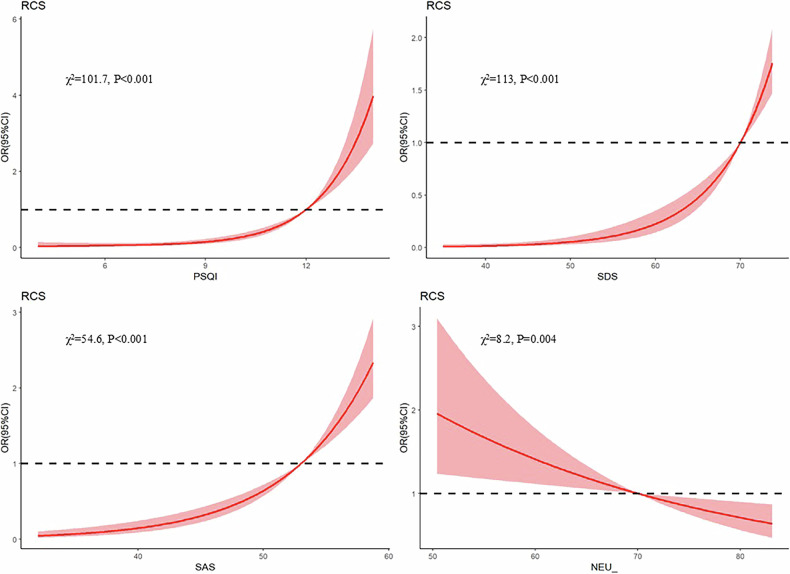
This study aims to uncover the mechanisms and quantitative dose response relationships among sleep quality, anxiety, depression and miscarriage, as well as develop a comprehensive predictive model for the miscarriage rate. In this study, 1058 pregnant women in mainland China were recruited. We utilized both univariate, multivariate analyses and sensitivity analysis to investigate the relationship between sleep quality, anxiety, depression, and miscarriage. Then, we used mediation analysis and directed acyclic graph to explore how anxiety and sleep quality mediate the relationship between depression and miscarriage. We employed restricted cubic spline (RCS) to examine the dose-response relationship between these variables and constructed a nomogram model for predicting the occurrence of miscarriages. During our investigation, 16.4% of the participant had a miscarriage. Our results showed a significant association between sleep quality, anxiety, depression and miscarriage both unadjusted and multivariable multinomial logistic regression. Dose-response relationships showed that the miscarriage rate slowly increases with increasing PSQI, SAS and SDS scores at first. However, when a certain threshold is reached, even slight increases in the scores will lead to a sharp rise in the miscarriage rate. Anxiety mediated the effect of depression on miscarriage by 44% and sleep quality had a similar mediation effect (16%). The quantitative dose response relationships between PSQI, SAS, SDS, and the miscarriage rate are all positive. In the impact of depression on the miscarriage rate, anxiety and sleep quality also play significant mediating roles. By revealing high-risk pregnant women, early intervention can be provided, aiming to reduce the miscarriage rate.
期刊介绍:
Psychiatry has suffered tremendously by the limited translational pipeline. Nobel laureate Julius Axelrod''s discovery in 1961 of monoamine reuptake by pre-synaptic neurons still forms the basis of contemporary antidepressant treatment. There is a grievous gap between the explosion of knowledge in neuroscience and conceptually novel treatments for our patients. Translational Psychiatry bridges this gap by fostering and highlighting the pathway from discovery to clinical applications, healthcare and global health. We view translation broadly as the full spectrum of work that marks the pathway from discovery to global health, inclusive. The steps of translation that are within the scope of Translational Psychiatry include (i) fundamental discovery, (ii) bench to bedside, (iii) bedside to clinical applications (clinical trials), (iv) translation to policy and health care guidelines, (v) assessment of health policy and usage, and (vi) global health. All areas of medical research, including — but not restricted to — molecular biology, genetics, pharmacology, imaging and epidemiology are welcome as they contribute to enhance the field of translational psychiatry.



 京公网安备 11010802042870号
京ICP备2023020795号-1
京公网安备 11010802042870号
京ICP备2023020795号-1

 分享
分享
 求助内容:
求助内容: 应助结果提醒方式:
 扫码关注我们
