Hao Luo , Dan Su , Shuzhe Yang , Yukun Li , Zhengxiang Shan , Mengting Zheng , Min Hong , Tiefeng Liu , Mi Lu
{"title":"Diversified battery recycling: Advances in recovery techniques and value-added functional applications","authors":"Hao Luo , Dan Su , Shuzhe Yang , Yukun Li , Zhengxiang Shan , Mengting Zheng , Min Hong , Tiefeng Liu , Mi Lu","doi":"10.1016/j.nanoen.2025.110973","DOIUrl":null,"url":null,"abstract":"<div><div>The recycling of spent batteries is essential for conserving rare elements and promoting environmental sustainability. The development of high-efficiency, cost-effective, and environmentally friend recycling methods for spent batteries remains a critical research priority. Herein, this review systematically analyzes the features of current recycling techniques and highlights the future technical directions for closed-loop battery recycling. Furthermore, broader applications of recycled batteries as high-value functional materials are explored and promoted beyond energy storage. Specifically, this review first examines the technical limitations of traditional metallurgical methods and then explores current developments and future directions in direct recycling techniques. In further, this review aims to advocate for exploring diverse high-value applications of recycled materials beyond closed-loop battery recycling, such as, the recovered transition metals and carbon-based materials show promising potential as catalysts, adsorbents, biomedical agents, and chemical reagents across various high value-added fields. Finally, this review analyzes challenges and provides a promising way on future recycling models and applications, aiming to achieve high-efficient, high-value, and environmentally friendly reuse of spent batteries for sustainable development.</div></div>","PeriodicalId":394,"journal":{"name":"Nano Energy","volume":"139 ","pages":"Article 110973"},"PeriodicalIF":17.1000,"publicationDate":"2025-06-15","publicationTypes":"Journal Article","fieldsOfStudy":null,"isOpenAccess":false,"openAccessPdf":"","citationCount":"0","resultStr":null,"platform":"Semanticscholar","paperid":null,"PeriodicalName":"Nano Energy","FirstCategoryId":"88","ListUrlMain":"https://www.sciencedirect.com/science/article/pii/S2211285525003325","RegionNum":1,"RegionCategory":"材料科学","ArticlePicture":[],"TitleCN":null,"AbstractTextCN":null,"PMCID":null,"EPubDate":"2025/4/9 0:00:00","PubModel":"Epub","JCR":"Q1","JCRName":"CHEMISTRY, PHYSICAL","Score":null,"Total":0}
引用次数: 0
Abstract
The recycling of spent batteries is essential for conserving rare elements and promoting environmental sustainability. The development of high-efficiency, cost-effective, and environmentally friend recycling methods for spent batteries remains a critical research priority. Herein, this review systematically analyzes the features of current recycling techniques and highlights the future technical directions for closed-loop battery recycling. Furthermore, broader applications of recycled batteries as high-value functional materials are explored and promoted beyond energy storage. Specifically, this review first examines the technical limitations of traditional metallurgical methods and then explores current developments and future directions in direct recycling techniques. In further, this review aims to advocate for exploring diverse high-value applications of recycled materials beyond closed-loop battery recycling, such as, the recovered transition metals and carbon-based materials show promising potential as catalysts, adsorbents, biomedical agents, and chemical reagents across various high value-added fields. Finally, this review analyzes challenges and provides a promising way on future recycling models and applications, aiming to achieve high-efficient, high-value, and environmentally friendly reuse of spent batteries for sustainable development.
期刊介绍:
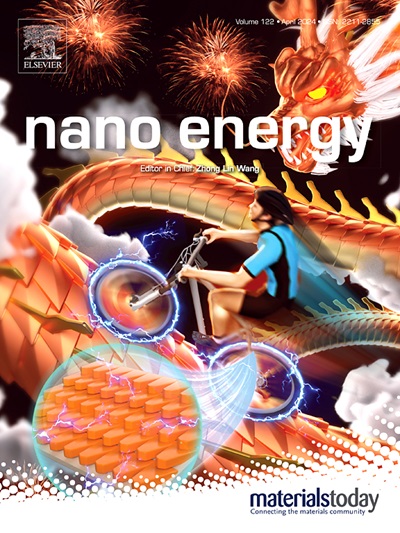
Nano Energy is a multidisciplinary, rapid-publication forum of original peer-reviewed contributions on the science and engineering of nanomaterials and nanodevices used in all forms of energy harvesting, conversion, storage, utilization and policy. Through its mixture of articles, reviews, communications, research news, and information on key developments, Nano Energy provides a comprehensive coverage of this exciting and dynamic field which joins nanoscience and nanotechnology with energy science. The journal is relevant to all those who are interested in nanomaterials solutions to the energy problem.
Nano Energy publishes original experimental and theoretical research on all aspects of energy-related research which utilizes nanomaterials and nanotechnology. Manuscripts of four types are considered: review articles which inform readers of the latest research and advances in energy science; rapid communications which feature exciting research breakthroughs in the field; full-length articles which report comprehensive research developments; and news and opinions which comment on topical issues or express views on the developments in related fields.




 京公网安备 11010802042870号
京ICP备2023020795号-1
京公网安备 11010802042870号
京ICP备2023020795号-1

 分享
分享
 求助内容:
求助内容: 应助结果提醒方式:
 扫码关注我们
