Katarzyna Roszek, Milena Jankowska, Agnieszka Bielicka and Marek Wiśniewski
{"title":"Nanoplastic paradox: unraveling the complex toxicity of nano-sized polyethylene†","authors":"Katarzyna Roszek, Milena Jankowska, Agnieszka Bielicka and Marek Wiśniewski","doi":"10.1039/D4EN01032A","DOIUrl":null,"url":null,"abstract":"<p >The increasing production of polyethylene has inevitably led to its accumulation in the environment, which gradually created a global environmental problem. Unfortunately, despite the huge attention paid to microplastics and the increasing research interest in nanoplastics in the environment, we are still far from fully understanding their true toxicity. The aim of the present work was to mimic the real oxidation process that forms nano-sized polyethylene (nPE) particles from larger waste, and to characterize the obtained nPE in terms of their chemical properties and cytotoxicity. Environmentally relevant nanoplastic was used to avoid the biased interpretations of its impact on cell viability <em>in vitro</em> and on the physiology of the American cockroach (<em>Periplaneta americana</em>) as an <em>in vivo</em> model. The results obtained might be at least surprising, as the toxicity of nPE in both <em>in vitro</em> and <em>in vivo</em> tests increased with the dilution of the solution. This apparent contradiction is explained by the unique physicochemical properties of the obtained nanomaterial and the increasing contribution of the polar layer of nanoparticles formed during oxidation. Thus, the presence of Lewis acidic sites and the polarity of the surface underlie the observed phenomena: (i) the ability of nanoplastic particles to agglomerate and aggregate, (ii) their influence on cell viability, (iii) the decrease in the membrane potential of neurons, and (iv) the changes in the behavior of highly resistant organisms such as <em>Periplaneta americana</em>.</p>","PeriodicalId":73,"journal":{"name":"Environmental Science: Nano","volume":" 5","pages":" 2846-2856"},"PeriodicalIF":5.1000,"publicationDate":"2025-04-09","publicationTypes":"Journal Article","fieldsOfStudy":null,"isOpenAccess":false,"openAccessPdf":"","citationCount":"0","resultStr":null,"platform":"Semanticscholar","paperid":null,"PeriodicalName":"Environmental Science: Nano","FirstCategoryId":"6","ListUrlMain":"https://pubs.rsc.org/en/content/articlelanding/2025/en/d4en01032a","RegionNum":2,"RegionCategory":"环境科学与生态学","ArticlePicture":[],"TitleCN":null,"AbstractTextCN":null,"PMCID":null,"EPubDate":"","PubModel":"","JCR":"Q1","JCRName":"CHEMISTRY, MULTIDISCIPLINARY","Score":null,"Total":0}
引用次数: 0
Abstract
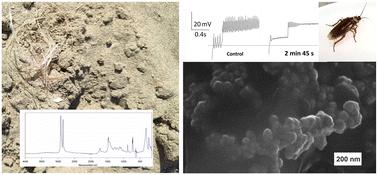
The increasing production of polyethylene has inevitably led to its accumulation in the environment, which gradually created a global environmental problem. Unfortunately, despite the huge attention paid to microplastics and the increasing research interest in nanoplastics in the environment, we are still far from fully understanding their true toxicity. The aim of the present work was to mimic the real oxidation process that forms nano-sized polyethylene (nPE) particles from larger waste, and to characterize the obtained nPE in terms of their chemical properties and cytotoxicity. Environmentally relevant nanoplastic was used to avoid the biased interpretations of its impact on cell viability in vitro and on the physiology of the American cockroach (Periplaneta americana) as an in vivo model. The results obtained might be at least surprising, as the toxicity of nPE in both in vitro and in vivo tests increased with the dilution of the solution. This apparent contradiction is explained by the unique physicochemical properties of the obtained nanomaterial and the increasing contribution of the polar layer of nanoparticles formed during oxidation. Thus, the presence of Lewis acidic sites and the polarity of the surface underlie the observed phenomena: (i) the ability of nanoplastic particles to agglomerate and aggregate, (ii) their influence on cell viability, (iii) the decrease in the membrane potential of neurons, and (iv) the changes in the behavior of highly resistant organisms such as Periplaneta americana.
期刊介绍:
Environmental Science: Nano serves as a comprehensive and high-impact peer-reviewed source of information on the design and demonstration of engineered nanomaterials for environment-based applications. It also covers the interactions between engineered, natural, and incidental nanomaterials with biological and environmental systems. This scope includes, but is not limited to, the following topic areas:
Novel nanomaterial-based applications for water, air, soil, food, and energy sustainability
Nanomaterial interactions with biological systems and nanotoxicology
Environmental fate, reactivity, and transformations of nanoscale materials
Nanoscale processes in the environment
Sustainable nanotechnology including rational nanomaterial design, life cycle assessment, risk/benefit analysis



 京公网安备 11010802042870号
京ICP备2023020795号-1
京公网安备 11010802042870号
京ICP备2023020795号-1

 分享
分享
 求助内容:
求助内容: 应助结果提醒方式:
 扫码关注我们
