Daniel Villegas , Constanza Sepúlveda-Hernández , María Jesús Salamé , María Josefina Poupin
{"title":"Enhancing Growth and Salinity Stress Tolerance in Arabidopsis with Low-Dose Gamma Radiation Priming through a Hormesis Approach","authors":"Daniel Villegas , Constanza Sepúlveda-Hernández , María Jesús Salamé , María Josefina Poupin","doi":"10.1016/j.stress.2025.100834","DOIUrl":null,"url":null,"abstract":"<div><div>Hormesis describes a biphasic response where low-dose exposure triggers positive physiological effects, while higher doses become detrimental. Priming, based on the concept of hormesis, suggests that low doses of a stressor induce beneficial adaptive responses, improving resilience to subsequent, more intense stressors in plants. Ionizing radiation is an interesting method for inducing priming (radio-priming) due to its potential to trigger molecular, biochemical, and physiological responses. Yet, the effects of varying radiation doses, applied at different developmental stages or to distinct plant materials, remain poorly understood, as do the long-term impacts on plant performance. This study evaluated the short- and long-term effects of gamma radiation on <em>Arabidopsis thaliana</em> growth and salinity stress response. Various plant materials were irradiated with increasing gamma doses (5–200 Gray, Gy), and subsequently exposed to salinity stress. Changes in growth, biochemical parameters, gene regulation, and fitness were compared in the different treatments. Low-dose gamma radiation (5–10 Gy) enhanced growth in non-saline and mild salinity conditions, increasing rosette area by 40% in soaked seeds. The 5 Gy treatment also enhanced root growth under severe salinity stress. Conversely, doses exceeding 40 Gy were generally detrimental. Radio-primed plants under salinity stress showed rapid upregulation of <em>LOX2, GLYI7, NHX2</em>, and <em>SOS1</em>. Fitness analysis revealed that the 5 Gy-treated plants produced more seeds per silique under saline conditions. These results confirm that low-dose gamma radiation enhances salinity tolerance in <em>A. thaliana</em>, aligning with the hormesis hypothesis by promoting growth and activating stress-response genes without compromising plant fitness.</div></div>","PeriodicalId":34736,"journal":{"name":"Plant Stress","volume":"16 ","pages":"Article 100834"},"PeriodicalIF":6.8000,"publicationDate":"2025-03-31","publicationTypes":"Journal Article","fieldsOfStudy":null,"isOpenAccess":false,"openAccessPdf":"","citationCount":"0","resultStr":null,"platform":"Semanticscholar","paperid":null,"PeriodicalName":"Plant Stress","FirstCategoryId":"1085","ListUrlMain":"https://www.sciencedirect.com/science/article/pii/S2667064X25000995","RegionNum":0,"RegionCategory":null,"ArticlePicture":[],"TitleCN":null,"AbstractTextCN":null,"PMCID":null,"EPubDate":"","PubModel":"","JCR":"Q1","JCRName":"PLANT SCIENCES","Score":null,"Total":0}
引用次数: 0
Abstract
Hormesis describes a biphasic response where low-dose exposure triggers positive physiological effects, while higher doses become detrimental. Priming, based on the concept of hormesis, suggests that low doses of a stressor induce beneficial adaptive responses, improving resilience to subsequent, more intense stressors in plants. Ionizing radiation is an interesting method for inducing priming (radio-priming) due to its potential to trigger molecular, biochemical, and physiological responses. Yet, the effects of varying radiation doses, applied at different developmental stages or to distinct plant materials, remain poorly understood, as do the long-term impacts on plant performance. This study evaluated the short- and long-term effects of gamma radiation on Arabidopsis thaliana growth and salinity stress response. Various plant materials were irradiated with increasing gamma doses (5–200 Gray, Gy), and subsequently exposed to salinity stress. Changes in growth, biochemical parameters, gene regulation, and fitness were compared in the different treatments. Low-dose gamma radiation (5–10 Gy) enhanced growth in non-saline and mild salinity conditions, increasing rosette area by 40% in soaked seeds. The 5 Gy treatment also enhanced root growth under severe salinity stress. Conversely, doses exceeding 40 Gy were generally detrimental. Radio-primed plants under salinity stress showed rapid upregulation of LOX2, GLYI7, NHX2, and SOS1. Fitness analysis revealed that the 5 Gy-treated plants produced more seeds per silique under saline conditions. These results confirm that low-dose gamma radiation enhances salinity tolerance in A. thaliana, aligning with the hormesis hypothesis by promoting growth and activating stress-response genes without compromising plant fitness.
期刊介绍:
The journal Plant Stress deals with plant (or other photoautotrophs, such as algae, cyanobacteria and lichens) responses to abiotic and biotic stress factors that can result in limited growth and productivity. Such responses can be analyzed and described at a physiological, biochemical and molecular level. Experimental approaches/technologies aiming to improve growth and productivity with a potential for downstream validation under stress conditions will also be considered. Both fundamental and applied research manuscripts are welcome, provided that clear mechanistic hypotheses are made and descriptive approaches are avoided. In addition, high-quality review articles will also be considered, provided they follow a critical approach and stimulate thought for future research avenues.
Plant Stress welcomes high-quality manuscripts related (but not limited) to interactions between plants and:
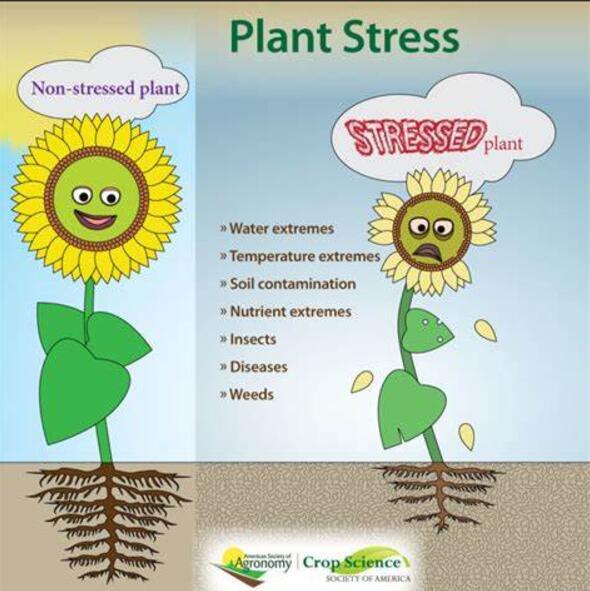
Lack of water (drought) and excess (flooding),
Salinity stress,
Elevated temperature and/or low temperature (chilling and freezing),
Hypoxia and/or anoxia,
Mineral nutrient excess and/or deficiency,
Heavy metals and/or metalloids,
Plant priming (chemical, biological, physiological, nanomaterial, biostimulant) approaches for improved stress protection,
Viral, phytoplasma, bacterial and fungal plant-pathogen interactions.
The journal welcomes basic and applied research articles, as well as review articles and short communications. All submitted manuscripts will be subject to a thorough peer-reviewing process.




 京公网安备 11010802042870号
京ICP备2023020795号-1
京公网安备 11010802042870号
京ICP备2023020795号-1

 分享
分享
 求助内容:
求助内容: 应助结果提醒方式:
 扫码关注我们
