{"title":"Optimal rooting substrates and hormonal regulation via a multi-omics analysis during Vitis davidii cutting rooting","authors":"Ting Zheng , Lingzhu Wei , Jiang Xiang , Weiwei Zheng , Jiang Wu , Jianhui Cheng","doi":"10.1016/j.stress.2025.100851","DOIUrl":null,"url":null,"abstract":"<div><div>Spine grapes (<em>Vitis davidii</em> Foex), a typical wild grape species native to China, is primarily propagated through cutting. However, successful rooting remains a significant challenge in production. Thus, one aim of this study is to identify an optimal substrate for rooting of <em>V.davidii</em> cuttings and explore the hormonal regulation under the rooting process. Among 13 substrates tested, T12 (perlite) produced the highest rooting rate (90%) and a 100% callus formation rate, followed by T1 (rice husk biochar + coarse river sand 1:1) and T2 (rice husk biochar + perlite 1:1). Rooting materials with large, hard particles, such as perlite and coarse river sand, improved rooting. Electron microscopy showed that <em>V. davidii</em> exhibited mixed-type rooting, and there was no direct relationship between callus formation and rooting success. Transcriptome and metabolome analyses indicated that significant differences in auxin and cytokinin were observed between P1 vs P2, suggesting their important roles in bud germination and leaf expansion. Salicylic acid (SA) was essential for callus and root formation, while jasmonic acid (JA) and gibberellins (GA) were more closely associated with direct rooting of cuttings rather than callus formation. Integrated Gene Ontology (GO) and KEGG analyses screened 17 crucial hormone regulatory transcription factors during rooting in cuttings. Among these, ARR18 and RR26 were mainly expressed at the P1 stage, while TIFY6B was predominant in P2, and GAI1 was highly active in the P1 and P4 stages. Remarkably, TIFY10A expression was 2.93 times higher in P3 and P4 compared to P1 and P2 and was highly correlated with various hormones. TIFY10A expression increased sharply under exogenous JA treatment and exhibited tissue-specificity. These findings suggest an important role of TIFY10A in the rooting process of grape <em>V. davidii</em> cuttings, particularly in callus and adventitious root formation.</div></div>","PeriodicalId":34736,"journal":{"name":"Plant Stress","volume":"16 ","pages":"Article 100851"},"PeriodicalIF":6.8000,"publicationDate":"2025-06-01","publicationTypes":"Journal Article","fieldsOfStudy":null,"isOpenAccess":false,"openAccessPdf":"","citationCount":"0","resultStr":null,"platform":"Semanticscholar","paperid":null,"PeriodicalName":"Plant Stress","FirstCategoryId":"1085","ListUrlMain":"https://www.sciencedirect.com/science/article/pii/S2667064X25001162","RegionNum":0,"RegionCategory":null,"ArticlePicture":[],"TitleCN":null,"AbstractTextCN":null,"PMCID":null,"EPubDate":"2025/4/8 0:00:00","PubModel":"Epub","JCR":"Q1","JCRName":"PLANT SCIENCES","Score":null,"Total":0}
引用次数: 0
Abstract
Spine grapes (Vitis davidii Foex), a typical wild grape species native to China, is primarily propagated through cutting. However, successful rooting remains a significant challenge in production. Thus, one aim of this study is to identify an optimal substrate for rooting of V.davidii cuttings and explore the hormonal regulation under the rooting process. Among 13 substrates tested, T12 (perlite) produced the highest rooting rate (90%) and a 100% callus formation rate, followed by T1 (rice husk biochar + coarse river sand 1:1) and T2 (rice husk biochar + perlite 1:1). Rooting materials with large, hard particles, such as perlite and coarse river sand, improved rooting. Electron microscopy showed that V. davidii exhibited mixed-type rooting, and there was no direct relationship between callus formation and rooting success. Transcriptome and metabolome analyses indicated that significant differences in auxin and cytokinin were observed between P1 vs P2, suggesting their important roles in bud germination and leaf expansion. Salicylic acid (SA) was essential for callus and root formation, while jasmonic acid (JA) and gibberellins (GA) were more closely associated with direct rooting of cuttings rather than callus formation. Integrated Gene Ontology (GO) and KEGG analyses screened 17 crucial hormone regulatory transcription factors during rooting in cuttings. Among these, ARR18 and RR26 were mainly expressed at the P1 stage, while TIFY6B was predominant in P2, and GAI1 was highly active in the P1 and P4 stages. Remarkably, TIFY10A expression was 2.93 times higher in P3 and P4 compared to P1 and P2 and was highly correlated with various hormones. TIFY10A expression increased sharply under exogenous JA treatment and exhibited tissue-specificity. These findings suggest an important role of TIFY10A in the rooting process of grape V. davidii cuttings, particularly in callus and adventitious root formation.
期刊介绍:
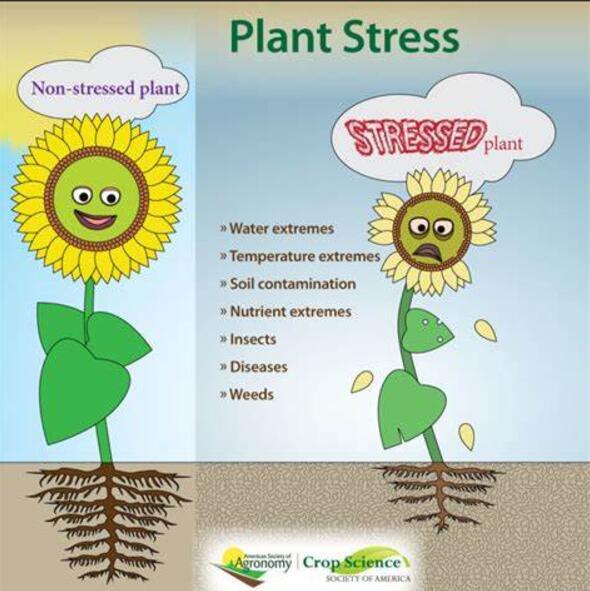
The journal Plant Stress deals with plant (or other photoautotrophs, such as algae, cyanobacteria and lichens) responses to abiotic and biotic stress factors that can result in limited growth and productivity. Such responses can be analyzed and described at a physiological, biochemical and molecular level. Experimental approaches/technologies aiming to improve growth and productivity with a potential for downstream validation under stress conditions will also be considered. Both fundamental and applied research manuscripts are welcome, provided that clear mechanistic hypotheses are made and descriptive approaches are avoided. In addition, high-quality review articles will also be considered, provided they follow a critical approach and stimulate thought for future research avenues.
Plant Stress welcomes high-quality manuscripts related (but not limited) to interactions between plants and:
Lack of water (drought) and excess (flooding),
Salinity stress,
Elevated temperature and/or low temperature (chilling and freezing),
Hypoxia and/or anoxia,
Mineral nutrient excess and/or deficiency,
Heavy metals and/or metalloids,
Plant priming (chemical, biological, physiological, nanomaterial, biostimulant) approaches for improved stress protection,
Viral, phytoplasma, bacterial and fungal plant-pathogen interactions.
The journal welcomes basic and applied research articles, as well as review articles and short communications. All submitted manuscripts will be subject to a thorough peer-reviewing process.



 京公网安备 11010802042870号
京ICP备2023020795号-1
京公网安备 11010802042870号
京ICP备2023020795号-1

 分享
分享
 求助内容:
求助内容: 应助结果提醒方式:
 扫码关注我们
