{"title":"Method development for the determination of phosphine residues in foods.","authors":"Shu-Wei Lin, Yu-Ting Liu, Ya-Chun Chou, Yu-Ching Hung, Shu-Han Chang, Ya-Min Kao, Su-Hsiang Tseng, Der-Yuan Wang","doi":"10.38212/2224-6614.3521","DOIUrl":null,"url":null,"abstract":"<p><p>Phosphine (PH<sub>3</sub>) is a fumigant used for pest control of stored products and foods. In Taiwan, PH<sub>3</sub> has the maximum residue level (MRL) in 14 foods, including dried fruits, vegetables, spices, nuts, crops, roots, and tuber vegetables. In this study, gas chromatography/mass spectrometry coupled with a headspace sampler (HS-GC/MS) was used to determine the PH<sub>3</sub> content in foods. The stability of the PH<sub>3</sub> standard was evaluated either directly using the gas standard or indirectly using zinc phosphide (Zn<sub>3</sub>P<sub>2</sub>) with an acid. The optimal conditions for the headspace agitator were determined to be an incubation temperature of 65 °C, rotation speed of 750 rpm, and shaking time of 20 min. The PH<sub>3</sub> residue in the sample was sufficiently released when 15 mL of 5% sulfuric acid was added. The PH<sub>3</sub> gas standard was applicable for quantification because the correlation coefficients of the standard and matrix-matched calibration curves were greater than 0.99, and the coefficient of variation of the repeatability test was less than 20%. The signal-to-noise ratio was greater than 3 when PH<sub>3</sub> was fortified into the testing matrix at 5 ng/g; therefore, the limit of quantification of PH<sub>3</sub> was determined to be 0.005 ppm. Because of the significant matrix effects and difficulty in obtaining representative matrices, the developed method referred to the EU Reference Laboratory-single residue method to estimate the PH<sub>3</sub> content in the sample using a standard curve and the PH<sub>3</sub> content was accurately quantified using the standard addition method. The proposed method was used to analyze 44 real samples obtained from markets and food factories, including various food commodities. Among these samples, three showed detectable PH<sub>3</sub> residues, with concentrations ranging from 0.006 to 0.066 ppm, which complies with the MRLs in Taiwan. This study successfully utilized HS-GC/MS with a gaseous PH<sub>3</sub> reference standard to develop a facile sample preparation method for detecting PH<sub>3</sub> in foods.</p>","PeriodicalId":358,"journal":{"name":"Journal of Food and Drug Analysis","volume":"33 1","pages":"13-20"},"PeriodicalIF":3.3000,"publicationDate":"2025-03-31","publicationTypes":"Journal Article","fieldsOfStudy":null,"isOpenAccess":false,"openAccessPdf":"https://www.ncbi.nlm.nih.gov/pmc/articles/PMC12039535/pdf/","citationCount":"0","resultStr":null,"platform":"Semanticscholar","paperid":null,"PeriodicalName":"Journal of Food and Drug Analysis","FirstCategoryId":"97","ListUrlMain":"https://doi.org/10.38212/2224-6614.3521","RegionNum":3,"RegionCategory":"农林科学","ArticlePicture":[],"TitleCN":null,"AbstractTextCN":null,"PMCID":null,"EPubDate":"","PubModel":"","JCR":"Q2","JCRName":"FOOD SCIENCE & TECHNOLOGY","Score":null,"Total":0}
引用次数: 0
Abstract
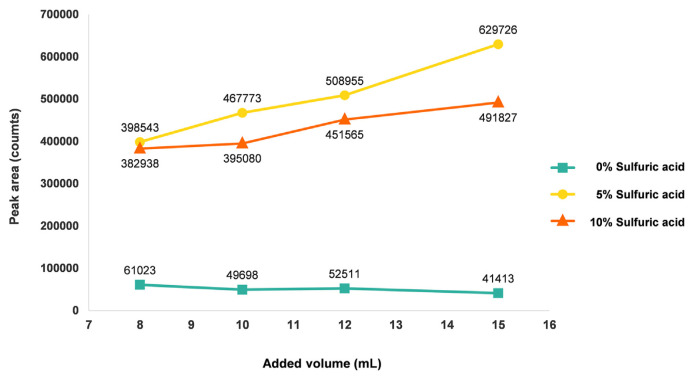
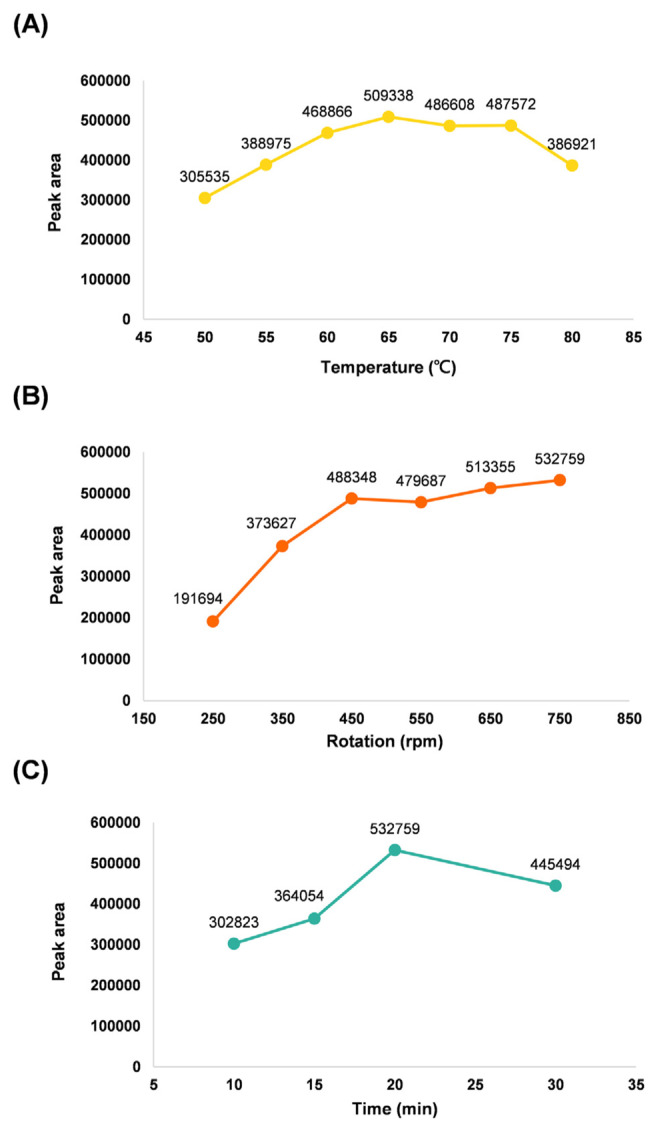
Phosphine (PH3) is a fumigant used for pest control of stored products and foods. In Taiwan, PH3 has the maximum residue level (MRL) in 14 foods, including dried fruits, vegetables, spices, nuts, crops, roots, and tuber vegetables. In this study, gas chromatography/mass spectrometry coupled with a headspace sampler (HS-GC/MS) was used to determine the PH3 content in foods. The stability of the PH3 standard was evaluated either directly using the gas standard or indirectly using zinc phosphide (Zn3P2) with an acid. The optimal conditions for the headspace agitator were determined to be an incubation temperature of 65 °C, rotation speed of 750 rpm, and shaking time of 20 min. The PH3 residue in the sample was sufficiently released when 15 mL of 5% sulfuric acid was added. The PH3 gas standard was applicable for quantification because the correlation coefficients of the standard and matrix-matched calibration curves were greater than 0.99, and the coefficient of variation of the repeatability test was less than 20%. The signal-to-noise ratio was greater than 3 when PH3 was fortified into the testing matrix at 5 ng/g; therefore, the limit of quantification of PH3 was determined to be 0.005 ppm. Because of the significant matrix effects and difficulty in obtaining representative matrices, the developed method referred to the EU Reference Laboratory-single residue method to estimate the PH3 content in the sample using a standard curve and the PH3 content was accurately quantified using the standard addition method. The proposed method was used to analyze 44 real samples obtained from markets and food factories, including various food commodities. Among these samples, three showed detectable PH3 residues, with concentrations ranging from 0.006 to 0.066 ppm, which complies with the MRLs in Taiwan. This study successfully utilized HS-GC/MS with a gaseous PH3 reference standard to develop a facile sample preparation method for detecting PH3 in foods.
期刊介绍:
The journal aims to provide an international platform for scientists, researchers and academicians to promote, share and discuss new findings, current issues, and developments in the different areas of food and drug analysis.
The scope of the Journal includes analytical methodologies and biological activities in relation to food, drugs, cosmetics and traditional Chinese medicine, as well as related disciplines of topical interest to public health professionals.




 京公网安备 11010802042870号
京ICP备2023020795号-1
京公网安备 11010802042870号
京ICP备2023020795号-1

 分享
分享

 求助内容:
求助内容: 应助结果提醒方式:
 扫码关注我们
