Gastrocnemius medialis tendon properties do not differ between male academy soccer players and control participants but are related to jump performance.
David C Robshaw, Conall F Murtagh, Barry Drust, Robert M Erskine
{"title":"Gastrocnemius medialis tendon properties do not differ between male academy soccer players and control participants but are related to jump performance.","authors":"David C Robshaw, Conall F Murtagh, Barry Drust, Robert M Erskine","doi":"10.1007/s00421-025-05763-9","DOIUrl":null,"url":null,"abstract":"<p><p>The aims of this study were to investigate (i) differences in gastrocnemius medialis (GM) tendon properties between adult male soccer players from an English category one academy (ASP) and male control participants (CON); and (ii) the relationships between GM tendon properties and jump performance. The GM tendon force-elongation relationship was measured in 13 ASP (mean ± SD height 1.81 ± 0.07 m; mass 73.6 ± 5.4 kg; age 18.8 ± 1.2 years) and 11 CON (1.74 ± 0.05 m; 71.2 ± 7.6 kg; 22.3 ± 3.0 years) using a combination of dynamometry, ultrasonography and electromyography. Participants also performed a series of unilateral and bilateral countermovement jumps (CMJ) and bilateral drop jumps on a force platform. GM tendon properties did not differ between groups but maximal tendon elongation correlated inversely with unilateral vertical CMJ peak power (r = -0.427, P = 0.037). Furthermore, leg stiffness and peak force during a drop jump correlated with GM tendon stiffness (r = 0.431-0.462, P = 0.035-0.023), maximal tendon force and Achilles tendon CSA (r = 0.409-0.737, P ≤ 0.047). These results suggest that GM tendon properties do not differ between ASP and CON but a stiffer GM tendon may facilitate the production of larger forces to increase power output during a unilateral vertical CMJ. Furthermore, higher force and stiffness outputs are achieved during a drop jump by stronger individuals with larger and stiffer GM tendons, which could lead to greater pitch-based performance and may represent a protective mechanism to shield the tendon against injury.</p>","PeriodicalId":12005,"journal":{"name":"European Journal of Applied Physiology","volume":" ","pages":"2597-2609"},"PeriodicalIF":2.7000,"publicationDate":"2025-09-01","publicationTypes":"Journal Article","fieldsOfStudy":null,"isOpenAccess":false,"openAccessPdf":"https://www.ncbi.nlm.nih.gov/pmc/articles/PMC12423170/pdf/","citationCount":"0","resultStr":null,"platform":"Semanticscholar","paperid":null,"PeriodicalName":"European Journal of Applied Physiology","FirstCategoryId":"3","ListUrlMain":"https://doi.org/10.1007/s00421-025-05763-9","RegionNum":3,"RegionCategory":"医学","ArticlePicture":[],"TitleCN":null,"AbstractTextCN":null,"PMCID":null,"EPubDate":"2025/4/8 0:00:00","PubModel":"Epub","JCR":"Q2","JCRName":"PHYSIOLOGY","Score":null,"Total":0}
引用次数: 0
Abstract
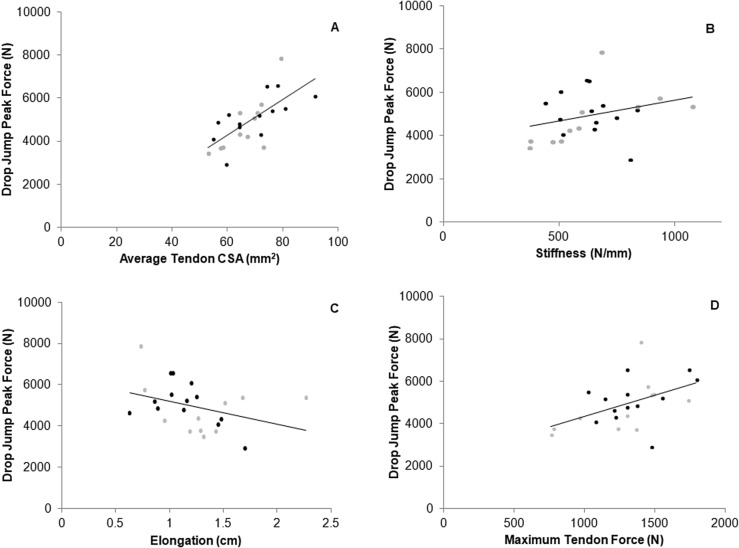
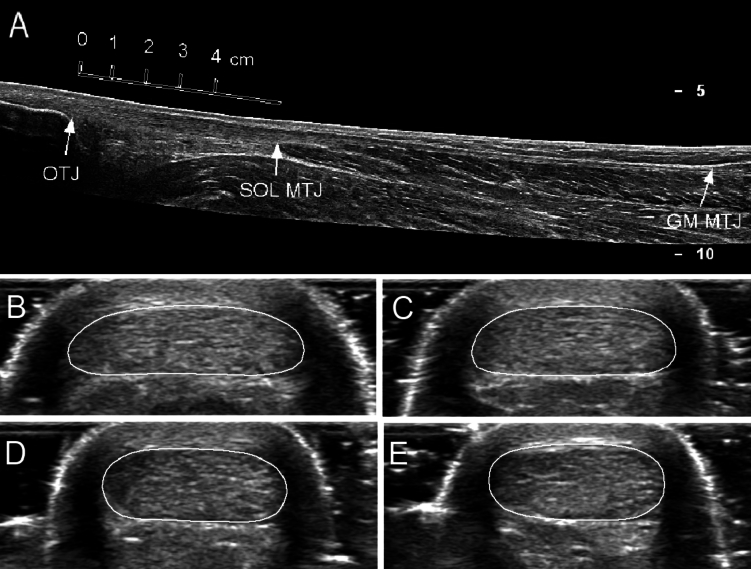
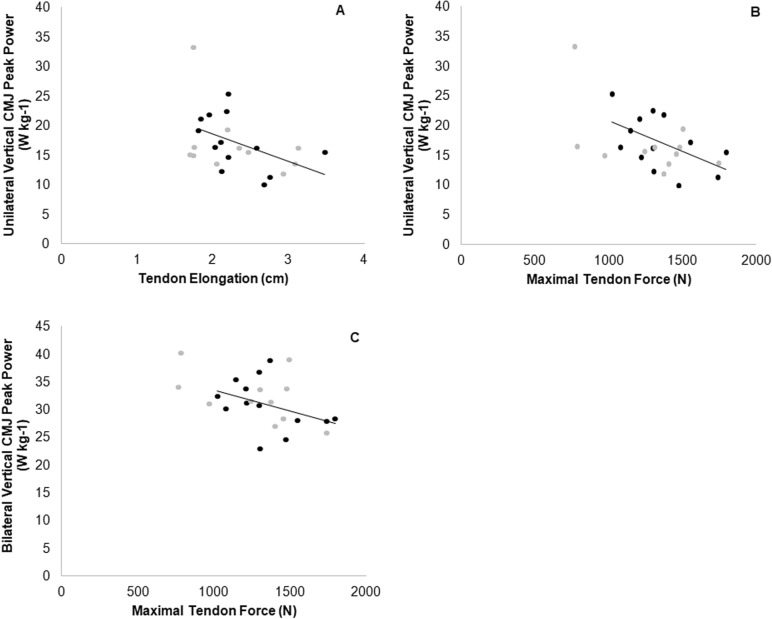
The aims of this study were to investigate (i) differences in gastrocnemius medialis (GM) tendon properties between adult male soccer players from an English category one academy (ASP) and male control participants (CON); and (ii) the relationships between GM tendon properties and jump performance. The GM tendon force-elongation relationship was measured in 13 ASP (mean ± SD height 1.81 ± 0.07 m; mass 73.6 ± 5.4 kg; age 18.8 ± 1.2 years) and 11 CON (1.74 ± 0.05 m; 71.2 ± 7.6 kg; 22.3 ± 3.0 years) using a combination of dynamometry, ultrasonography and electromyography. Participants also performed a series of unilateral and bilateral countermovement jumps (CMJ) and bilateral drop jumps on a force platform. GM tendon properties did not differ between groups but maximal tendon elongation correlated inversely with unilateral vertical CMJ peak power (r = -0.427, P = 0.037). Furthermore, leg stiffness and peak force during a drop jump correlated with GM tendon stiffness (r = 0.431-0.462, P = 0.035-0.023), maximal tendon force and Achilles tendon CSA (r = 0.409-0.737, P ≤ 0.047). These results suggest that GM tendon properties do not differ between ASP and CON but a stiffer GM tendon may facilitate the production of larger forces to increase power output during a unilateral vertical CMJ. Furthermore, higher force and stiffness outputs are achieved during a drop jump by stronger individuals with larger and stiffer GM tendons, which could lead to greater pitch-based performance and may represent a protective mechanism to shield the tendon against injury.
期刊介绍:
The European Journal of Applied Physiology (EJAP) aims to promote mechanistic advances in human integrative and translational physiology. Physiology is viewed broadly, having overlapping context with related disciplines such as biomechanics, biochemistry, endocrinology, ergonomics, immunology, motor control, and nutrition. EJAP welcomes studies dealing with physical exercise, training and performance. Studies addressing physiological mechanisms are preferred over descriptive studies. Papers dealing with animal models or pathophysiological conditions are not excluded from consideration, but must be clearly relevant to human physiology.



 京公网安备 11010802042870号
京ICP备2023020795号-1
京公网安备 11010802042870号
京ICP备2023020795号-1

 分享
分享
 求助内容:
求助内容: 应助结果提醒方式:
 扫码关注我们
