Comparison of efficacy and safety of mirabegron and vibegron in the treatment of Overactive Bladder (OAB) in older women: A systematic review and meta-analysis.
{"title":"Comparison of efficacy and safety of mirabegron and vibegron in the treatment of Overactive Bladder (OAB) in older women: A systematic review and meta-analysis.","authors":"Jiankun Zhang, Junpeng Chi, Keyuan Lou, Junjie Zhao, Feng Gao, Yuanshan Cui","doi":"10.1371/journal.pone.0317550","DOIUrl":null,"url":null,"abstract":"<p><strong>Background: </strong>After the introduction of anticholinergic drugs for the treatment of overactive bladder (OAB), the discovery of β-adrenergic agonists has helped reduce the side effects associated with the former. Currently, the two available medications, mirabegron and vibegron, are β-adrenergic agonists. However, clinical practitioners are still faced with the dilemma of which drug to choose.</p><p><strong>Objective: </strong>To analyze and compare the efficacy and adverse effects of the two medications.</p><p><strong>Methods: </strong>A literature search was conducted to identify randomized controlled trials using mirabegron and vibegron for the treatment of OAB. Databases such as PubMed, Web of Science, Cochrane Library, and Embase were searched. The search cutoff date was July 25 2024. Data extraction and quality assessment were performed using standardized methods. A meta-analysis was then conducted using RevMan software and a random-effects model, with studies weighted according to sample size and variance. Heterogeneity was assessed using the I² statistic. All statistical analyses were performed using RevMan, and results were presented as effect sizes (e.g., mean difference or risk ratio).</p><p><strong>Results: </strong>Three randomized controlled trials compared the safety and efficacy of mirabegron and vibegron head-to-head, involving 368 patients. The trials, each lasting 8 or 12 weeks. The trials compared the changes in various indices of the OABSS (Overactive Bladder Symptom Score) between the two drugs. The statistical methods used in the analysis included Mean Difference (MD), 95% Confidence Interval (CI), p-value, and I² statistic. For OABSS: MD = 0.38, 95% CI = - 0.19 to 0.95, p = 0.28, I² = 21%; for Q1: MD = 0.08, 95% CI = - 0.01 to 0.26, p = 0.31, I² = 4%; for Q2: MD = 0.08, 95% CI = - 0.21 to 0.37, p = 0.67, I² = 0%; for Q3: MD = 0.05, 95% CI = - 0.45 to 0.56, p = 0.90, I² = 0%; for Q4: MD = - 0.21, 95% CI = - 0.68 to 0.27, p = 0.35, I² = 0%. The relative risk (RR) of adverse effects between the two drugs was: RR = 0.87, 95% CI = 0.57 to 1.34, p = 0.27, I² = 25%; for constipation: RR = 0.73, 95% CI = 0.37 to 1.43, p = 0.27, I² = 25%; and for dry mouth: RR = 0.98, 95% CI = 0.42 to 2.30, p = 0.78, I² = 0%.</p><p><strong>Conclusion: </strong>There appears to be no statistically significant difference in efficacy and safety between mirabegron and vibegron for OAB patients. Further high-quality prospective studies are needed to confirm these results.</p>","PeriodicalId":20189,"journal":{"name":"PLoS ONE","volume":"20 4","pages":"e0317550"},"PeriodicalIF":2.6000,"publicationDate":"2025-04-08","publicationTypes":"Journal Article","fieldsOfStudy":null,"isOpenAccess":false,"openAccessPdf":"https://www.ncbi.nlm.nih.gov/pmc/articles/PMC11977964/pdf/","citationCount":"0","resultStr":null,"platform":"Semanticscholar","paperid":null,"PeriodicalName":"PLoS ONE","FirstCategoryId":"103","ListUrlMain":"https://doi.org/10.1371/journal.pone.0317550","RegionNum":3,"RegionCategory":"综合性期刊","ArticlePicture":[],"TitleCN":null,"AbstractTextCN":null,"PMCID":null,"EPubDate":"2025/1/1 0:00:00","PubModel":"eCollection","JCR":"Q1","JCRName":"MULTIDISCIPLINARY SCIENCES","Score":null,"Total":0}
引用次数: 0
Abstract
Background: After the introduction of anticholinergic drugs for the treatment of overactive bladder (OAB), the discovery of β-adrenergic agonists has helped reduce the side effects associated with the former. Currently, the two available medications, mirabegron and vibegron, are β-adrenergic agonists. However, clinical practitioners are still faced with the dilemma of which drug to choose.
Objective: To analyze and compare the efficacy and adverse effects of the two medications.
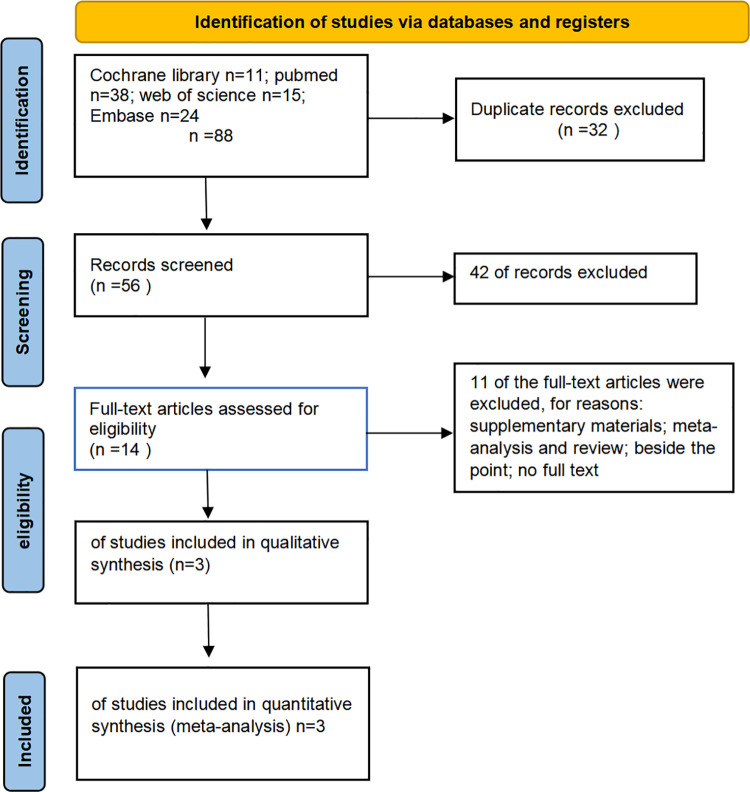
Methods: A literature search was conducted to identify randomized controlled trials using mirabegron and vibegron for the treatment of OAB. Databases such as PubMed, Web of Science, Cochrane Library, and Embase were searched. The search cutoff date was July 25 2024. Data extraction and quality assessment were performed using standardized methods. A meta-analysis was then conducted using RevMan software and a random-effects model, with studies weighted according to sample size and variance. Heterogeneity was assessed using the I² statistic. All statistical analyses were performed using RevMan, and results were presented as effect sizes (e.g., mean difference or risk ratio).
Results: Three randomized controlled trials compared the safety and efficacy of mirabegron and vibegron head-to-head, involving 368 patients. The trials, each lasting 8 or 12 weeks. The trials compared the changes in various indices of the OABSS (Overactive Bladder Symptom Score) between the two drugs. The statistical methods used in the analysis included Mean Difference (MD), 95% Confidence Interval (CI), p-value, and I² statistic. For OABSS: MD = 0.38, 95% CI = - 0.19 to 0.95, p = 0.28, I² = 21%; for Q1: MD = 0.08, 95% CI = - 0.01 to 0.26, p = 0.31, I² = 4%; for Q2: MD = 0.08, 95% CI = - 0.21 to 0.37, p = 0.67, I² = 0%; for Q3: MD = 0.05, 95% CI = - 0.45 to 0.56, p = 0.90, I² = 0%; for Q4: MD = - 0.21, 95% CI = - 0.68 to 0.27, p = 0.35, I² = 0%. The relative risk (RR) of adverse effects between the two drugs was: RR = 0.87, 95% CI = 0.57 to 1.34, p = 0.27, I² = 25%; for constipation: RR = 0.73, 95% CI = 0.37 to 1.43, p = 0.27, I² = 25%; and for dry mouth: RR = 0.98, 95% CI = 0.42 to 2.30, p = 0.78, I² = 0%.
Conclusion: There appears to be no statistically significant difference in efficacy and safety between mirabegron and vibegron for OAB patients. Further high-quality prospective studies are needed to confirm these results.
期刊介绍:
PLOS ONE is an international, peer-reviewed, open-access, online publication. PLOS ONE welcomes reports on primary research from any scientific discipline. It provides:
* Open-access—freely accessible online, authors retain copyright
* Fast publication times
* Peer review by expert, practicing researchers
* Post-publication tools to indicate quality and impact
* Community-based dialogue on articles
* Worldwide media coverage






 京公网安备 11010802042870号
京ICP备2023020795号-1
京公网安备 11010802042870号
京ICP备2023020795号-1

 分享
分享
 求助内容:
求助内容: 应助结果提醒方式:
 扫码关注我们
