Roman-Ulrich Müller, Dominique Guerrot, Michel Chonchol, Roland Schmitt, Kiyotaka Uchiyama, Ron T Gansevoort, Emilie Cornec-Le Gall
{"title":"SGLT2 inhibition for patients with ADPKD - closing the evidence gap.","authors":"Roman-Ulrich Müller, Dominique Guerrot, Michel Chonchol, Roland Schmitt, Kiyotaka Uchiyama, Ron T Gansevoort, Emilie Cornec-Le Gall","doi":"10.1093/ndt/gfaf061","DOIUrl":null,"url":null,"abstract":"<p><p>Inhibitors of the sodium-glucose cotransporter 2 (SGLT2i) were originally developed to treat diabetes mellitus but have shown important renoprotective benefits independently from blood glucose levels. SGLT2i have thus become an important addition to the therapeutic armamentarium to treat patients with chronic kidney disease. However, specific patient populations were excluded from the pivotal trials, for instance patients with very low eGFR, patients on dialysis, kidney transplant recipients, and patients with autosomal dominant polycystic kidney disease (ADPKD), the most common genetic kidney disorder. Considering the lack of potent treatment modalities in ADPKD, the use of SGLT2i in this patient population would be of major interest. However, the combination of inconclusive results from preclinical models with the lack of clinical efficacy data and potential disease-specific safety concerns currently exclude patients with ADPKD from this promising therapeutic opportunity. This results in an urgent need for adequately powered clinical trials examining SGLT2i in ADPKD. This review summarizes the current knowledge on SGLT2i in this specific patient population and outlines running and upcoming clinical trial programs in different geographic regions aiming to make SGLT2i accessible to patients with ADPKD.</p>","PeriodicalId":19078,"journal":{"name":"Nephrology Dialysis Transplantation","volume":" ","pages":"2231-2238"},"PeriodicalIF":5.6000,"publicationDate":"2025-11-26","publicationTypes":"Journal Article","fieldsOfStudy":null,"isOpenAccess":false,"openAccessPdf":"https://www.ncbi.nlm.nih.gov/pmc/articles/PMC12648075/pdf/","citationCount":"0","resultStr":null,"platform":"Semanticscholar","paperid":null,"PeriodicalName":"Nephrology Dialysis Transplantation","FirstCategoryId":"3","ListUrlMain":"https://doi.org/10.1093/ndt/gfaf061","RegionNum":2,"RegionCategory":"医学","ArticlePicture":[],"TitleCN":null,"AbstractTextCN":null,"PMCID":null,"EPubDate":"","PubModel":"","JCR":"Q1","JCRName":"TRANSPLANTATION","Score":null,"Total":0}
引用次数: 0
Abstract
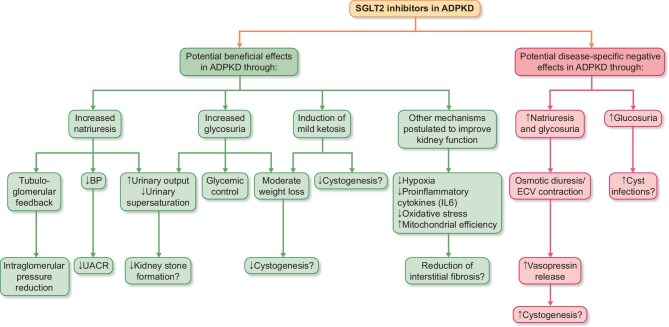
Inhibitors of the sodium-glucose cotransporter 2 (SGLT2i) were originally developed to treat diabetes mellitus but have shown important renoprotective benefits independently from blood glucose levels. SGLT2i have thus become an important addition to the therapeutic armamentarium to treat patients with chronic kidney disease. However, specific patient populations were excluded from the pivotal trials, for instance patients with very low eGFR, patients on dialysis, kidney transplant recipients, and patients with autosomal dominant polycystic kidney disease (ADPKD), the most common genetic kidney disorder. Considering the lack of potent treatment modalities in ADPKD, the use of SGLT2i in this patient population would be of major interest. However, the combination of inconclusive results from preclinical models with the lack of clinical efficacy data and potential disease-specific safety concerns currently exclude patients with ADPKD from this promising therapeutic opportunity. This results in an urgent need for adequately powered clinical trials examining SGLT2i in ADPKD. This review summarizes the current knowledge on SGLT2i in this specific patient population and outlines running and upcoming clinical trial programs in different geographic regions aiming to make SGLT2i accessible to patients with ADPKD.
期刊介绍:
Nephrology Dialysis Transplantation (ndt) is the leading nephrology journal in Europe and renowned worldwide, devoted to original clinical and laboratory research in nephrology, dialysis and transplantation. ndt is an official journal of the [ERA-EDTA](http://www.era-edta.org/) (European Renal Association-European Dialysis and Transplant Association). Published monthly, the journal provides an essential resource for researchers and clinicians throughout the world. All research articles in this journal have undergone peer review.
Print ISSN: 0931-0509.




 京公网安备 11010802042870号
京ICP备2023020795号-1
京公网安备 11010802042870号
京ICP备2023020795号-1

 分享
分享
 求助内容:
求助内容: 应助结果提醒方式:
 扫码关注我们
