Lupeng Zeng, Wanhua Shi, Kewen Chen, Kun Wang, Yaping Dai, Xin Cheng, Shi Lu, Dandan Gao, Weiming Sun, Xi Zhang, Jing Zhang, Jinghua Chen
{"title":"Indocyanine Green Aggregation-Induced Hypotonic Stress to Remodel Aloe Exosome-like Vesicles for Enhanced Tumor Penetration and Phototherapy","authors":"Lupeng Zeng, Wanhua Shi, Kewen Chen, Kun Wang, Yaping Dai, Xin Cheng, Shi Lu, Dandan Gao, Weiming Sun, Xi Zhang, Jing Zhang, Jinghua Chen","doi":"10.1021/acsnano.4c15440","DOIUrl":null,"url":null,"abstract":"As ubiquitous transport nanovesicles in cell biology, plant exosome-like vesicles (PELVs) have enormous potential to deliver drugs safely and effectively. Drug encapsulation and mechanical stability of vesicles are key limitations influencing their delivery efficiency. However, common methods (i.e., ultrasound, electroporation) for drug loading inevitably affect the inherent vesicle characteristics, which influence their stability, leakproof nature, cellular internalization, and tumor penetration. Herein, in order to balance this contradiction, we put forward a strategy to skillfully remodel aloe exosome-like vesicles (AELVs) through indocyanine green (ICG)-induced hypotonic stress during endogenous drug loading. We observe that the rigidity of AELVs is enhanced with the accumulation of long hydrocarbon chain lipids under ICG-induced hypotonic stress. Synchronously, ICG is also loaded into AELVs (ICG/AELVs, IAs), which effectively prevents secondary damage during drug loading. More interestingly, we find that hypotonic stress promotes IA secretion with less intravesicular protein, which is beneficial to enlarge their inner space for more drug loading. The IAs show great storage stability, leakproof, and antidegradation performance. Compared with control AELVs, IAs with higher rigidity are more liable to penetrate into the tumor. IAs further modifying with the AS1411 aptamer (AS1411-IAs, AIAs) exhibit high tumor targeting <i>in vivo</i>. After intravenous administration, the 4T1 tumor is obviously inhibited by AIAs plus NIR irradiation, which effectively improves the survival rate of tumor-bearing mice. Overall, we systematically explore the effects of drug-induced osmotic stress on PELVs during endogenous drug loading and achieve efficient tumor therapy. This work simplifies the process of drug loading in PELVs and enhances their plasticity, which provides a promising perspective for PELV-based drug delivery and clinical application.","PeriodicalId":21,"journal":{"name":"ACS Nano","volume":"111 1","pages":""},"PeriodicalIF":16.0000,"publicationDate":"2025-04-17","publicationTypes":"Journal Article","fieldsOfStudy":null,"isOpenAccess":false,"openAccessPdf":"","citationCount":"0","resultStr":null,"platform":"Semanticscholar","paperid":null,"PeriodicalName":"ACS Nano","FirstCategoryId":"88","ListUrlMain":"https://doi.org/10.1021/acsnano.4c15440","RegionNum":1,"RegionCategory":"材料科学","ArticlePicture":[],"TitleCN":null,"AbstractTextCN":null,"PMCID":null,"EPubDate":"","PubModel":"","JCR":"Q1","JCRName":"CHEMISTRY, MULTIDISCIPLINARY","Score":null,"Total":0}
引用次数: 0
Abstract
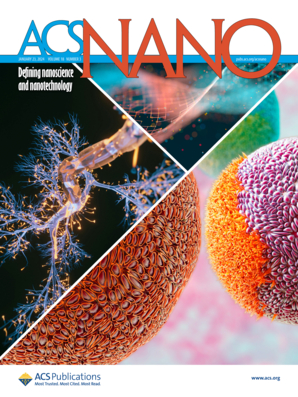
As ubiquitous transport nanovesicles in cell biology, plant exosome-like vesicles (PELVs) have enormous potential to deliver drugs safely and effectively. Drug encapsulation and mechanical stability of vesicles are key limitations influencing their delivery efficiency. However, common methods (i.e., ultrasound, electroporation) for drug loading inevitably affect the inherent vesicle characteristics, which influence their stability, leakproof nature, cellular internalization, and tumor penetration. Herein, in order to balance this contradiction, we put forward a strategy to skillfully remodel aloe exosome-like vesicles (AELVs) through indocyanine green (ICG)-induced hypotonic stress during endogenous drug loading. We observe that the rigidity of AELVs is enhanced with the accumulation of long hydrocarbon chain lipids under ICG-induced hypotonic stress. Synchronously, ICG is also loaded into AELVs (ICG/AELVs, IAs), which effectively prevents secondary damage during drug loading. More interestingly, we find that hypotonic stress promotes IA secretion with less intravesicular protein, which is beneficial to enlarge their inner space for more drug loading. The IAs show great storage stability, leakproof, and antidegradation performance. Compared with control AELVs, IAs with higher rigidity are more liable to penetrate into the tumor. IAs further modifying with the AS1411 aptamer (AS1411-IAs, AIAs) exhibit high tumor targeting in vivo. After intravenous administration, the 4T1 tumor is obviously inhibited by AIAs plus NIR irradiation, which effectively improves the survival rate of tumor-bearing mice. Overall, we systematically explore the effects of drug-induced osmotic stress on PELVs during endogenous drug loading and achieve efficient tumor therapy. This work simplifies the process of drug loading in PELVs and enhances their plasticity, which provides a promising perspective for PELV-based drug delivery and clinical application.
期刊介绍:
ACS Nano, published monthly, serves as an international forum for comprehensive articles on nanoscience and nanotechnology research at the intersections of chemistry, biology, materials science, physics, and engineering. The journal fosters communication among scientists in these communities, facilitating collaboration, new research opportunities, and advancements through discoveries. ACS Nano covers synthesis, assembly, characterization, theory, and simulation of nanostructures, nanobiotechnology, nanofabrication, methods and tools for nanoscience and nanotechnology, and self- and directed-assembly. Alongside original research articles, it offers thorough reviews, perspectives on cutting-edge research, and discussions envisioning the future of nanoscience and nanotechnology.




 京公网安备 11010802042870号
京ICP备2023020795号-1
京公网安备 11010802042870号
京ICP备2023020795号-1

 分享
分享
 求助内容:
求助内容: 应助结果提醒方式:
 扫码关注我们
