Marina Antonio , Arsenio Muñoz de la Peña , Héctor C. Goicoechea , Mirta R. Alcaraz
{"title":"How excitation-emission matrices have revolutionised multi-way data analyses – A tutorial for multi-way EEM-based calibration method developments","authors":"Marina Antonio , Arsenio Muñoz de la Peña , Héctor C. Goicoechea , Mirta R. Alcaraz","doi":"10.1016/j.aca.2025.344089","DOIUrl":null,"url":null,"abstract":"<div><div>For many years, excitation-emission matrix (EEM) fluorescence spectroscopy has been a compelling analytical technique, fostering the development of multidimensional data analysis-based methods. Its applications span diverse fields, including analytical chemistry and biological, food, and environmental sciences, which have been extensively documented in the scientific literature. EEM spectroscopy stands out for its versatility, affordability, and exceptional capacity to provide rich analytical insights, making it a preferred choice for investigations requiring higher-order data analysis. While second-order data analysis based on EEM fluorescence spectroscopy has been widely explored, generating third-order data from EEM remains a challenging and spotlighted research area.</div><div>This tutorial intends to trace the evolution of multi-way data analysis in recent years, focusing on applying multidimensional fluorescence in analytical contexts. It delves into the critical issues, emerging trends, and challenges in analytical calibration method developments. Moreover, our comprehensive assessment encompasses the instrumental, methodological, and practical aspects of multi-way data applications, providing tailored guidance to empower readers in overcoming obstacles and advancing their research endeavours.</div></div>","PeriodicalId":240,"journal":{"name":"Analytica Chimica Acta","volume":"1360 ","pages":"Article 344089"},"PeriodicalIF":6.0000,"publicationDate":"2025-07-22","publicationTypes":"Journal Article","fieldsOfStudy":null,"isOpenAccess":false,"openAccessPdf":"","citationCount":"0","resultStr":null,"platform":"Semanticscholar","paperid":null,"PeriodicalName":"Analytica Chimica Acta","FirstCategoryId":"92","ListUrlMain":"https://www.sciencedirect.com/science/article/pii/S0003267025004830","RegionNum":2,"RegionCategory":"化学","ArticlePicture":[],"TitleCN":null,"AbstractTextCN":null,"PMCID":null,"EPubDate":"2025/4/19 0:00:00","PubModel":"Epub","JCR":"Q1","JCRName":"CHEMISTRY, ANALYTICAL","Score":null,"Total":0}
引用次数: 0
Abstract
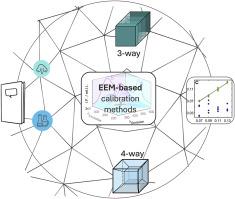
For many years, excitation-emission matrix (EEM) fluorescence spectroscopy has been a compelling analytical technique, fostering the development of multidimensional data analysis-based methods. Its applications span diverse fields, including analytical chemistry and biological, food, and environmental sciences, which have been extensively documented in the scientific literature. EEM spectroscopy stands out for its versatility, affordability, and exceptional capacity to provide rich analytical insights, making it a preferred choice for investigations requiring higher-order data analysis. While second-order data analysis based on EEM fluorescence spectroscopy has been widely explored, generating third-order data from EEM remains a challenging and spotlighted research area.
This tutorial intends to trace the evolution of multi-way data analysis in recent years, focusing on applying multidimensional fluorescence in analytical contexts. It delves into the critical issues, emerging trends, and challenges in analytical calibration method developments. Moreover, our comprehensive assessment encompasses the instrumental, methodological, and practical aspects of multi-way data applications, providing tailored guidance to empower readers in overcoming obstacles and advancing their research endeavours.
期刊介绍:
Analytica Chimica Acta has an open access mirror journal Analytica Chimica Acta: X, sharing the same aims and scope, editorial team, submission system and rigorous peer review.
Analytica Chimica Acta provides a forum for the rapid publication of original research, and critical, comprehensive reviews dealing with all aspects of fundamental and applied modern analytical chemistry. The journal welcomes the submission of research papers which report studies concerning the development of new and significant analytical methodologies. In determining the suitability of submitted articles for publication, particular scrutiny will be placed on the degree of novelty and impact of the research and the extent to which it adds to the existing body of knowledge in analytical chemistry.




 京公网安备 11010802042870号
京ICP备2023020795号-1
京公网安备 11010802042870号
京ICP备2023020795号-1

 分享
分享
 求助内容:
求助内容: 应助结果提醒方式:
 扫码关注我们
