Fatemeh Motaghedi, Lina Rose, Yunyun Wu, R. Stephen Carmichael, Mohammed Jalal Ahamed, Simon Rondeau-Gagné, Tricia Breen Carmichael
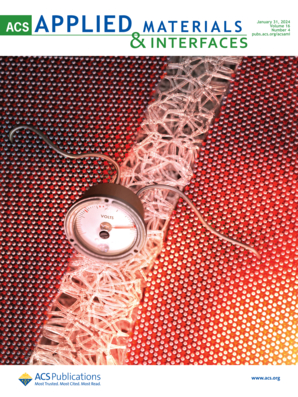
{"title":"All-Textile Wearable Capacitive Pressure Sensors Based on Cut-Pile Fabrics with Integrated Electrodes","authors":"Fatemeh Motaghedi, Lina Rose, Yunyun Wu, R. Stephen Carmichael, Mohammed Jalal Ahamed, Simon Rondeau-Gagné, Tricia Breen Carmichael","doi":"10.1021/acsami.5c01461","DOIUrl":null,"url":null,"abstract":"Wearable pressure sensors have the potential to revolutionize healthcare and promote wellness through the detection and monitoring of vital signs and human motion. Although textiles are an ideal platform for wearable sensors due to their ubiquity in daily life, textile-based pressure sensors typically suffer from low sensitivity. Capacitive pressure sensors require a porous, deformable dielectric layer to achieve high sensitivity, and off-the-shelf textiles have not met this challenge. In this paper, we present all-textile capacitive pressure sensors based on off-the-shelf cut-pile fabrics, in which we use selective solution metallization to integrate the electrode and cut-pile dielectric layer into a single piece of fabric. The resulting sensors exhibit sensitivities (0.029 kPa<sup>–1</sup>) and response times (3 ms) suitable for monitoring motions of the human body. We demonstrate their utility to detect subtle human facial motions, as well as grip strength. Through a comparative analysis of different cut-pile fabrics, we show that the compressibility of the cut-pile layer and thus the sensitivity of the sensor depend on the specific attributes of the cut piles. This work provides not only a new approach to wearable textile-based sensor fabrication but also insight into the textile structure/performance relationships necessary to advance the field of e-textiles.","PeriodicalId":5,"journal":{"name":"ACS Applied Materials & Interfaces","volume":"10 1","pages":""},"PeriodicalIF":8.2000,"publicationDate":"2025-04-21","publicationTypes":"Journal Article","fieldsOfStudy":null,"isOpenAccess":false,"openAccessPdf":"","citationCount":"0","resultStr":null,"platform":"Semanticscholar","paperid":null,"PeriodicalName":"ACS Applied Materials & Interfaces","FirstCategoryId":"88","ListUrlMain":"https://doi.org/10.1021/acsami.5c01461","RegionNum":2,"RegionCategory":"材料科学","ArticlePicture":[],"TitleCN":null,"AbstractTextCN":null,"PMCID":null,"EPubDate":"","PubModel":"","JCR":"Q1","JCRName":"MATERIALS SCIENCE, MULTIDISCIPLINARY","Score":null,"Total":0}
引用次数: 0
Abstract
Wearable pressure sensors have the potential to revolutionize healthcare and promote wellness through the detection and monitoring of vital signs and human motion. Although textiles are an ideal platform for wearable sensors due to their ubiquity in daily life, textile-based pressure sensors typically suffer from low sensitivity. Capacitive pressure sensors require a porous, deformable dielectric layer to achieve high sensitivity, and off-the-shelf textiles have not met this challenge. In this paper, we present all-textile capacitive pressure sensors based on off-the-shelf cut-pile fabrics, in which we use selective solution metallization to integrate the electrode and cut-pile dielectric layer into a single piece of fabric. The resulting sensors exhibit sensitivities (0.029 kPa–1) and response times (3 ms) suitable for monitoring motions of the human body. We demonstrate their utility to detect subtle human facial motions, as well as grip strength. Through a comparative analysis of different cut-pile fabrics, we show that the compressibility of the cut-pile layer and thus the sensitivity of the sensor depend on the specific attributes of the cut piles. This work provides not only a new approach to wearable textile-based sensor fabrication but also insight into the textile structure/performance relationships necessary to advance the field of e-textiles.
期刊介绍:
ACS Applied Materials & Interfaces is a leading interdisciplinary journal that brings together chemists, engineers, physicists, and biologists to explore the development and utilization of newly-discovered materials and interfacial processes for specific applications. Our journal has experienced remarkable growth since its establishment in 2009, both in terms of the number of articles published and the impact of the research showcased. We are proud to foster a truly global community, with the majority of published articles originating from outside the United States, reflecting the rapid growth of applied research worldwide.





 京公网安备 11010802042870号
京ICP备2023020795号-1
京公网安备 11010802042870号
京ICP备2023020795号-1

 分享
分享
 求助内容:
求助内容: 应助结果提醒方式:
 扫码关注我们
