Cheng Gong , Peiming Zhang , Ya Liu , Ruolan Chen , Kai Huang , Weizhun Yang , Lirong Gao , Ming Xu , Xuezhi Yang , Yin Liu , Qian Liu , Bing Yan , Bin Zhao , Guibin Jiang
{"title":"A reversible fluorescence probe enables bioimaging and toxicity evaluation of lithium ion in living human cells","authors":"Cheng Gong , Peiming Zhang , Ya Liu , Ruolan Chen , Kai Huang , Weizhun Yang , Lirong Gao , Ming Xu , Xuezhi Yang , Yin Liu , Qian Liu , Bing Yan , Bin Zhao , Guibin Jiang","doi":"10.1016/j.jhazmat.2025.138343","DOIUrl":null,"url":null,"abstract":"<div><div>The extensive use of lithium (Li) in green energy generation and storage poses a growing risk of human Li<sup>+</sup> exposure. Therefore, advancing bioimaging and safety evaluation approaches for Li<sup>+</sup> is crucial. This study introduces a new stratagem to reveal the toxicity effects of Li<sup>+</sup> by developing a reversible lithium-sensitive probe (LSP). This probe, designed by conjugating spiropyran and azacrown ethers, enables highly selective imaging of Li<sup>+</sup> within living cells at environmentally relevant concentrations, both extracellularly and <em>in vitro</em>. Utilizing this advanced probe, we conducted noninvasive monitoring to observe Li<sup>+</sup> permeation through Aquaporin-1 (AQP1) channels in human embryonic kidney cells (HEK293) and its subsequent accumulation in the mitochondria. This mitochondrial accumulation led to decreased mitochondrial membrane potential, increased Cytochrome C (Cyto C) release, disruption of mitochondrial respiratory chain complex activity, and heightened cellular oxidative stress. These findings underscore LSP’s utility in delineating spatial distributions and concentrations of Li<sup>+</sup> in biological systems and monitor the Li<sup>+</sup>-involved nephrotoxicity caused by mitochondrial damage.</div></div>","PeriodicalId":361,"journal":{"name":"Journal of Hazardous Materials","volume":"493 ","pages":"Article 138343"},"PeriodicalIF":11.3000,"publicationDate":"2025-08-05","publicationTypes":"Journal Article","fieldsOfStudy":null,"isOpenAccess":false,"openAccessPdf":"","citationCount":"0","resultStr":null,"platform":"Semanticscholar","paperid":null,"PeriodicalName":"Journal of Hazardous Materials","FirstCategoryId":"93","ListUrlMain":"https://www.sciencedirect.com/science/article/pii/S0304389425012580","RegionNum":1,"RegionCategory":"环境科学与生态学","ArticlePicture":[],"TitleCN":null,"AbstractTextCN":null,"PMCID":null,"EPubDate":"2025/4/21 0:00:00","PubModel":"Epub","JCR":"Q1","JCRName":"ENGINEERING, ENVIRONMENTAL","Score":null,"Total":0}
引用次数: 0
Abstract
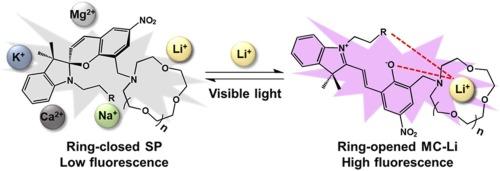
The extensive use of lithium (Li) in green energy generation and storage poses a growing risk of human Li+ exposure. Therefore, advancing bioimaging and safety evaluation approaches for Li+ is crucial. This study introduces a new stratagem to reveal the toxicity effects of Li+ by developing a reversible lithium-sensitive probe (LSP). This probe, designed by conjugating spiropyran and azacrown ethers, enables highly selective imaging of Li+ within living cells at environmentally relevant concentrations, both extracellularly and in vitro. Utilizing this advanced probe, we conducted noninvasive monitoring to observe Li+ permeation through Aquaporin-1 (AQP1) channels in human embryonic kidney cells (HEK293) and its subsequent accumulation in the mitochondria. This mitochondrial accumulation led to decreased mitochondrial membrane potential, increased Cytochrome C (Cyto C) release, disruption of mitochondrial respiratory chain complex activity, and heightened cellular oxidative stress. These findings underscore LSP’s utility in delineating spatial distributions and concentrations of Li+ in biological systems and monitor the Li+-involved nephrotoxicity caused by mitochondrial damage.
期刊介绍:
The Journal of Hazardous Materials serves as a global platform for promoting cutting-edge research in the field of Environmental Science and Engineering. Our publication features a wide range of articles, including full-length research papers, review articles, and perspectives, with the aim of enhancing our understanding of the dangers and risks associated with various materials concerning public health and the environment. It is important to note that the term "environmental contaminants" refers specifically to substances that pose hazardous effects through contamination, while excluding those that do not have such impacts on the environment or human health. Moreover, we emphasize the distinction between wastes and hazardous materials in order to provide further clarity on the scope of the journal. We have a keen interest in exploring specific compounds and microbial agents that have adverse effects on the environment.



 京公网安备 11010802042870号
京ICP备2023020795号-1
京公网安备 11010802042870号
京ICP备2023020795号-1

 分享
分享
 求助内容:
求助内容: 应助结果提醒方式:
 扫码关注我们
