Xiaofang Li , Bikram Basak , Rahul S. Tanpure , Xin Zheng , Byong-Hun Jeon
{"title":"Unraveling the genetic basis of microbial metal resistance: shift from mendelian to systems biology","authors":"Xiaofang Li , Bikram Basak , Rahul S. Tanpure , Xin Zheng , Byong-Hun Jeon","doi":"10.1016/j.jhazmat.2025.138350","DOIUrl":null,"url":null,"abstract":"<div><div>Microbial metal resistance, a trait that enables microorganisms to withstand high levels of toxic metals, has been studied for over a century. The significance of uncovering these mechanisms goes beyond basic science as they have implications for human health through their connection to microbial pathogenesis, metal bioremediation, and biomining. Recent advances in analytical chemistry and molecular biology have accelerated the discovery and understanding of genetic mechanisms underlying microbial metal resistance, identifying specific metal resistance genes and their operons. The emergence of omics tools has further propelled research towards a comprehensive understanding of how cells respond to metal stress at the systemic level, revealing the complex regulatory networks and evolutionary dynamics that drive microbial adaptation to metal-rich environments. In this article, we present a historical overview of the evolving understanding of the genetic determinants of metal resistance in microbes. Through multiple narrative threads, we illustrate how our knowledge of microbial metal resistance and genetics has interacted with genetic tools and concept development. This review also discusses how our understanding of microbial metal resistance has progressed from the Mendelian perspective to the current systems biology viewpoint, particularly as omics approaches have considerably enhanced our understanding. This system-level understanding has opened new possibilities for genetically engineered microorganisms to regulate metal homeostasis.</div></div>","PeriodicalId":361,"journal":{"name":"Journal of Hazardous Materials","volume":"493 ","pages":"Article 138350"},"PeriodicalIF":11.3000,"publicationDate":"2025-04-21","publicationTypes":"Journal Article","fieldsOfStudy":null,"isOpenAccess":false,"openAccessPdf":"","citationCount":"0","resultStr":null,"platform":"Semanticscholar","paperid":null,"PeriodicalName":"Journal of Hazardous Materials","FirstCategoryId":"93","ListUrlMain":"https://www.sciencedirect.com/science/article/pii/S0304389425012658","RegionNum":1,"RegionCategory":"环境科学与生态学","ArticlePicture":[],"TitleCN":null,"AbstractTextCN":null,"PMCID":null,"EPubDate":"","PubModel":"","JCR":"Q1","JCRName":"ENGINEERING, ENVIRONMENTAL","Score":null,"Total":0}
引用次数: 0
Abstract
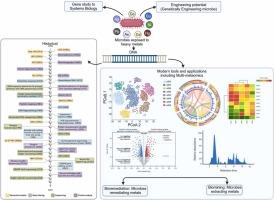
Microbial metal resistance, a trait that enables microorganisms to withstand high levels of toxic metals, has been studied for over a century. The significance of uncovering these mechanisms goes beyond basic science as they have implications for human health through their connection to microbial pathogenesis, metal bioremediation, and biomining. Recent advances in analytical chemistry and molecular biology have accelerated the discovery and understanding of genetic mechanisms underlying microbial metal resistance, identifying specific metal resistance genes and their operons. The emergence of omics tools has further propelled research towards a comprehensive understanding of how cells respond to metal stress at the systemic level, revealing the complex regulatory networks and evolutionary dynamics that drive microbial adaptation to metal-rich environments. In this article, we present a historical overview of the evolving understanding of the genetic determinants of metal resistance in microbes. Through multiple narrative threads, we illustrate how our knowledge of microbial metal resistance and genetics has interacted with genetic tools and concept development. This review also discusses how our understanding of microbial metal resistance has progressed from the Mendelian perspective to the current systems biology viewpoint, particularly as omics approaches have considerably enhanced our understanding. This system-level understanding has opened new possibilities for genetically engineered microorganisms to regulate metal homeostasis.
期刊介绍:
The Journal of Hazardous Materials serves as a global platform for promoting cutting-edge research in the field of Environmental Science and Engineering. Our publication features a wide range of articles, including full-length research papers, review articles, and perspectives, with the aim of enhancing our understanding of the dangers and risks associated with various materials concerning public health and the environment. It is important to note that the term "environmental contaminants" refers specifically to substances that pose hazardous effects through contamination, while excluding those that do not have such impacts on the environment or human health. Moreover, we emphasize the distinction between wastes and hazardous materials in order to provide further clarity on the scope of the journal. We have a keen interest in exploring specific compounds and microbial agents that have adverse effects on the environment.




 京公网安备 11010802042870号
京ICP备2023020795号-1
京公网安备 11010802042870号
京ICP备2023020795号-1

 分享
分享
 求助内容:
求助内容: 应助结果提醒方式:
 扫码关注我们
