Rosangela Mastrangelo, Teresa Guaragnone, Andrea Casini, Damiano Bandelli, David Chelazzi, Piero Baglioni
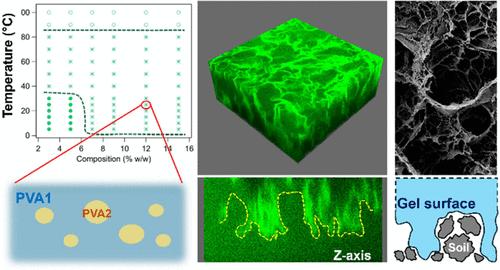
{"title":"“Twin-Chain” Hydrogels with Tailored Porosity, Surface Roughness, and Cleaning Capabilities","authors":"Rosangela Mastrangelo, Teresa Guaragnone, Andrea Casini, Damiano Bandelli, David Chelazzi, Piero Baglioni","doi":"10.1021/acs.langmuir.4c05381","DOIUrl":null,"url":null,"abstract":"The remedial conservation of cultural heritage requires advanced functional materials that span from soft matter to nanostructured formulations, whose study is relevant to different fields, ranging from cosmetics and detergency to tissue engineering. In the vast landscape of innovative materials developed to counteract artwork degradation, gels have emerged as ideal candidates for cleaning delicate and complex surfaces. More specifically, twin-chain networks (TCNs), i.e., sponge-like hydrogels obtained through spontaneous polymer–polymer phase separation and sustainable freeze–thawing, showed unprecedented cleaning performances on modern/contemporary iconic paintings, such as works by Jackson Pollock and Pablo Picasso. The key to their efficacy lies in the complex cleaning mechanism at the gel–substrate interface. Recent findings suggest that the pore size and connectivity, affecting the nanoscale tortuosity, play a crucial role in determining the gels’ uptake (cleaning) ability. Nonetheless, diffusion of soil through the gel networks is only part of the complex processes that control the removal of unwanted layers from painted surfaces. A deeper understanding of the cleaning mechanism requires studying the uptake of solid particulate matter: gel adhesion and surface roughness affect the cleaning performance of a gel. In this work, TCNs with modulated porosity, obtained by mixing poly(vinyl alcohol)s (PVAs) of different hydrolysis degrees and molecular weights, were characterized through different techniques (confocal laser scanning microscopy, scanning electron microscopy, differential scanning calorimetry, and rheology) to relate porosity and structural features to the surface roughness and diffusional properties of the gels. Finally, cleaning tests on model painted surfaces revealed a clear connection between the surface inhomogeneity and the cleaning performance of the gels.","PeriodicalId":50,"journal":{"name":"Langmuir","volume":"108 1","pages":""},"PeriodicalIF":3.9000,"publicationDate":"2025-04-20","publicationTypes":"Journal Article","fieldsOfStudy":null,"isOpenAccess":false,"openAccessPdf":"","citationCount":"0","resultStr":null,"platform":"Semanticscholar","paperid":null,"PeriodicalName":"Langmuir","FirstCategoryId":"92","ListUrlMain":"https://doi.org/10.1021/acs.langmuir.4c05381","RegionNum":2,"RegionCategory":"化学","ArticlePicture":[],"TitleCN":null,"AbstractTextCN":null,"PMCID":null,"EPubDate":"","PubModel":"","JCR":"Q2","JCRName":"CHEMISTRY, MULTIDISCIPLINARY","Score":null,"Total":0}
引用次数: 0
Abstract
The remedial conservation of cultural heritage requires advanced functional materials that span from soft matter to nanostructured formulations, whose study is relevant to different fields, ranging from cosmetics and detergency to tissue engineering. In the vast landscape of innovative materials developed to counteract artwork degradation, gels have emerged as ideal candidates for cleaning delicate and complex surfaces. More specifically, twin-chain networks (TCNs), i.e., sponge-like hydrogels obtained through spontaneous polymer–polymer phase separation and sustainable freeze–thawing, showed unprecedented cleaning performances on modern/contemporary iconic paintings, such as works by Jackson Pollock and Pablo Picasso. The key to their efficacy lies in the complex cleaning mechanism at the gel–substrate interface. Recent findings suggest that the pore size and connectivity, affecting the nanoscale tortuosity, play a crucial role in determining the gels’ uptake (cleaning) ability. Nonetheless, diffusion of soil through the gel networks is only part of the complex processes that control the removal of unwanted layers from painted surfaces. A deeper understanding of the cleaning mechanism requires studying the uptake of solid particulate matter: gel adhesion and surface roughness affect the cleaning performance of a gel. In this work, TCNs with modulated porosity, obtained by mixing poly(vinyl alcohol)s (PVAs) of different hydrolysis degrees and molecular weights, were characterized through different techniques (confocal laser scanning microscopy, scanning electron microscopy, differential scanning calorimetry, and rheology) to relate porosity and structural features to the surface roughness and diffusional properties of the gels. Finally, cleaning tests on model painted surfaces revealed a clear connection between the surface inhomogeneity and the cleaning performance of the gels.
期刊介绍:
Langmuir is an interdisciplinary journal publishing articles in the following subject categories:
Colloids: surfactants and self-assembly, dispersions, emulsions, foams
Interfaces: adsorption, reactions, films, forces
Biological Interfaces: biocolloids, biomolecular and biomimetic materials
Materials: nano- and mesostructured materials, polymers, gels, liquid crystals
Electrochemistry: interfacial charge transfer, charge transport, electrocatalysis, electrokinetic phenomena, bioelectrochemistry
Devices and Applications: sensors, fluidics, patterning, catalysis, photonic crystals
However, when high-impact, original work is submitted that does not fit within the above categories, decisions to accept or decline such papers will be based on one criteria: What Would Irving Do?
Langmuir ranks #2 in citations out of 136 journals in the category of Physical Chemistry with 113,157 total citations. The journal received an Impact Factor of 4.384*.
This journal is also indexed in the categories of Materials Science (ranked #1) and Multidisciplinary Chemistry (ranked #5).



 京公网安备 11010802042870号
京ICP备2023020795号-1
京公网安备 11010802042870号
京ICP备2023020795号-1

 分享
分享
 求助内容:
求助内容: 应助结果提醒方式:
 扫码关注我们
