PSMA-Targeted Nanoparticles with PI3K/mTOR Dual Inhibitor Downregulate P-Glycoprotein and Inactivate Myeloid-Derived Suppressor Cells for Enhanced Chemotherapy and Immunotherapy in Prostate Cancer
{"title":"PSMA-Targeted Nanoparticles with PI3K/mTOR Dual Inhibitor Downregulate P-Glycoprotein and Inactivate Myeloid-Derived Suppressor Cells for Enhanced Chemotherapy and Immunotherapy in Prostate Cancer","authors":"Lu Yin, Feiya Yang, Wenkuan Wang, Lingpu Zhang, Zheng Cao, Haoyuan Shi, Kehao Pan, Liyuan Wu, Haihua Xiao, Nianzeng Xing","doi":"10.1002/adma.202415322","DOIUrl":null,"url":null,"abstract":"<p>Acquired drug resistance and the immunosuppressive tumor microenvironment significantly limit the efficacy of chemotherapy and immunotherapy in advanced prostate cancer. Blocking the PI3K/mTOR signaling pathway has been recently proved as a new strategy to improve sensitivity to chemotherapy and immunotherapy. Herein, glutathione (GSH)-sensitive nanoparticles (PSMA-NP/BEZ) are developed that can target prostate-specific membrane antigen (PSMA), loaded with PI3K/mTOR dual inhibitor prodrug BEZ235. BEZ235 can be released from PSMA-NP/BEZ in response to elevated GSH levels in prostate cancer tissues, inhibiting the PI3K/AKT/mTOR pathway and impairing downstream cellular functions such as cell proliferation, DNA repair, and protein synthesis. When combined with paclitaxel, PSMA-NP/BEZ could reduce drug efflux by downregulating P-glycoprotein expression in cancer cells, thus enhancing the sensitivity to chemotherapy. Furthermore, PSMA-NP/BEZ could impair the immunosuppressive functions of myeloid-derived suppressor cells and reshape the “cold” immune microenvironment in prostate cancer, enhancing immunotherapeutic efficacy and including long-term immune memory against tumor recurrence. PSMA-NP/BEZ serves a safe and promising strategy to improve the efficacy of chemotherapy and immunotherapy in advanced prostate cancer.</p>","PeriodicalId":114,"journal":{"name":"Advanced Materials","volume":"37 26","pages":""},"PeriodicalIF":26.8000,"publicationDate":"2025-04-21","publicationTypes":"Journal Article","fieldsOfStudy":null,"isOpenAccess":false,"openAccessPdf":"","citationCount":"0","resultStr":null,"platform":"Semanticscholar","paperid":null,"PeriodicalName":"Advanced Materials","FirstCategoryId":"88","ListUrlMain":"https://advanced.onlinelibrary.wiley.com/doi/10.1002/adma.202415322","RegionNum":1,"RegionCategory":"材料科学","ArticlePicture":[],"TitleCN":null,"AbstractTextCN":null,"PMCID":null,"EPubDate":"","PubModel":"","JCR":"Q1","JCRName":"CHEMISTRY, MULTIDISCIPLINARY","Score":null,"Total":0}
引用次数: 0
Abstract
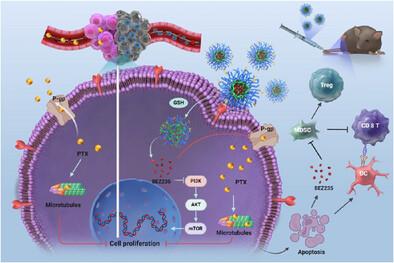
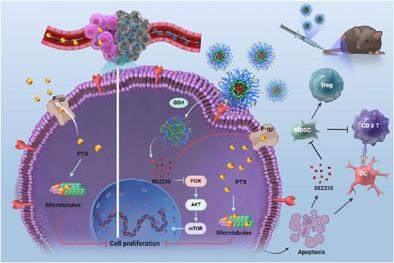
Acquired drug resistance and the immunosuppressive tumor microenvironment significantly limit the efficacy of chemotherapy and immunotherapy in advanced prostate cancer. Blocking the PI3K/mTOR signaling pathway has been recently proved as a new strategy to improve sensitivity to chemotherapy and immunotherapy. Herein, glutathione (GSH)-sensitive nanoparticles (PSMA-NP/BEZ) are developed that can target prostate-specific membrane antigen (PSMA), loaded with PI3K/mTOR dual inhibitor prodrug BEZ235. BEZ235 can be released from PSMA-NP/BEZ in response to elevated GSH levels in prostate cancer tissues, inhibiting the PI3K/AKT/mTOR pathway and impairing downstream cellular functions such as cell proliferation, DNA repair, and protein synthesis. When combined with paclitaxel, PSMA-NP/BEZ could reduce drug efflux by downregulating P-glycoprotein expression in cancer cells, thus enhancing the sensitivity to chemotherapy. Furthermore, PSMA-NP/BEZ could impair the immunosuppressive functions of myeloid-derived suppressor cells and reshape the “cold” immune microenvironment in prostate cancer, enhancing immunotherapeutic efficacy and including long-term immune memory against tumor recurrence. PSMA-NP/BEZ serves a safe and promising strategy to improve the efficacy of chemotherapy and immunotherapy in advanced prostate cancer.
期刊介绍:
Advanced Materials, one of the world's most prestigious journals and the foundation of the Advanced portfolio, is the home of choice for best-in-class materials science for more than 30 years. Following this fast-growing and interdisciplinary field, we are considering and publishing the most important discoveries on any and all materials from materials scientists, chemists, physicists, engineers as well as health and life scientists and bringing you the latest results and trends in modern materials-related research every week.





 京公网安备 11010802042870号
京ICP备2023020795号-1
京公网安备 11010802042870号
京ICP备2023020795号-1

 分享
分享
 求助内容:
求助内容: 应助结果提醒方式:
 扫码关注我们
