Wenjin Ma , Ziyan Kou , Mengya Fang , Meixia Huo , Xiangyue Xu , Xudong Lin , Lingli Huang
{"title":"Environmental peracetic acid increases antibiotic resistance in Streptococcus Suis","authors":"Wenjin Ma , Ziyan Kou , Mengya Fang , Meixia Huo , Xiangyue Xu , Xudong Lin , Lingli Huang","doi":"10.1016/j.jhazmat.2025.138353","DOIUrl":null,"url":null,"abstract":"<div><div>Disinfectants in the environment have important impacts on the occurrence of antibiotic resistant bacteria, posing a new threat to public health. <em>Streptococcus suis</em> (<em>S. suis</em>) can survive in the environment for three months and carries antibiotic resistance genes. However, it remains unclear whether disinfectants directly induce antibiotic resistance in <em>S. suis</em>. Here, we conducted induction experiments on the <em>S. suis</em> standard strain (CVCC609) with eight disinfectants at different concentrations and investigated their effects on the antibiotic resistance mechanism of <em>S. suis</em>. The results showed that only 64 mg L<sup>−1</sup> peracetic acid (PAA) led to an increase (8-fold) in <em>S. suis</em> resistance to tiamulin (TIA) with genetic stability. The treatment also induced significant changes in the morphology and capsule of the mutant strains, as well as triggered an increase in reactive oxygen species and biofilms in bacterial cells, resulting in an emergency response. Moreover, PAA significantly decreased the cell membrane permeability and led to slight changes in the adenosine triphosphate level. The key differentially expressed genes are closely related to these resistance mechanisms. These results reveal the co-selection mechanism of <em>S. suis</em> resistance to PAA and TIA, and highlight the importance of standardized application of disinfectants in livestock and poultry farming.</div></div>","PeriodicalId":361,"journal":{"name":"Journal of Hazardous Materials","volume":"493 ","pages":"Article 138353"},"PeriodicalIF":11.3000,"publicationDate":"2025-08-05","publicationTypes":"Journal Article","fieldsOfStudy":null,"isOpenAccess":false,"openAccessPdf":"","citationCount":"0","resultStr":null,"platform":"Semanticscholar","paperid":null,"PeriodicalName":"Journal of Hazardous Materials","FirstCategoryId":"93","ListUrlMain":"https://www.sciencedirect.com/science/article/pii/S0304389425012683","RegionNum":1,"RegionCategory":"环境科学与生态学","ArticlePicture":[],"TitleCN":null,"AbstractTextCN":null,"PMCID":null,"EPubDate":"2025/4/20 0:00:00","PubModel":"Epub","JCR":"Q1","JCRName":"ENGINEERING, ENVIRONMENTAL","Score":null,"Total":0}
引用次数: 0
Abstract
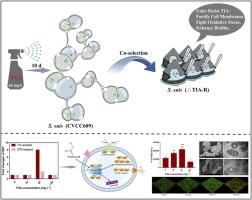
Disinfectants in the environment have important impacts on the occurrence of antibiotic resistant bacteria, posing a new threat to public health. Streptococcus suis (S. suis) can survive in the environment for three months and carries antibiotic resistance genes. However, it remains unclear whether disinfectants directly induce antibiotic resistance in S. suis. Here, we conducted induction experiments on the S. suis standard strain (CVCC609) with eight disinfectants at different concentrations and investigated their effects on the antibiotic resistance mechanism of S. suis. The results showed that only 64 mg L−1 peracetic acid (PAA) led to an increase (8-fold) in S. suis resistance to tiamulin (TIA) with genetic stability. The treatment also induced significant changes in the morphology and capsule of the mutant strains, as well as triggered an increase in reactive oxygen species and biofilms in bacterial cells, resulting in an emergency response. Moreover, PAA significantly decreased the cell membrane permeability and led to slight changes in the adenosine triphosphate level. The key differentially expressed genes are closely related to these resistance mechanisms. These results reveal the co-selection mechanism of S. suis resistance to PAA and TIA, and highlight the importance of standardized application of disinfectants in livestock and poultry farming.
期刊介绍:
The Journal of Hazardous Materials serves as a global platform for promoting cutting-edge research in the field of Environmental Science and Engineering. Our publication features a wide range of articles, including full-length research papers, review articles, and perspectives, with the aim of enhancing our understanding of the dangers and risks associated with various materials concerning public health and the environment. It is important to note that the term "environmental contaminants" refers specifically to substances that pose hazardous effects through contamination, while excluding those that do not have such impacts on the environment or human health. Moreover, we emphasize the distinction between wastes and hazardous materials in order to provide further clarity on the scope of the journal. We have a keen interest in exploring specific compounds and microbial agents that have adverse effects on the environment.



 京公网安备 11010802042870号
京ICP备2023020795号-1
京公网安备 11010802042870号
京ICP备2023020795号-1

 分享
分享
 求助内容:
求助内容: 应助结果提醒方式:
 扫码关注我们
