Sijia Liang , Jianchao Liu , Meijun Bao , Yifan Fan , Ming Kong
{"title":"Microplastics in lakes: Distribution patterns and influencing factors","authors":"Sijia Liang , Jianchao Liu , Meijun Bao , Yifan Fan , Ming Kong","doi":"10.1016/j.jhazmat.2025.138339","DOIUrl":null,"url":null,"abstract":"<div><div>As a kind of new pollutants, microplastics (MPs) have aroused public concern due to their widespread presence and potential ecological risks. Lakes, as crucial freshwater ecosystems and important water resources, are particularly vulnerable to MPs pollution. While MPs are known to be unevenly distributed within lakes, their distribution patterns and influencing factors have not been thoroughly understood. This review analyzes 84 field studies across 64 lakes worldwide to elucidate MPs distribution patterns and their driving mechanisms. Analysis reveals that MPs abundance is typically highest near areas of intense human activity and major water inflows, though hydrodynamics and wind conditions also influence spatial patterns. MPs characteristics (shape, size, color, polymer type) show distinct distribution patterns influenced by source types, transport mechanisms, and degradation processes. While surface water MPs concentrations vary seasonally due to precipitation, wind, and human activities, sediment cores indicate increasing MPs abundance in recent deposits. Integration of water and sediment sampling reveals that MPs characteristics affect their vertical distribution, with denser particles prone to sedimentation. This review identifies key knowledge gaps, including limited data on vertical distributions and temporal variations, and emphasizes the need for standardized methods and quantitative analysis of driving factors. These reviewed findings provide a foundation for understanding MPs fate in lake ecosystems and improving risk assessment capabilities, offering valuable insights for future surveys on MPs.</div></div>","PeriodicalId":361,"journal":{"name":"Journal of Hazardous Materials","volume":"493 ","pages":"Article 138339"},"PeriodicalIF":11.3000,"publicationDate":"2025-08-05","publicationTypes":"Journal Article","fieldsOfStudy":null,"isOpenAccess":false,"openAccessPdf":"","citationCount":"0","resultStr":null,"platform":"Semanticscholar","paperid":null,"PeriodicalName":"Journal of Hazardous Materials","FirstCategoryId":"93","ListUrlMain":"https://www.sciencedirect.com/science/article/pii/S0304389425012543","RegionNum":1,"RegionCategory":"环境科学与生态学","ArticlePicture":[],"TitleCN":null,"AbstractTextCN":null,"PMCID":null,"EPubDate":"2025/4/22 0:00:00","PubModel":"Epub","JCR":"Q1","JCRName":"ENGINEERING, ENVIRONMENTAL","Score":null,"Total":0}
引用次数: 0
Abstract
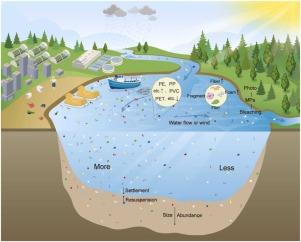
As a kind of new pollutants, microplastics (MPs) have aroused public concern due to their widespread presence and potential ecological risks. Lakes, as crucial freshwater ecosystems and important water resources, are particularly vulnerable to MPs pollution. While MPs are known to be unevenly distributed within lakes, their distribution patterns and influencing factors have not been thoroughly understood. This review analyzes 84 field studies across 64 lakes worldwide to elucidate MPs distribution patterns and their driving mechanisms. Analysis reveals that MPs abundance is typically highest near areas of intense human activity and major water inflows, though hydrodynamics and wind conditions also influence spatial patterns. MPs characteristics (shape, size, color, polymer type) show distinct distribution patterns influenced by source types, transport mechanisms, and degradation processes. While surface water MPs concentrations vary seasonally due to precipitation, wind, and human activities, sediment cores indicate increasing MPs abundance in recent deposits. Integration of water and sediment sampling reveals that MPs characteristics affect their vertical distribution, with denser particles prone to sedimentation. This review identifies key knowledge gaps, including limited data on vertical distributions and temporal variations, and emphasizes the need for standardized methods and quantitative analysis of driving factors. These reviewed findings provide a foundation for understanding MPs fate in lake ecosystems and improving risk assessment capabilities, offering valuable insights for future surveys on MPs.
期刊介绍:
The Journal of Hazardous Materials serves as a global platform for promoting cutting-edge research in the field of Environmental Science and Engineering. Our publication features a wide range of articles, including full-length research papers, review articles, and perspectives, with the aim of enhancing our understanding of the dangers and risks associated with various materials concerning public health and the environment. It is important to note that the term "environmental contaminants" refers specifically to substances that pose hazardous effects through contamination, while excluding those that do not have such impacts on the environment or human health. Moreover, we emphasize the distinction between wastes and hazardous materials in order to provide further clarity on the scope of the journal. We have a keen interest in exploring specific compounds and microbial agents that have adverse effects on the environment.



 京公网安备 11010802042870号
京ICP备2023020795号-1
京公网安备 11010802042870号
京ICP备2023020795号-1

 分享
分享
 求助内容:
求助内容: 应助结果提醒方式:
 扫码关注我们
