Huiru Zhu, Xiaoying Ni, Jiaxin Su, Yong Qin, Xiaoya He, Bo Liu, Shuang Ding, Haoru Wang, Xiangmin Zhang, Jie Huang, Qian Hu, Ruofei Ma, Jinhua Cai
{"title":"Multifunctional Mesoporous Silicon Nanoparticles for MRI-Based Diagnostic Imaging and Glioma Therapy","authors":"Huiru Zhu, Xiaoying Ni, Jiaxin Su, Yong Qin, Xiaoya He, Bo Liu, Shuang Ding, Haoru Wang, Xiangmin Zhang, Jie Huang, Qian Hu, Ruofei Ma, Jinhua Cai","doi":"10.1021/acsami.5c02882","DOIUrl":null,"url":null,"abstract":"To overcome the limited efficacy of chemodynamic therapy (CDT) caused by insufficient hydrogen peroxide (H<sub>2</sub>O<sub>2</sub>) in the tumor microenvironment, we engineered a glutathione (GSH)-responsive multifunctional nanosystem, HCTG-C, based on hollow mesoporous organosilica nanoparticles. This system integrates tirapazamine (TPZ), glucose oxidase (GOx), in situ-synthesized copper sulfide (CuS), and CT2A glioma cell membrane coating to enable dual tumor-targeted therapy and self-imaging capabilities. The therapeutic mechanism relies on three synergistic cascades: (1) GOx-mediated glucose oxidation to deplete oxygen and generate H<sub>2</sub>O<sub>2</sub>, establishing a self-sustaining H<sub>2</sub>O<sub>2</sub> supply; (2) GSH-triggered CuS conversion to Cu(I), amplifying Fenton-like reactions for efficient H<sub>2</sub>O<sub>2</sub>-to-reactive oxygen species conversion and ferroptosis induction; and (3) hypoxia-activated TPZ to exert cytotoxic effects, synergizing chemotherapy with CDT. Experimental results demonstrated that HCTG-C achieves real-time MRI monitoring via GSH depletion-driven Cu valence transitions, while its self-replenishing H<sub>2</sub>O<sub>2</sub> and oxygen-activation mechanisms significantly enhance antitumor efficacy against CT2A glioma in vitro and in vivo. By innovatively combining H<sub>2</sub>O<sub>2</sub> self-supply cascades, hypoxia-activated chemotherapy, and ferroptosis-driven CDT, this work presents a paradigm-shifting strategy for self-imaging-guided combinatorial therapy, advancing ferroptosis-based approaches for precision glioma treatment.","PeriodicalId":5,"journal":{"name":"ACS Applied Materials & Interfaces","volume":"124 1","pages":""},"PeriodicalIF":8.2000,"publicationDate":"2025-04-22","publicationTypes":"Journal Article","fieldsOfStudy":null,"isOpenAccess":false,"openAccessPdf":"","citationCount":"0","resultStr":null,"platform":"Semanticscholar","paperid":null,"PeriodicalName":"ACS Applied Materials & Interfaces","FirstCategoryId":"88","ListUrlMain":"https://doi.org/10.1021/acsami.5c02882","RegionNum":2,"RegionCategory":"材料科学","ArticlePicture":[],"TitleCN":null,"AbstractTextCN":null,"PMCID":null,"EPubDate":"","PubModel":"","JCR":"Q1","JCRName":"MATERIALS SCIENCE, MULTIDISCIPLINARY","Score":null,"Total":0}
引用次数: 0
Abstract
To overcome the limited efficacy of chemodynamic therapy (CDT) caused by insufficient hydrogen peroxide (H2O2) in the tumor microenvironment, we engineered a glutathione (GSH)-responsive multifunctional nanosystem, HCTG-C, based on hollow mesoporous organosilica nanoparticles. This system integrates tirapazamine (TPZ), glucose oxidase (GOx), in situ-synthesized copper sulfide (CuS), and CT2A glioma cell membrane coating to enable dual tumor-targeted therapy and self-imaging capabilities. The therapeutic mechanism relies on three synergistic cascades: (1) GOx-mediated glucose oxidation to deplete oxygen and generate H2O2, establishing a self-sustaining H2O2 supply; (2) GSH-triggered CuS conversion to Cu(I), amplifying Fenton-like reactions for efficient H2O2-to-reactive oxygen species conversion and ferroptosis induction; and (3) hypoxia-activated TPZ to exert cytotoxic effects, synergizing chemotherapy with CDT. Experimental results demonstrated that HCTG-C achieves real-time MRI monitoring via GSH depletion-driven Cu valence transitions, while its self-replenishing H2O2 and oxygen-activation mechanisms significantly enhance antitumor efficacy against CT2A glioma in vitro and in vivo. By innovatively combining H2O2 self-supply cascades, hypoxia-activated chemotherapy, and ferroptosis-driven CDT, this work presents a paradigm-shifting strategy for self-imaging-guided combinatorial therapy, advancing ferroptosis-based approaches for precision glioma treatment.
期刊介绍:
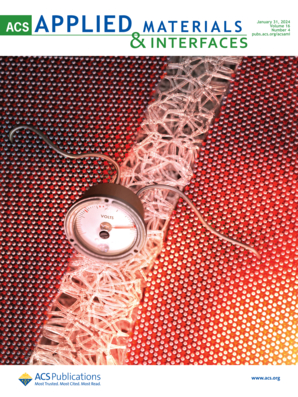
ACS Applied Materials & Interfaces is a leading interdisciplinary journal that brings together chemists, engineers, physicists, and biologists to explore the development and utilization of newly-discovered materials and interfacial processes for specific applications. Our journal has experienced remarkable growth since its establishment in 2009, both in terms of the number of articles published and the impact of the research showcased. We are proud to foster a truly global community, with the majority of published articles originating from outside the United States, reflecting the rapid growth of applied research worldwide.




 京公网安备 11010802042870号
京ICP备2023020795号-1
京公网安备 11010802042870号
京ICP备2023020795号-1

 分享
分享
 求助内容:
求助内容: 应助结果提醒方式:
 扫码关注我们
