{"title":"A Plea for Cumulative Stressor Risk Assessments in Light of Climate Change","authors":"G. Allen Burton, Jr., Jason R. Rohr","doi":"10.1021/acs.est.5c02733","DOIUrl":null,"url":null,"abstract":"Historically, environmental protection by governmental agencies has focused on controlling point-source discharges, in many cases emphasizing wastewaters laden with nutrients, pathogens, metals, and/or synthetic organics. Most non-United States countries do not focus effluent limits much beyond nutrients and dissolved oxygen and do not put limits on metals and synthetic organics. Water quality standards were established to regulate dischargers and drinking water and protect aquatic biota from impairment associated with point-source pollution. Nevertheless, widespread causes of ecosystem impairments from non-point-source (diffuse) pollution, habitat degradation, and invasive species had not been a focus of regulatory enforcement internationally. The U.S. Clean Water Act (sections 303(d), 305(b), and 314) requires each state to submit a biennial report on the quality of its water resources to the U.S. EPA. These reports identify monitored parameters causing failure of a water body to meet its “designated use”. In these reports, the overwhelming causes of impairments are single contaminants, such as chemicals, nutrients, or <i>Escherichia coli</i>, rather than the suite of stressors to which organisms are exposed. These stressors are certainly similar to those in other human-dominated watersheds of the world. Many international and national organizations, e.g., UNEP, WHO, IUCN, Council of Biological Diversity, JPI Oceans Knowledge Hub, Australia State of the Environment, Joint Nature Conservation Committee (UK), and U.S. EPA Office of Research & Development, and scientific authors have stated in recent years that cumulative effect assessments (CEAs) must be adopted to better protect ecosystems from physical, chemical, and biological stressors. Santos et al. (1) reviewed CEAs in terms of improving the European Water Framework Directive and highlighted the need for climate stressor inclusion. Nevertheless, most of the CEAs have failed to emphasize how climate stress and other chemical, physical, and biological stressors should be integrated (Figure 1). Figure 1. Climate-related stressors interact with traditionally managed stressors with known consequences. Cumulative stressor risk assessments are necessary for effective management. Environmental management and regulations can no longer take this overly simplistic focus. The increasing frequency and magnitude of climate change (CC)-related disasters and their interactions with these “traditional” parameters (stressors) mandate a more realistic assessment of ecosystem quality for protection, management, and restoration. Most areas of the planet have already been altered by CC, with large areas experiencing widespread devastation to ecosystems and human systems. To make matters worse, there are far more studies examining single stressors than the interaction of CC-related stressors (i.e., warming temperatures, wildfire, drought, and flooding) and stressors of traditional regulatory focus. Additionally, CC typically interacts antagonistically or synergistically with these traditional stressors, thus exacerbating adverse effects and the risk of ecosystem impairment. (2) These interactions make it challenging, if not impossible, to predict risk from single-stressor studies. Hence, we submit that (a) there is a need for more ecologically relevant experiments that rigorously consider common multiple stressors and (b) environmental science, management, restoration, and regulations advance and embrace the reality of cumulative stressor exposures. Given the above, how do U.S. EPA and other environmental regulatory agencies effectively manage for ecosystem impairments by chemical contaminants, when temperature, flooding, drought, and wildfires are increasing in scope, frequency, and magnitude? For example, low flows associated with droughts exempt wastewater dischargers from permit or water quality standards violations. In many regions, low flows are becoming the norm; therefore, wastewater is becoming a greater component of instream flows, and aquatic biota are more likely to be impacted. Conversely, flooding often overwhelms wastewater treatment plants, resulting in the release of untreated sewage. Additionally, urban and agricultural flooding also releases a wide range of potentially toxic chemicals, nutrients, and pathogens. These same streams increasingly suffer from wildfires that decimate the watershed, loading streams with eroded soils, nutrients, ash, and debris. Numerous studies have highlighted the manifold ways that a changing climate will increase both exposure to and effects of chemical contaminants (e.g., refs (3) and (4)). Will regulatory agencies continue with business as usual, adapt to manage traditional stressors in a rapidly changing environment, or throw up their arms when disasters occur and drop environmental regulations? While so many highly recognized organizations and authors have called for cumulative stressor effects and CC to be part of regulatory and management programs, there has been no apparent adoption of this call. The implementation of CEA–climate frameworks into government decision making appears unlikely given the current political environment. Consequently, academia, not-for-profit organizations, and industry must take the lead in moving the science of environmental risk assessments forward. These sectors are less encumbered by bureaucracy, tradition, and politics. Some organizations appear eager to embrace the value of explicitly considering how CC will exacerbate traditional stressors and the value of science in helping humanity navigate the impending challenges of a changing climate. To successfully move the science of CEA forward, academia, not-for-profit organizations, and industry (and government if possible) must together mobilize resources and energy to better understand, manage, and regulate the myriad ways that traditional stressors and CC interact to threaten our livelihoods. G. Allen Burton, Jr., is a Professor in both the School of Sustainability & Environment and the Department of Earth & Environmental Sciences at the University of Michigan (UM). He has an Honorary Doctorate from the University of Roskilde (Denmark) and is a Concurrent Professor at Nanjing University and an Honorary Professor at the State Key Laboratory of Environmental Criteria and Risk Assessment in Beijing. His research has taken him to all seven continents with several Visiting Scientist positions, focusing on sediment and stormwater contaminants and understanding bioavailability processes, ecological risk, and ranking stressor importance. At UM, he served as Director of the Institute for Global Change Biology, the Water Center, and the Cooperative Institute of Limnology and Ecosystems Research. He was Editor-in-Chief of <i>Environmental Toxicology & Chemistry</i>, was past president of the Society of Environmental Toxicology & Chemistry, and served on numerous national and international panels. He has authored 235 peer-reviewed publications. Jason R. Rohr is the Ludmilla F., Stephen J., and Robert T. Galla Professor of Biological Sciences and Chair of the Department of Biological Sciences at the University of Notre Dame. He holds B.A. degrees in biology and environmental studies, a M.A. in teaching biology, and a Ph.D. in ecology all from Binghamton University and conducted postdoctoral research at the University of Kentucky and The Pennsylvania State University. His research program emphasizes planetary health, focusing on how natural and anthropogenic environmental changes, mainly climate change, pollution, and alterations to biodiversity, affect wildlife populations, species interactions, and the spread of both wildlife and human diseases. His research makes efforts to integrate across disciplines, including ecology, the health sciences, the agricultural sciences, toxicology, conservation biology, sociology, and economics, and to address multiple Sustainable Development Goals. The primary aim of his laboratory is to understand, and develop solutions to, environmental problems to improve human health and a sustainable coexistence with the natural world. This article references 4 other publications. This article has not yet been cited by other publications.","PeriodicalId":36,"journal":{"name":"环境科学与技术","volume":"17 1","pages":""},"PeriodicalIF":11.3000,"publicationDate":"2025-04-22","publicationTypes":"Journal Article","fieldsOfStudy":null,"isOpenAccess":false,"openAccessPdf":"","citationCount":"0","resultStr":null,"platform":"Semanticscholar","paperid":null,"PeriodicalName":"环境科学与技术","FirstCategoryId":"1","ListUrlMain":"https://doi.org/10.1021/acs.est.5c02733","RegionNum":1,"RegionCategory":"环境科学与生态学","ArticlePicture":[],"TitleCN":null,"AbstractTextCN":null,"PMCID":null,"EPubDate":"","PubModel":"","JCR":"Q1","JCRName":"ENGINEERING, ENVIRONMENTAL","Score":null,"Total":0}
引用次数: 0
Abstract
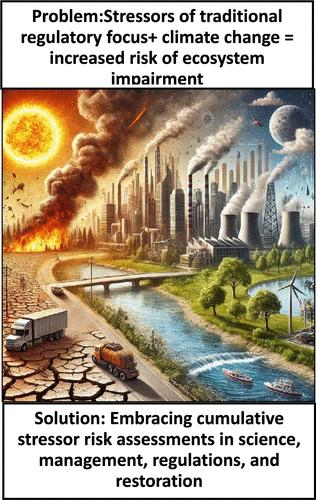
Historically, environmental protection by governmental agencies has focused on controlling point-source discharges, in many cases emphasizing wastewaters laden with nutrients, pathogens, metals, and/or synthetic organics. Most non-United States countries do not focus effluent limits much beyond nutrients and dissolved oxygen and do not put limits on metals and synthetic organics. Water quality standards were established to regulate dischargers and drinking water and protect aquatic biota from impairment associated with point-source pollution. Nevertheless, widespread causes of ecosystem impairments from non-point-source (diffuse) pollution, habitat degradation, and invasive species had not been a focus of regulatory enforcement internationally. The U.S. Clean Water Act (sections 303(d), 305(b), and 314) requires each state to submit a biennial report on the quality of its water resources to the U.S. EPA. These reports identify monitored parameters causing failure of a water body to meet its “designated use”. In these reports, the overwhelming causes of impairments are single contaminants, such as chemicals, nutrients, or Escherichia coli, rather than the suite of stressors to which organisms are exposed. These stressors are certainly similar to those in other human-dominated watersheds of the world. Many international and national organizations, e.g., UNEP, WHO, IUCN, Council of Biological Diversity, JPI Oceans Knowledge Hub, Australia State of the Environment, Joint Nature Conservation Committee (UK), and U.S. EPA Office of Research & Development, and scientific authors have stated in recent years that cumulative effect assessments (CEAs) must be adopted to better protect ecosystems from physical, chemical, and biological stressors. Santos et al. (1) reviewed CEAs in terms of improving the European Water Framework Directive and highlighted the need for climate stressor inclusion. Nevertheless, most of the CEAs have failed to emphasize how climate stress and other chemical, physical, and biological stressors should be integrated (Figure 1). Figure 1. Climate-related stressors interact with traditionally managed stressors with known consequences. Cumulative stressor risk assessments are necessary for effective management. Environmental management and regulations can no longer take this overly simplistic focus. The increasing frequency and magnitude of climate change (CC)-related disasters and their interactions with these “traditional” parameters (stressors) mandate a more realistic assessment of ecosystem quality for protection, management, and restoration. Most areas of the planet have already been altered by CC, with large areas experiencing widespread devastation to ecosystems and human systems. To make matters worse, there are far more studies examining single stressors than the interaction of CC-related stressors (i.e., warming temperatures, wildfire, drought, and flooding) and stressors of traditional regulatory focus. Additionally, CC typically interacts antagonistically or synergistically with these traditional stressors, thus exacerbating adverse effects and the risk of ecosystem impairment. (2) These interactions make it challenging, if not impossible, to predict risk from single-stressor studies. Hence, we submit that (a) there is a need for more ecologically relevant experiments that rigorously consider common multiple stressors and (b) environmental science, management, restoration, and regulations advance and embrace the reality of cumulative stressor exposures. Given the above, how do U.S. EPA and other environmental regulatory agencies effectively manage for ecosystem impairments by chemical contaminants, when temperature, flooding, drought, and wildfires are increasing in scope, frequency, and magnitude? For example, low flows associated with droughts exempt wastewater dischargers from permit or water quality standards violations. In many regions, low flows are becoming the norm; therefore, wastewater is becoming a greater component of instream flows, and aquatic biota are more likely to be impacted. Conversely, flooding often overwhelms wastewater treatment plants, resulting in the release of untreated sewage. Additionally, urban and agricultural flooding also releases a wide range of potentially toxic chemicals, nutrients, and pathogens. These same streams increasingly suffer from wildfires that decimate the watershed, loading streams with eroded soils, nutrients, ash, and debris. Numerous studies have highlighted the manifold ways that a changing climate will increase both exposure to and effects of chemical contaminants (e.g., refs (3) and (4)). Will regulatory agencies continue with business as usual, adapt to manage traditional stressors in a rapidly changing environment, or throw up their arms when disasters occur and drop environmental regulations? While so many highly recognized organizations and authors have called for cumulative stressor effects and CC to be part of regulatory and management programs, there has been no apparent adoption of this call. The implementation of CEA–climate frameworks into government decision making appears unlikely given the current political environment. Consequently, academia, not-for-profit organizations, and industry must take the lead in moving the science of environmental risk assessments forward. These sectors are less encumbered by bureaucracy, tradition, and politics. Some organizations appear eager to embrace the value of explicitly considering how CC will exacerbate traditional stressors and the value of science in helping humanity navigate the impending challenges of a changing climate. To successfully move the science of CEA forward, academia, not-for-profit organizations, and industry (and government if possible) must together mobilize resources and energy to better understand, manage, and regulate the myriad ways that traditional stressors and CC interact to threaten our livelihoods. G. Allen Burton, Jr., is a Professor in both the School of Sustainability & Environment and the Department of Earth & Environmental Sciences at the University of Michigan (UM). He has an Honorary Doctorate from the University of Roskilde (Denmark) and is a Concurrent Professor at Nanjing University and an Honorary Professor at the State Key Laboratory of Environmental Criteria and Risk Assessment in Beijing. His research has taken him to all seven continents with several Visiting Scientist positions, focusing on sediment and stormwater contaminants and understanding bioavailability processes, ecological risk, and ranking stressor importance. At UM, he served as Director of the Institute for Global Change Biology, the Water Center, and the Cooperative Institute of Limnology and Ecosystems Research. He was Editor-in-Chief of Environmental Toxicology & Chemistry, was past president of the Society of Environmental Toxicology & Chemistry, and served on numerous national and international panels. He has authored 235 peer-reviewed publications. Jason R. Rohr is the Ludmilla F., Stephen J., and Robert T. Galla Professor of Biological Sciences and Chair of the Department of Biological Sciences at the University of Notre Dame. He holds B.A. degrees in biology and environmental studies, a M.A. in teaching biology, and a Ph.D. in ecology all from Binghamton University and conducted postdoctoral research at the University of Kentucky and The Pennsylvania State University. His research program emphasizes planetary health, focusing on how natural and anthropogenic environmental changes, mainly climate change, pollution, and alterations to biodiversity, affect wildlife populations, species interactions, and the spread of both wildlife and human diseases. His research makes efforts to integrate across disciplines, including ecology, the health sciences, the agricultural sciences, toxicology, conservation biology, sociology, and economics, and to address multiple Sustainable Development Goals. The primary aim of his laboratory is to understand, and develop solutions to, environmental problems to improve human health and a sustainable coexistence with the natural world. This article references 4 other publications. This article has not yet been cited by other publications.
从历史上看,政府机构的环境保护侧重于控制点源排放,在许多情况下强调含有营养物质、病原体、金属和/或合成有机物的废水。大多数非美国国家对污水的限制远远超出了对营养物和溶解氧的限制,也没有对金属和合成有机物加以限制。制定了水质标准,以规范排放和饮用水,保护水生生物群免受点源污染的损害。然而,由非点源(漫漫性)污染、生境退化和入侵物种引起的生态系统损害的广泛原因尚未成为国际监管执法的重点。美国《清洁水法》(第303(d)条、第305(b)条和第314条)要求各州每两年向美国环保署提交一份有关其水资源质量的报告。这些报告确定了导致水体不能满足其“指定用途”的监测参数。在这些报告中,损害的主要原因是单一的污染物,如化学物质、营养物质或大肠杆菌,而不是生物体所暴露的一系列压力源。这些压力源当然与世界上其他人类主导的流域相似。许多国际和国家组织,如联合国环境规划署、世界卫生组织、世界自然保护联盟、生物多样性理事会、JPI海洋知识中心、澳大利亚环境状况、联合自然保护委员会(英国)和美国环保署研究办公室;近年来,发展和科学作者指出,必须采用累积效应评估(CEAs)来更好地保护生态系统免受物理、化学和生物压力的影响。Santos等人(1)从改善《欧洲水框架指令》的角度回顾了cea,并强调了将气候压力因素纳入其中的必要性。然而,大多数cea未能强调如何将气候压力和其他化学、物理和生物压力因素整合起来(图1)。与气候相关的压力源与传统管理的压力源相互作用,并具有已知的后果。累积压力风险评估是有效管理的必要条件。环境管理和法规不能再采取这种过于简单化的重点。与气候变化(CC)相关的灾害的频率和规模日益增加,以及它们与这些“传统”参数(压力源)的相互作用,要求对生态系统质量进行更现实的评估,以进行保护、管理和恢复。地球上的大部分地区已经被气候变化所改变,大片地区正在经历对生态系统和人类系统的广泛破坏。更糟糕的是,研究单一压力源的研究远远多于研究与气候变化相关的压力源(如温度升高、野火、干旱和洪水)和传统监管焦点压力源的相互作用。此外,CC通常与这些传统压力源产生拮抗或协同作用,从而加剧了不利影响和生态系统损害的风险。(2)这些相互作用使得从单一压力源研究中预测风险具有挑战性,如果不是不可能的话。因此,我们提出(a)需要更多与生态相关的实验,严格考虑常见的多重压力源;(b)环境科学、管理、恢复和法规的发展,并接受累积压力源暴露的现实。鉴于上述情况,当温度、洪水、干旱和野火的范围、频率和强度都在增加时,美国环保署和其他环境监管机构如何有效地管理化学污染物对生态系统的损害?例如,与干旱有关的低流量使污水排放者免于违反许可证或水质标准。在许多地区,低流量正在成为常态;因此,废水正在成为溪流流量的更大组成部分,水生生物群更有可能受到影响。相反,洪水经常淹没污水处理厂,导致未经处理的污水排放。此外,城市和农业的洪水还会释放出大量潜在的有毒化学物质、营养物质和病原体。这些河流越来越多地遭受山火的破坏,山火摧毁了流域,给河流带来了侵蚀的土壤、营养物质、灰烬和碎片。许多研究强调了气候变化将增加化学污染物暴露和影响的多种方式(例如,参考文献(3)和(4))。 监管机构会一如既往地开展业务,在快速变化的环境中适应管理传统的压力源,还是在灾难发生时放弃环保法规?虽然许多知名组织和作者呼吁将累积压力源效应和CC纳入监管和管理计划,但这一呼吁并未得到明显采纳。鉴于目前的政治环境,将环境评估-气候框架纳入政府决策似乎不太可能。因此,学术界、非营利组织和工业界必须带头推动环境风险评估科学向前发展。这些部门较少受到官僚主义、传统和政治的阻碍。一些组织似乎急于接受明确考虑气候变化将如何加剧传统压力源的价值,以及科学在帮助人类应对即将到来的气候变化挑战方面的价值。为了成功地推动CEA科学向前发展,学术界、非营利组织和工业界(如果可能的话还有政府)必须共同调动资源和精力,更好地理解、管理和调节传统压力源和CC相互作用威胁我们生计的无数方式。G. Allen Burton, Jr.,可持续发展学院教授;环境与地球系密歇根大学(UM)环境科学。他拥有丹麦罗斯基勒大学荣誉博士学位,现任南京大学兼职教授和北京环境标准与风险评估国家重点实验室荣誉教授。他的研究带他去了七大洲,担任了几个访问科学家的职位,专注于沉积物和雨水污染物,了解生物利用度过程,生态风险,并对压力源的重要性进行排名。在澳大,他曾担任全球变化生物学研究所、水中心和湖沼学与生态系统合作研究所所长。曾任《环境毒理学》杂志主编;化学,曾任环境毒理学学会主席;化学,并在许多国家和国际小组任职。他撰写了235篇同行评审的出版物。Jason R. Rohr是圣母大学Ludmilla F., Stephen J.和Robert T. Galla生物科学教授和生物科学系系主任。他拥有宾厄姆顿大学的生物学和环境研究学士学位、教学生物学硕士学位和生态学博士学位,并在肯塔基大学和宾夕法尼亚州立大学进行博士后研究。他的研究项目强调地球健康,重点关注自然和人为环境变化,主要是气候变化、污染和生物多样性的变化,如何影响野生动物种群、物种相互作用以及野生动物和人类疾病的传播。他的研究努力整合跨学科,包括生态学、健康科学、农业科学、毒理学、保护生物学、社会学和经济学,并解决多个可持续发展目标。他的实验室的主要目标是了解环境问题,并制定解决方案,以改善人类健康和与自然世界的可持续共存。本文引用了其他4篇出版物。这篇文章尚未被其他出版物引用。
期刊介绍:
Environmental Science & Technology (ES&T) is a co-sponsored academic and technical magazine by the Hubei Provincial Environmental Protection Bureau and the Hubei Provincial Academy of Environmental Sciences.
Environmental Science & Technology (ES&T) holds the status of Chinese core journals, scientific papers source journals of China, Chinese Science Citation Database source journals, and Chinese Academic Journal Comprehensive Evaluation Database source journals. This publication focuses on the academic field of environmental protection, featuring articles related to environmental protection and technical advancements.



 京公网安备 11010802042870号
京ICP备2023020795号-1
京公网安备 11010802042870号
京ICP备2023020795号-1

 分享
分享
 求助内容:
求助内容: 应助结果提醒方式:
 扫码关注我们
