{"title":"N-heterocyclic compound with conjugated systems and multiple pyrazine and quinone redox active sites for high-performance aqueous zinc ion batteries","authors":"Lulu Huang, Jiahao Li, Xinyu Gao, Yongwen Wang, Haijiao Xie, Hanfeng Liang, Gang Wang, Tiantian Gu","doi":"10.1016/j.cej.2025.162993","DOIUrl":null,"url":null,"abstract":"Organic electrodes featuring low cost, abundant sources, and designable structure hold a bright future in aqueous zinc ion batteries (AZIBs). Nevertheless, most organic electrodes still encounter drawbacks such as sluggish kinetics, low capacity, and poor cycling stability. Herein, an anthraquinone derivative (PAQD) is reported for AZIBs. The five-membered ring structure and multiple redox center of PAQD achieve a high active site density, offering a brilliant capacity of 308 mAh g<sup>−1</sup> under 0.05 A g<sup>−1</sup>. Additionally, the establishment of anthraquinone units and N atoms not only expand π conjugated plane, but also improve conductivity, thus obtaining a superior rate capacity (100 mAh g<sup>−1</sup> under 10 A g<sup>−1</sup>). Besides, the flexible molecular framework enables PAQD to obtain a superior cycling lifespan with 30,000 cycles under 10 A g<sup>−1</sup> (with a 73 % capacity retention). The comprehensive <em>in-situ</em> and <em>ex-situ</em> characterizations and theoretical calculations prove that C<img alt=\"double bond\" src=\"https://sdfestaticassets-us-east-1.sciencedirectassets.com/shared-assets/55/entities/dbnd.gif\" style=\"vertical-align:middle\"/>O and C<img alt=\"double bond\" src=\"https://sdfestaticassets-us-east-1.sciencedirectassets.com/shared-assets/55/entities/dbnd.gif\" style=\"vertical-align:middle\"/>N groups are the redox active sites of PAQD cathode and reveal the mechanism of Zn<sup>2+</sup>/H<sup>+</sup> co-storage. Impressively, PAQD electrodes exhibit decent specific capacity in high load mass, low-temperature environments, and flexible devices. This work demonstrates a method for designing small molecule organic electrodes with high redox density and expands the applications in the field of flexible AZIBs.","PeriodicalId":270,"journal":{"name":"Chemical Engineering Journal","volume":"13 1","pages":""},"PeriodicalIF":13.2000,"publicationDate":"2025-04-23","publicationTypes":"Journal Article","fieldsOfStudy":null,"isOpenAccess":false,"openAccessPdf":"","citationCount":"0","resultStr":null,"platform":"Semanticscholar","paperid":null,"PeriodicalName":"Chemical Engineering Journal","FirstCategoryId":"5","ListUrlMain":"https://doi.org/10.1016/j.cej.2025.162993","RegionNum":1,"RegionCategory":"工程技术","ArticlePicture":[],"TitleCN":null,"AbstractTextCN":null,"PMCID":null,"EPubDate":"","PubModel":"","JCR":"Q1","JCRName":"ENGINEERING, CHEMICAL","Score":null,"Total":0}
引用次数: 0
Abstract
Organic electrodes featuring low cost, abundant sources, and designable structure hold a bright future in aqueous zinc ion batteries (AZIBs). Nevertheless, most organic electrodes still encounter drawbacks such as sluggish kinetics, low capacity, and poor cycling stability. Herein, an anthraquinone derivative (PAQD) is reported for AZIBs. The five-membered ring structure and multiple redox center of PAQD achieve a high active site density, offering a brilliant capacity of 308 mAh g−1 under 0.05 A g−1. Additionally, the establishment of anthraquinone units and N atoms not only expand π conjugated plane, but also improve conductivity, thus obtaining a superior rate capacity (100 mAh g−1 under 10 A g−1). Besides, the flexible molecular framework enables PAQD to obtain a superior cycling lifespan with 30,000 cycles under 10 A g−1 (with a 73 % capacity retention). The comprehensive in-situ and ex-situ characterizations and theoretical calculations prove that CO and CN groups are the redox active sites of PAQD cathode and reveal the mechanism of Zn2+/H+ co-storage. Impressively, PAQD electrodes exhibit decent specific capacity in high load mass, low-temperature environments, and flexible devices. This work demonstrates a method for designing small molecule organic electrodes with high redox density and expands the applications in the field of flexible AZIBs.
有机电极具有成本低、来源丰富、结构可设计等特点,在水锌离子电池中具有广阔的应用前景。然而,大多数有机电极仍然遇到动力学缓慢,容量低,循环稳定性差等缺点。本文报道了一种蒽醌衍生物(PAQD)。PAQD的五元环结构和多个氧化还原中心实现了高活性位点密度,在0.05 a g−1下提供308 mAh g−1的辉煌容量。此外,蒽醌单元和N原子的建立不仅扩大了π共轭平面,而且提高了电导率,从而获得了优越的倍率容量(100 mAh g−1,10 a g−1)。此外,灵活的分子框架使PAQD能够在10 a g−1下获得30,000次循环的优越循环寿命(容量保留率为73% %)。通过原位和非原位综合表征和理论计算,证明了CO和CN基团是PAQD阴极的氧化还原活性位点,揭示了Zn2+/H+共储的机理。令人印象深刻的是,PAQD电极在高负载质量,低温环境和柔性器件中表现出良好的比容量。本工作展示了一种设计高氧化还原密度小分子有机电极的方法,扩展了柔性azib领域的应用。
期刊介绍:
The Chemical Engineering Journal is an international research journal that invites contributions of original and novel fundamental research. It aims to provide an international platform for presenting original fundamental research, interpretative reviews, and discussions on new developments in chemical engineering. The journal welcomes papers that describe novel theory and its practical application, as well as those that demonstrate the transfer of techniques from other disciplines. It also welcomes reports on carefully conducted experimental work that is soundly interpreted. The main focus of the journal is on original and rigorous research results that have broad significance. The Catalysis section within the Chemical Engineering Journal focuses specifically on Experimental and Theoretical studies in the fields of heterogeneous catalysis, molecular catalysis, and biocatalysis. These studies have industrial impact on various sectors such as chemicals, energy, materials, foods, healthcare, and environmental protection.
 O and C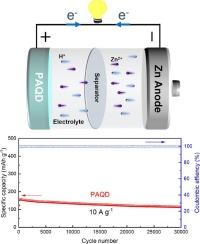



 京公网安备 11010802042870号
京ICP备2023020795号-1
京公网安备 11010802042870号
京ICP备2023020795号-1

 分享
分享
 求助内容:
求助内容: 应助结果提醒方式:
 扫码关注我们
