The effect of disease transmission on time-aggregated treatment efficacy estimates: a critical analysis of factors influencing the RTS,S and R21 malaria vaccine phase 3 trials
{"title":"The effect of disease transmission on time-aggregated treatment efficacy estimates: a critical analysis of factors influencing the RTS,S and R21 malaria vaccine phase 3 trials","authors":"Dídac Macià, Margarita Pons-Salort, Gemma Moncunill, Carlota Dobaño","doi":"10.1016/s1473-3099(25)00090-8","DOIUrl":null,"url":null,"abstract":"Comparing the efficacy of preventive interventions against infectious diseases, such as vaccines, across different field clinical trials or between subpopulations within the same trial, is common practice. In the case of malaria, WHO has approved two biosimilar subunit vaccines in the past 3 years, both targeting the circumsporozoite protein of the <em>Plasmodium falciparum</em> parasite for mass vaccination. In paediatric phase 3 clinical trials in Africa, the R21 and RTS,S vaccines showed efficacies of 72% (95% CI 69–76) and 55% (51–59) against multiple episodes of clinical malaria in the first year of follow-up, respectively. Notably, R21 exhibited higher efficacy in seasonal transmission areas, whereas RTS,S showed substantial variation in efficacy across the 11 African trial sites, with no clear explanation for this heterogeneity. These efficacy estimates are used to inform public health policies and generate new research hypotheses. However, the fact that efficacy results from clinical trials reflect more than the individual biological protection provided by a treatment, and are also influenced by the intensity and distribution of disease transmission during the follow-up period, is often overlooked. In this Personal View, we review all non-biological factors that can affect efficacy estimates in clinical trials, and particularly focus on one factor that has received little attention despite its importance and ease of identification: the interaction of waning vaccine protection with changes in transmission intensity over time. When efficacy varies over time, typically in the form of waning protection as is the case for R21 and RTS,S efficacy, variations in disease transmission, such as those due to seasonality, outbreak spread, or age-related susceptibility, can cause some periods of the follow-up to have a stronger contribution to the overall estimate than others. This interaction results in real differences in the level of disease prevention achieved, which in turn affects all commonly reported time-aggregated efficacy estimates. Using published results from R21 and RTS,S trials, we show this effect and provide a series of counterfactual predictions, illustrating how vaccine efficacy might differ, by between 10% and 20% in some cases, under alternative vaccination dates. We also discuss how this effect might confound efforts to identify determinants of protective efficacy and offer recommendations to address it in the analysis and reporting of trial results.","PeriodicalId":49923,"journal":{"name":"Lancet Infectious Diseases","volume":"17 1","pages":""},"PeriodicalIF":31.0000,"publicationDate":"2025-04-23","publicationTypes":"Journal Article","fieldsOfStudy":null,"isOpenAccess":false,"openAccessPdf":"","citationCount":"0","resultStr":null,"platform":"Semanticscholar","paperid":null,"PeriodicalName":"Lancet Infectious Diseases","FirstCategoryId":"3","ListUrlMain":"https://doi.org/10.1016/s1473-3099(25)00090-8","RegionNum":1,"RegionCategory":"医学","ArticlePicture":[],"TitleCN":null,"AbstractTextCN":null,"PMCID":null,"EPubDate":"","PubModel":"","JCR":"Q1","JCRName":"INFECTIOUS DISEASES","Score":null,"Total":0}
引用次数: 0
Abstract
Comparing the efficacy of preventive interventions against infectious diseases, such as vaccines, across different field clinical trials or between subpopulations within the same trial, is common practice. In the case of malaria, WHO has approved two biosimilar subunit vaccines in the past 3 years, both targeting the circumsporozoite protein of the Plasmodium falciparum parasite for mass vaccination. In paediatric phase 3 clinical trials in Africa, the R21 and RTS,S vaccines showed efficacies of 72% (95% CI 69–76) and 55% (51–59) against multiple episodes of clinical malaria in the first year of follow-up, respectively. Notably, R21 exhibited higher efficacy in seasonal transmission areas, whereas RTS,S showed substantial variation in efficacy across the 11 African trial sites, with no clear explanation for this heterogeneity. These efficacy estimates are used to inform public health policies and generate new research hypotheses. However, the fact that efficacy results from clinical trials reflect more than the individual biological protection provided by a treatment, and are also influenced by the intensity and distribution of disease transmission during the follow-up period, is often overlooked. In this Personal View, we review all non-biological factors that can affect efficacy estimates in clinical trials, and particularly focus on one factor that has received little attention despite its importance and ease of identification: the interaction of waning vaccine protection with changes in transmission intensity over time. When efficacy varies over time, typically in the form of waning protection as is the case for R21 and RTS,S efficacy, variations in disease transmission, such as those due to seasonality, outbreak spread, or age-related susceptibility, can cause some periods of the follow-up to have a stronger contribution to the overall estimate than others. This interaction results in real differences in the level of disease prevention achieved, which in turn affects all commonly reported time-aggregated efficacy estimates. Using published results from R21 and RTS,S trials, we show this effect and provide a series of counterfactual predictions, illustrating how vaccine efficacy might differ, by between 10% and 20% in some cases, under alternative vaccination dates. We also discuss how this effect might confound efforts to identify determinants of protective efficacy and offer recommendations to address it in the analysis and reporting of trial results.
比较预防传染病的干预措施(如疫苗)在不同的实地临床试验中或在同一试验的不同亚群之间的效果,是一种常见做法。就疟疾而言,世卫组织在过去3年中批准了两种生物类似药亚单位疫苗,均针对恶性疟原虫的环孢子子蛋白进行大规模疫苗接种。在非洲的儿科3期临床试验中,R21和RTS,S疫苗在随访第一年对临床疟疾多次发作的有效率分别为72% (95% CI 69-76)和55%(51-59)。值得注意的是,R21在季节性传播区表现出更高的疗效,而RTS,S在11个非洲试验点的疗效存在实质性差异,但没有明确的解释这种异质性。这些功效估计被用来为公共卫生政策提供信息,并产生新的研究假设。然而,临床试验的疗效结果反映的不仅仅是一种治疗所提供的个体生物保护,而且还受到随访期间疾病传播强度和分布的影响,这一事实往往被忽视。在本个人观点中,我们回顾了所有可能影响临床试验疗效估计的非生物学因素,并特别关注一个尽管重要且易于识别但很少受到关注的因素:随着时间的推移,疫苗保护作用减弱与传播强度变化的相互作用。当疗效随时间而变化时,通常表现为R21和RTS、S疗效的保护减弱,疾病传播的变化,如季节性、疫情传播或与年龄相关的易感性引起的疾病传播变化,可能导致随访的某些时期对总体估计的贡献大于其他时期。这种相互作用导致疾病预防水平的实际差异,进而影响所有通常报告的时间累计疗效估计。利用R21和RTS,S试验的已发表结果,我们展示了这种效应,并提供了一系列反事实预测,说明在不同的疫苗接种日期下,疫苗效力在某些情况下可能存在10%至20%的差异。我们还讨论了这种影响如何混淆了确定保护效果决定因素的努力,并提出了在分析和报告试验结果时解决这一问题的建议。
期刊介绍:
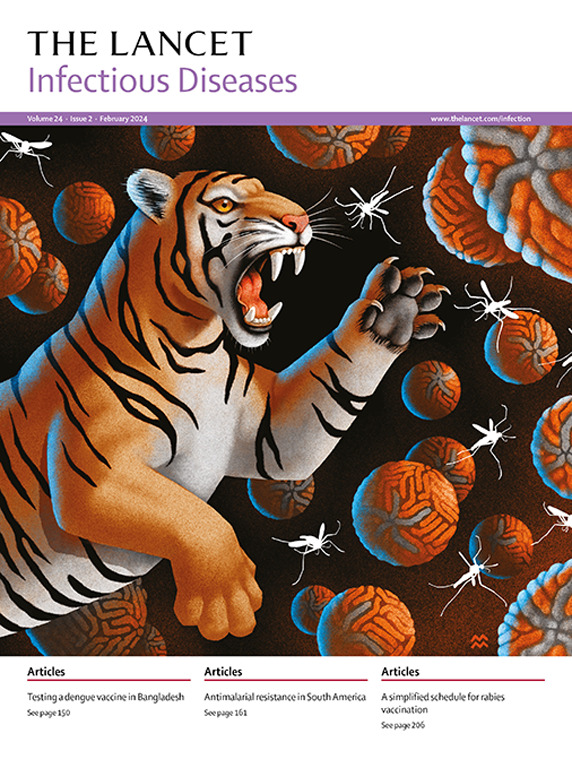
The Lancet Infectious Diseases was launched in August, 2001, and is a lively monthly journal of original research, review, opinion, and news covering international issues relevant to clinical infectious diseases specialists worldwide.The infectious diseases journal aims to be a world-leading publication, featuring original research that advocates change or sheds light on clinical practices related to infectious diseases. The journal prioritizes articles with the potential to impact clinical practice or influence perspectives. Content covers a wide range of topics, including anti-infective therapy and immunization, bacterial, viral, fungal, and parasitic infections, emerging infectious diseases, HIV/AIDS, malaria, tuberculosis, mycobacterial infections, infection control, infectious diseases epidemiology, neglected tropical diseases, and travel medicine. Informative reviews on any subject linked to infectious diseases and human health are also welcomed.



 京公网安备 11010802042870号
京ICP备2023020795号-1
京公网安备 11010802042870号
京ICP备2023020795号-1

 分享
分享
 求助内容:
求助内容: 应助结果提醒方式:
 扫码关注我们
