Baosheng Bai, Sungyu Kim, Joonho Moon, Wongeun Yi, Eunsub Yun, Chi Bum Bahn
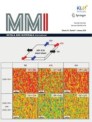
{"title":"Effects of Surface Peening on Residual Stress and Microstructure of Nickel-base Alloy 182 and 52 M Welds","authors":"Baosheng Bai, Sungyu Kim, Joonho Moon, Wongeun Yi, Eunsub Yun, Chi Bum Bahn","doi":"10.1007/s12540-024-01824-4","DOIUrl":null,"url":null,"abstract":"<div><p>The effects of surface peening techniques on morphology, residual stress, hardness, and microstructure were studied using Alloy 182 and 52 M specimens treated with water jet peening (WJP), air laser peening (ALP), underwater laser peening (ULP), and ultrasonic nanocrystal surface modification (UNSM). To simulate actual plant conditions, the surfaces of specimens were pre-treated with heavy grinding. Specimens processed a single time and multiple times (× 2, × 4, and × 8) were prepared to evaluate the impact of repeated treatments. The results indicated that all techniques achieved a compressive residual stress field of at least 1 mm depth, as intended. UNSM generated the highest compressive residual stress on the surface, followed by ULP, WJP, and ALP. UNSM also introduced the deepest layer of plastic deformation and grain refinement. ULP initially showed dislocations after a single treatment, while grain refinement occurred after two treatments. WJP and ALP introduced the thinnest layers of plastic deformation, but the smallest grains were observed near the surface. Increasing treatment number deepened plastic deformation but had limited effect on increasing surface residual stress, with only ALP showing a continuous increase. In addition, the mechanism for the differences in the effects of each peening technique on surface characteristics was discussed.</p><h3>Graphical Abstract</h3>\n<div><figure><div><div><picture><source><img></source></picture></div></div></figure></div></div>","PeriodicalId":703,"journal":{"name":"Metals and Materials International","volume":"31 5","pages":"1352 - 1368"},"PeriodicalIF":4.0000,"publicationDate":"2024-10-26","publicationTypes":"Journal Article","fieldsOfStudy":null,"isOpenAccess":false,"openAccessPdf":"","citationCount":"0","resultStr":null,"platform":"Semanticscholar","paperid":null,"PeriodicalName":"Metals and Materials International","FirstCategoryId":"88","ListUrlMain":"https://link.springer.com/article/10.1007/s12540-024-01824-4","RegionNum":3,"RegionCategory":"材料科学","ArticlePicture":[],"TitleCN":null,"AbstractTextCN":null,"PMCID":null,"EPubDate":"","PubModel":"","JCR":"Q2","JCRName":"MATERIALS SCIENCE, MULTIDISCIPLINARY","Score":null,"Total":0}
引用次数: 0
Abstract
The effects of surface peening techniques on morphology, residual stress, hardness, and microstructure were studied using Alloy 182 and 52 M specimens treated with water jet peening (WJP), air laser peening (ALP), underwater laser peening (ULP), and ultrasonic nanocrystal surface modification (UNSM). To simulate actual plant conditions, the surfaces of specimens were pre-treated with heavy grinding. Specimens processed a single time and multiple times (× 2, × 4, and × 8) were prepared to evaluate the impact of repeated treatments. The results indicated that all techniques achieved a compressive residual stress field of at least 1 mm depth, as intended. UNSM generated the highest compressive residual stress on the surface, followed by ULP, WJP, and ALP. UNSM also introduced the deepest layer of plastic deformation and grain refinement. ULP initially showed dislocations after a single treatment, while grain refinement occurred after two treatments. WJP and ALP introduced the thinnest layers of plastic deformation, but the smallest grains were observed near the surface. Increasing treatment number deepened plastic deformation but had limited effect on increasing surface residual stress, with only ALP showing a continuous increase. In addition, the mechanism for the differences in the effects of each peening technique on surface characteristics was discussed.
期刊介绍:
Metals and Materials International publishes original papers and occasional critical reviews on all aspects of research and technology in materials engineering: physical metallurgy, materials science, and processing of metals and other materials. Emphasis is placed on those aspects of the science of materials that are concerned with the relationships among the processing, structure and properties (mechanical, chemical, electrical, electrochemical, magnetic and optical) of materials. Aspects of processing include the melting, casting, and fabrication with the thermodynamics, kinetics and modeling.



 京公网安备 11010802042870号
京ICP备2023020795号-1
京公网安备 11010802042870号
京ICP备2023020795号-1

 分享
分享
 求助内容:
求助内容: 应助结果提醒方式:
 扫码关注我们
