A metabolomics footprint approach to understanding the benefits of synbiotics in functional foods and dietary therapeutics for health, communicable and non-communicable diseases
{"title":"A metabolomics footprint approach to understanding the benefits of synbiotics in functional foods and dietary therapeutics for health, communicable and non-communicable diseases","authors":"Abhishek Cukkemane , Prashant Kumar , Bharathwaj Sathyamoorthy","doi":"10.1016/j.foodres.2019.108679","DOIUrl":null,"url":null,"abstract":"<div><p>Gut microbiota have been shown to affect various cellular and host response elements such as immunological, neurological, energy, storage, etc. In recent years, this has led to rapid expansion in dietary products containing probiotics, prebiotics and combination thereof in synbiotics. While benefits of consuming functional foods derived from probiotics strains have been demonstrated for various metabolites, a detailed analysis of the biochemical footprints and their benefits remain under-studied. Herein, using a combination of NMR metabolomics, microbial techniques and cell-culture assays, we have characterized metabolite profiles of probiotic <em>viz. Lactobacillus delbruekii</em> ATCC 9649, <em>Lactobacillus casei</em> ATCC 335, <em>Lactobacillus plantarum</em> NRC 716 and <em>Bacillus coagulans</em> ATCC 12425 cultures in fermented milk. We identified predominance of sugars, small chain fatty acids, organic acids and branched chain amino acids from natural abundance <sup>13</sup>C NMR studies. Additionally, we identified myriad metabolites and their respective pathways using <sup>1</sup>H NMR spectroscopy. Based on our findings, synbiotic fermented dairy products were customized with co-cultures and complemented with pro- and pre- biotics. Furthermore, we demonstrate epithelial cell interaction and anti-microbial activity of <em>L. plantarum</em> based ferment against a range of bacterial pathogens highlighting possible biochemical mechanisms for anti-microbial activity, quorum sensing, gut colonization and other beneficial factors that may be crucial. Furthermore, we propose plausible explanation against non-communicable diseases such as tumor-inhibitory, anti-proliferative and pro-apoptotic effects which has direct implications for dietary therapeutics.</p></div>","PeriodicalId":323,"journal":{"name":"Food Research International","volume":"128 ","pages":"Article 108679"},"PeriodicalIF":8.0000,"publicationDate":"2020-02-01","publicationTypes":"Journal Article","fieldsOfStudy":null,"isOpenAccess":false,"openAccessPdf":"https://sci-hub-pdf.com/10.1016/j.foodres.2019.108679","citationCount":"12","resultStr":null,"platform":"Semanticscholar","paperid":null,"PeriodicalName":"Food Research International","FirstCategoryId":"97","ListUrlMain":"https://www.sciencedirect.com/science/article/pii/S0963996919305654","RegionNum":1,"RegionCategory":"农林科学","ArticlePicture":[],"TitleCN":null,"AbstractTextCN":null,"PMCID":null,"EPubDate":"","PubModel":"","JCR":"Q1","JCRName":"FOOD SCIENCE & TECHNOLOGY","Score":null,"Total":0}
引用次数: 12
Abstract
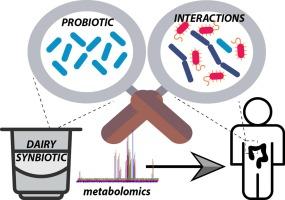
Gut microbiota have been shown to affect various cellular and host response elements such as immunological, neurological, energy, storage, etc. In recent years, this has led to rapid expansion in dietary products containing probiotics, prebiotics and combination thereof in synbiotics. While benefits of consuming functional foods derived from probiotics strains have been demonstrated for various metabolites, a detailed analysis of the biochemical footprints and their benefits remain under-studied. Herein, using a combination of NMR metabolomics, microbial techniques and cell-culture assays, we have characterized metabolite profiles of probiotic viz. Lactobacillus delbruekii ATCC 9649, Lactobacillus casei ATCC 335, Lactobacillus plantarum NRC 716 and Bacillus coagulans ATCC 12425 cultures in fermented milk. We identified predominance of sugars, small chain fatty acids, organic acids and branched chain amino acids from natural abundance 13C NMR studies. Additionally, we identified myriad metabolites and their respective pathways using 1H NMR spectroscopy. Based on our findings, synbiotic fermented dairy products were customized with co-cultures and complemented with pro- and pre- biotics. Furthermore, we demonstrate epithelial cell interaction and anti-microbial activity of L. plantarum based ferment against a range of bacterial pathogens highlighting possible biochemical mechanisms for anti-microbial activity, quorum sensing, gut colonization and other beneficial factors that may be crucial. Furthermore, we propose plausible explanation against non-communicable diseases such as tumor-inhibitory, anti-proliferative and pro-apoptotic effects which has direct implications for dietary therapeutics.
期刊介绍:
Food Research International serves as a rapid dissemination platform for significant and impactful research in food science, technology, engineering, and nutrition. The journal focuses on publishing novel, high-quality, and high-impact review papers, original research papers, and letters to the editors across various disciplines in the science and technology of food. Additionally, it follows a policy of publishing special issues on topical and emergent subjects in food research or related areas. Selected, peer-reviewed papers from scientific meetings, workshops, and conferences on the science, technology, and engineering of foods are also featured in special issues.



 京公网安备 11010802042870号
京ICP备2023020795号-1
京公网安备 11010802042870号
京ICP备2023020795号-1

 分享
分享
 求助内容:
求助内容: 应助结果提醒方式:
 扫码关注我们
