{"title":"Statistical evidence on the impact of agricultural straw burning on urban air quality in China","authors":"Tong Liu , Guojun He , Alexis Kai Hon Lau","doi":"10.1016/j.scitotenv.2019.134633","DOIUrl":null,"url":null,"abstract":"<div><p>Agricultural straw burning is prevalent globally with a long history, but evidence on its pollution and health impact is limited in many countries. This study quantifies the effect of agricultural straw burning on urban air quality in China. Fixed-effects (FE) panel regression models are employed to link straw burning points detected by high-resolution satellites to air quality monitored at 1650 ground-level stations from 2013 to 2015. The method can explain over 80% of the monthly variation in urban air quality during straw burning seasons. The results show that straw burning primarily affects particulate matter, and has negligible effects on other pollutants. Specifically, ten additional burning points in a month in the rural farmland of a city can lead to a 5.19 ± 2.54 µg/m<sup>3</sup> (3.67%±1.76%) increase in urban PM<sub>10</sub> concentration. The effect is statistically significant for monthly burnings over 20 points. Upwind burnings’ effect is 2-4 times larger than that of non-upwind burnings. The contribution from straw burning remains significant for daily and annual PM<sub>10</sub> in urban areas. These estimates imply that straw burning should be properly regulated to improve air quality and protect public health in China, and the method and findings have broad implications for other agrarian regions with similar issues.</p></div>","PeriodicalId":422,"journal":{"name":"Science of the Total Environment","volume":"711 ","pages":"Article 134633"},"PeriodicalIF":8.0000,"publicationDate":"2020-04-01","publicationTypes":"Journal Article","fieldsOfStudy":null,"isOpenAccess":false,"openAccessPdf":"https://sci-hub-pdf.com/10.1016/j.scitotenv.2019.134633","citationCount":"24","resultStr":null,"platform":"Semanticscholar","paperid":null,"PeriodicalName":"Science of the Total Environment","FirstCategoryId":"93","ListUrlMain":"https://www.sciencedirect.com/science/article/pii/S0048969719346248","RegionNum":1,"RegionCategory":"环境科学与生态学","ArticlePicture":[],"TitleCN":null,"AbstractTextCN":null,"PMCID":null,"EPubDate":"","PubModel":"","JCR":"Q1","JCRName":"ENVIRONMENTAL SCIENCES","Score":null,"Total":0}
引用次数: 24
Abstract
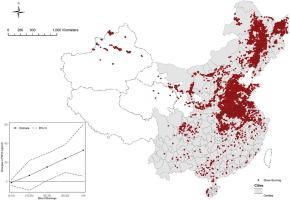
Agricultural straw burning is prevalent globally with a long history, but evidence on its pollution and health impact is limited in many countries. This study quantifies the effect of agricultural straw burning on urban air quality in China. Fixed-effects (FE) panel regression models are employed to link straw burning points detected by high-resolution satellites to air quality monitored at 1650 ground-level stations from 2013 to 2015. The method can explain over 80% of the monthly variation in urban air quality during straw burning seasons. The results show that straw burning primarily affects particulate matter, and has negligible effects on other pollutants. Specifically, ten additional burning points in a month in the rural farmland of a city can lead to a 5.19 ± 2.54 µg/m3 (3.67%±1.76%) increase in urban PM10 concentration. The effect is statistically significant for monthly burnings over 20 points. Upwind burnings’ effect is 2-4 times larger than that of non-upwind burnings. The contribution from straw burning remains significant for daily and annual PM10 in urban areas. These estimates imply that straw burning should be properly regulated to improve air quality and protect public health in China, and the method and findings have broad implications for other agrarian regions with similar issues.
期刊介绍:
The Science of the Total Environment is an international journal dedicated to scientific research on the environment and its interaction with humanity. It covers a wide range of disciplines and seeks to publish innovative, hypothesis-driven, and impactful research that explores the entire environment, including the atmosphere, lithosphere, hydrosphere, biosphere, and anthroposphere.
The journal's updated Aims & Scope emphasizes the importance of interdisciplinary environmental research with broad impact. Priority is given to studies that advance fundamental understanding and explore the interconnectedness of multiple environmental spheres. Field studies are preferred, while laboratory experiments must demonstrate significant methodological advancements or mechanistic insights with direct relevance to the environment.