{"title":"Mucosal Immunity in the Male and Female Reproductive Tract and Prevention of HIV transmission","authors":"Charles R. Wira PhD, Fulvia Veronese PhD","doi":"10.1111/j.1600-0897.2010.00976.x","DOIUrl":null,"url":null,"abstract":"<p>This Workshop entitled ‘Reproductive tract mucosal immunity and the prevention of HIV transmission’ was sponsored by the US National Institute of Allergy and Infectious Diseases (NIAID), NIH, in collaboration with the Dartmouth Medical School, took place at the Dartmouth Hitchcock Medical Center, in Lebanon NH, USA from June 30 to July 2, 2010. The overall objective of this meeting was to emphasize the importance of mucosal immunity in the male and female reproductive tract for transmission of HIV and to identify the means whereby the mucosal immune system can be optimized to achieve protection against HIV acquisition. This meeting would not have been possible without help from an excellent Scientific Organizing Committee consisting of Drs Geetha P. Bansal, Tulane University School of Public Health and Tropical Medicine; Susan Cu-Uvin, The Warren Alpert Medical School of Brown University; Charu Kaushic, McMaster University; Jiri Mestecky, University of Alabama at Birmingham; and Robin Shattock, St George’s, University of London, who worked with us in preparing this Workshop. We also express our appreciation to Dr William Green, Dean of Dartmouth Medical School, for his support and commitment to the success of this Workshop.</p><p>To the best of our knowledge this was the first meeting of its kind, which brought together leading scientists from around the world who are actively working in the area of sexual transmission of HIV, HIV mucosal immunity, and reproductive immunology. The specific purpose of this meeting was to (i) discuss the most recent developments in basic, clinical, and translational studies in the field of reproductive immunology as they relate to the sexual transmission of HIV; (ii) highlight the potential of immunity in the male and female reproductive tract (RT) in preventing HIV infection and discuss novel approaches that might enhance RT immunity; and (iii) facilitate cross-fertilization between HIV researchers and those in the field of reproductive immunology. Focusing on the reproductive tract, key topics included the sites of HIV infection, the mechanism of early HIV transmission, the role of the mucosal immune system in disease prevention, and the influence of the endocrine system in immune protection and risk of HIV transmission.</p><p>During the opening ceremony, we were privileged to have Dr ‘Chic’ Everett Koop, former Surgeon General of the United States as our keynote speaker. Dr Koop was born in Brooklyn in 1916 and was a Dartmouth graduate in 1937. In 1941, he received his Doctorate of Science from the University of Pennsylvania. From 1964 to 1976, he was the Editor in Chief of Journal of Pediatric Surgery. He was appointed Deputy Assistant Secretary of Health, US Public Health Service in March 1981 and was sworn in as Surgeon General of the United States in November 1981 under President Ronald Reagan. As the Surgeon General, he oversaw the activities of 6000 members of the Public Health Service Commission Core and advised the public on a variety of health matters including smoking and health, diet, nutrition, environmental health hazards, the importance of immunization and disease prevention. As the government’s chief spokesperson for AIDS, Dr Koop led the battle to recognize AIDS as a new and dangerous disease. He has authored over 200 peer-review articles, review journals, as well as several books. Because of his contributions, he has received the highest award for civilians from three countries, the Legion of Honor in France, The Order of Merit of Duarte, Sanchez, and Mella from the Dominican Republic, and a Presidential Medal of Freedom from the United States. As seen in the Forward of this issue, Dr Koop has recapped his thoughts about the ‘The Hidden Epidemic’ and his role in increasing the awareness about this dreaded disease, which to this day threatens the lives of men, women, and children all over the world. All participants joined us in expressing our deepest gratitude to Dr Koop for his lifelong commitment and remarkable contributions to advancing our understanding of HIV/AIDS and extended warm congratulations to him and his bride of 7 weeks, Ms Cora Koop. Dr Koop’s plenary address is available on podcast at http://www.dhslides.org/mic/mucosal063010f/f.htm.</p><p>Our special invited speaker, Ms. Dawn Averitt Bridge shared her story of courage with us. Dawn was diagnosed with HIV in 1988 at age 19 and has since become one of the nation’s most prominent HIV and AIDS advocates as well as an accomplished speaker and published writer. Dawn is the founder of The Well Project, a 501(c) (3) organization formed in 2002 to improve the lives of women living with HIV and AIDS. The Well Project’s mission is to change the course of the AIDS pandemic through a comprehensive focus on treatment and prevention for women. As an advocate for social justice for people living with HIV and AIDS, Dawn has developed programs to increase awareness, accelerate testing, provide access to treatment, disseminate information and expand clinical trials. Dawn’s numerous affiliations range from a Food and Drug Administration Advisory Panel to several NIH Working Groups. Dawn is a member of the Perinatal HIV Guidelines Working Group as well as a member of the Office of AIDS Research Advisory Council. Most recently, she was appointed to ‘PACHA’, The President’s Advisory Council on HIV/AIDS. As seen in the Contents, she has kindly agreed to share her story with all, as she did with us this past summer.</p><p>The scientific program included seven plenary sessions. At the end of each session, there was ample time for discussion between speakers and participants. This was followed by a public session entitled ‘The Forgotten Epidemic: AIDS in the 21st Century’ aimed at highlighting for the at-large scientific community at Dartmouth and the general public, the impact HIV/AIDS is still having on at-risk communities and the challenges we are confronting for HIV prevention and treatment.</p><p>The themes of the plenary sessions were</p><p>Owing to an overwhelming response of our invited speakers to requests for Review Articles, we are able to present this special issue, dedicated exclusively to the prevention of HIV transmission by the mucosal immune systems in the male and female reproductive tracts. As indicated in Contents, Review Articles have been categorized according to the plenary sessions within which they were presented. Focusing on the reproductive tract, key topics included the sites of HIV infection, the mechanism of early HIV transmission, the role of the mucosal immune system in disease prevention, and the influence of the endocrine system in immune protection and risk of HIV transmission.</p><p>Our first session has been referred to as Reproductive Biology 101 because, thanks to Drs Mor and Bronson, participants received a solid refresher in the biological function of the male and female reproductive tracts as well as an understanding of the key elements of immune protection at each of these sites. Other presentations throughout the first 2 days focused on the differences that exist between the reproductive tracts and the gastrointestinal tract, the effect of microbiome, hormones, menstrual cycle, semen, age, mucus, and sex on susceptibility to HIV infection, the contributions of early immunological events and immune cell targets responsible for male to female and female to male transmission of HIV. At the end of the last day, workshop participants discussed how understanding the early transmission events and the innate and adaptive immune mechanisms of protection at mucosal sites is helping in the development of novel approaches to prevent HIV infection. This discussion was followed by presentations that addressed the methodological concerns that continue to challenge HIV researchers as they attempt to measure responses to HIV infection in the reproductive tract.</p><p>What came out of this conference was a new understanding of the complexities of the male and female reproductive tracts as it pertains to susceptibility to infection and protection against HIV. The debates were considerable, ranging from discussions over the initial site(s) of infection, which cells were the first cells infected, whether infection results from free virus or virus-infected cells in semen, how viral amplification occurs, and which aspects of the immune system are present as a first line of defense, as well as which aspects of the immune system can be induced to confer protection of both men and women. We all agreed that there has been much progress but that there are still many basic questions regarding sexual transmission of HIV and antiviral immune responses in the reproductive tract that remain to be answered. What was remarkable about this conference was that leaders in the hunt to understand HIV and sexual transmission had an opportunity to meet and talk to one another in a way that most are not able to, owing to the pressures of science.</p><p>Lastly, Dartmouth Medical School and Workshop researchers offered a look at current efforts to treat and prevent HIV and AIDS during a public forum at Dartmouth-Hitchcock Medical Center. Entitled ‘The Forgotten Epidemic: AIDS in the 21st Century’. It lasted 3 hr with talks by Drs Chuck Wira, Charu Kaushic, Dawn Averitt Bridge, Susan Cu-Uvin, and Jiri Mestecky. Each presentation brought a unique perspective to understanding the spread of HIV. All presentations were podcast and are available for viewing in their entirety on http://www.dhslides.org/mic/mic070210f/f.htm.</p><p>The hallmark of our Workshop was collegiality that grew as the meeting progressed. It started with an opening reception at DHMC, increased owing to the ample time for discussion and peaked with a lively reception and dinner at Home Hill Inn in Plainfield, NH. It may also have been due to the fact that transportation from hotel to Dartmouth was by yellow school busses, which helped all to enjoy the opportunity of being students as well as teachers at this Workshop.</p><p>Owing to an overwhelming response of our invited speakers to requests for Review Articles, we are able to present this special issue of AJRI, dedicated exclusively to the prevention of HIV transmission by the mucosal immune systems in the male and female reproductive tracts. As indicated in Contents, Review Articles have been categorized according to the plenary sessions within which they were presented.</p><p>The organizers are grateful for the fruitful collaboration of AJRI. The information shared during this Workshop and in this special issue will in some small way raise the level of awareness in the greater HIV community to the challenges of this worldwide epidemic and help focus future studies on the antiviral immune responses in the genital tract and the sexual transmission of HIV, which is the predominant route through which men and women become infected.</p><p> </p><p>Charles R. Wira, PhDProfessor,Department of Physiology and Neurobiology,Dartmouth Medical School,Lebanon, NH, USAEmail: <span>[email protected]</span></p><p> </p><p>Fulvia Veronese, PhDHealth Scientist AdministratorDAIDS, NIAID, NIH, DHHSBethesda, MD, USAEmail: <span>[email protected]</span></p>","PeriodicalId":7665,"journal":{"name":"American Journal of Reproductive Immunology","volume":"65 3","pages":"182-185"},"PeriodicalIF":2.4000,"publicationDate":"2011-02-07","publicationTypes":"Journal Article","fieldsOfStudy":null,"isOpenAccess":false,"openAccessPdf":"https://sci-hub-pdf.com/10.1111/j.1600-0897.2010.00976.x","citationCount":"9","resultStr":null,"platform":"Semanticscholar","paperid":null,"PeriodicalName":"American Journal of Reproductive Immunology","FirstCategoryId":"3","ListUrlMain":"https://onlinelibrary.wiley.com/doi/10.1111/j.1600-0897.2010.00976.x","RegionNum":3,"RegionCategory":"医学","ArticlePicture":[],"TitleCN":null,"AbstractTextCN":null,"PMCID":null,"EPubDate":"","PubModel":"","JCR":"Q3","JCRName":"IMMUNOLOGY","Score":null,"Total":0}
引用次数: 9
Abstract
This Workshop entitled ‘Reproductive tract mucosal immunity and the prevention of HIV transmission’ was sponsored by the US National Institute of Allergy and Infectious Diseases (NIAID), NIH, in collaboration with the Dartmouth Medical School, took place at the Dartmouth Hitchcock Medical Center, in Lebanon NH, USA from June 30 to July 2, 2010. The overall objective of this meeting was to emphasize the importance of mucosal immunity in the male and female reproductive tract for transmission of HIV and to identify the means whereby the mucosal immune system can be optimized to achieve protection against HIV acquisition. This meeting would not have been possible without help from an excellent Scientific Organizing Committee consisting of Drs Geetha P. Bansal, Tulane University School of Public Health and Tropical Medicine; Susan Cu-Uvin, The Warren Alpert Medical School of Brown University; Charu Kaushic, McMaster University; Jiri Mestecky, University of Alabama at Birmingham; and Robin Shattock, St George’s, University of London, who worked with us in preparing this Workshop. We also express our appreciation to Dr William Green, Dean of Dartmouth Medical School, for his support and commitment to the success of this Workshop.
To the best of our knowledge this was the first meeting of its kind, which brought together leading scientists from around the world who are actively working in the area of sexual transmission of HIV, HIV mucosal immunity, and reproductive immunology. The specific purpose of this meeting was to (i) discuss the most recent developments in basic, clinical, and translational studies in the field of reproductive immunology as they relate to the sexual transmission of HIV; (ii) highlight the potential of immunity in the male and female reproductive tract (RT) in preventing HIV infection and discuss novel approaches that might enhance RT immunity; and (iii) facilitate cross-fertilization between HIV researchers and those in the field of reproductive immunology. Focusing on the reproductive tract, key topics included the sites of HIV infection, the mechanism of early HIV transmission, the role of the mucosal immune system in disease prevention, and the influence of the endocrine system in immune protection and risk of HIV transmission.
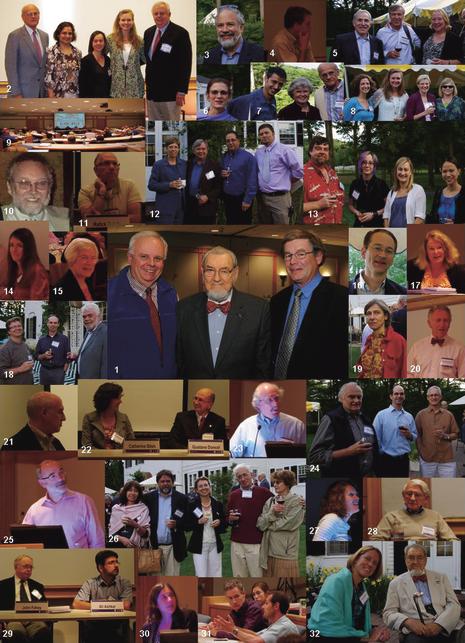
During the opening ceremony, we were privileged to have Dr ‘Chic’ Everett Koop, former Surgeon General of the United States as our keynote speaker. Dr Koop was born in Brooklyn in 1916 and was a Dartmouth graduate in 1937. In 1941, he received his Doctorate of Science from the University of Pennsylvania. From 1964 to 1976, he was the Editor in Chief of Journal of Pediatric Surgery. He was appointed Deputy Assistant Secretary of Health, US Public Health Service in March 1981 and was sworn in as Surgeon General of the United States in November 1981 under President Ronald Reagan. As the Surgeon General, he oversaw the activities of 6000 members of the Public Health Service Commission Core and advised the public on a variety of health matters including smoking and health, diet, nutrition, environmental health hazards, the importance of immunization and disease prevention. As the government’s chief spokesperson for AIDS, Dr Koop led the battle to recognize AIDS as a new and dangerous disease. He has authored over 200 peer-review articles, review journals, as well as several books. Because of his contributions, he has received the highest award for civilians from three countries, the Legion of Honor in France, The Order of Merit of Duarte, Sanchez, and Mella from the Dominican Republic, and a Presidential Medal of Freedom from the United States. As seen in the Forward of this issue, Dr Koop has recapped his thoughts about the ‘The Hidden Epidemic’ and his role in increasing the awareness about this dreaded disease, which to this day threatens the lives of men, women, and children all over the world. All participants joined us in expressing our deepest gratitude to Dr Koop for his lifelong commitment and remarkable contributions to advancing our understanding of HIV/AIDS and extended warm congratulations to him and his bride of 7 weeks, Ms Cora Koop. Dr Koop’s plenary address is available on podcast at http://www.dhslides.org/mic/mucosal063010f/f.htm.
Our special invited speaker, Ms. Dawn Averitt Bridge shared her story of courage with us. Dawn was diagnosed with HIV in 1988 at age 19 and has since become one of the nation’s most prominent HIV and AIDS advocates as well as an accomplished speaker and published writer. Dawn is the founder of The Well Project, a 501(c) (3) organization formed in 2002 to improve the lives of women living with HIV and AIDS. The Well Project’s mission is to change the course of the AIDS pandemic through a comprehensive focus on treatment and prevention for women. As an advocate for social justice for people living with HIV and AIDS, Dawn has developed programs to increase awareness, accelerate testing, provide access to treatment, disseminate information and expand clinical trials. Dawn’s numerous affiliations range from a Food and Drug Administration Advisory Panel to several NIH Working Groups. Dawn is a member of the Perinatal HIV Guidelines Working Group as well as a member of the Office of AIDS Research Advisory Council. Most recently, she was appointed to ‘PACHA’, The President’s Advisory Council on HIV/AIDS. As seen in the Contents, she has kindly agreed to share her story with all, as she did with us this past summer.
The scientific program included seven plenary sessions. At the end of each session, there was ample time for discussion between speakers and participants. This was followed by a public session entitled ‘The Forgotten Epidemic: AIDS in the 21st Century’ aimed at highlighting for the at-large scientific community at Dartmouth and the general public, the impact HIV/AIDS is still having on at-risk communities and the challenges we are confronting for HIV prevention and treatment.
The themes of the plenary sessions were
Owing to an overwhelming response of our invited speakers to requests for Review Articles, we are able to present this special issue, dedicated exclusively to the prevention of HIV transmission by the mucosal immune systems in the male and female reproductive tracts. As indicated in Contents, Review Articles have been categorized according to the plenary sessions within which they were presented. Focusing on the reproductive tract, key topics included the sites of HIV infection, the mechanism of early HIV transmission, the role of the mucosal immune system in disease prevention, and the influence of the endocrine system in immune protection and risk of HIV transmission.
Our first session has been referred to as Reproductive Biology 101 because, thanks to Drs Mor and Bronson, participants received a solid refresher in the biological function of the male and female reproductive tracts as well as an understanding of the key elements of immune protection at each of these sites. Other presentations throughout the first 2 days focused on the differences that exist between the reproductive tracts and the gastrointestinal tract, the effect of microbiome, hormones, menstrual cycle, semen, age, mucus, and sex on susceptibility to HIV infection, the contributions of early immunological events and immune cell targets responsible for male to female and female to male transmission of HIV. At the end of the last day, workshop participants discussed how understanding the early transmission events and the innate and adaptive immune mechanisms of protection at mucosal sites is helping in the development of novel approaches to prevent HIV infection. This discussion was followed by presentations that addressed the methodological concerns that continue to challenge HIV researchers as they attempt to measure responses to HIV infection in the reproductive tract.
What came out of this conference was a new understanding of the complexities of the male and female reproductive tracts as it pertains to susceptibility to infection and protection against HIV. The debates were considerable, ranging from discussions over the initial site(s) of infection, which cells were the first cells infected, whether infection results from free virus or virus-infected cells in semen, how viral amplification occurs, and which aspects of the immune system are present as a first line of defense, as well as which aspects of the immune system can be induced to confer protection of both men and women. We all agreed that there has been much progress but that there are still many basic questions regarding sexual transmission of HIV and antiviral immune responses in the reproductive tract that remain to be answered. What was remarkable about this conference was that leaders in the hunt to understand HIV and sexual transmission had an opportunity to meet and talk to one another in a way that most are not able to, owing to the pressures of science.
Lastly, Dartmouth Medical School and Workshop researchers offered a look at current efforts to treat and prevent HIV and AIDS during a public forum at Dartmouth-Hitchcock Medical Center. Entitled ‘The Forgotten Epidemic: AIDS in the 21st Century’. It lasted 3 hr with talks by Drs Chuck Wira, Charu Kaushic, Dawn Averitt Bridge, Susan Cu-Uvin, and Jiri Mestecky. Each presentation brought a unique perspective to understanding the spread of HIV. All presentations were podcast and are available for viewing in their entirety on http://www.dhslides.org/mic/mic070210f/f.htm.
The hallmark of our Workshop was collegiality that grew as the meeting progressed. It started with an opening reception at DHMC, increased owing to the ample time for discussion and peaked with a lively reception and dinner at Home Hill Inn in Plainfield, NH. It may also have been due to the fact that transportation from hotel to Dartmouth was by yellow school busses, which helped all to enjoy the opportunity of being students as well as teachers at this Workshop.
Owing to an overwhelming response of our invited speakers to requests for Review Articles, we are able to present this special issue of AJRI, dedicated exclusively to the prevention of HIV transmission by the mucosal immune systems in the male and female reproductive tracts. As indicated in Contents, Review Articles have been categorized according to the plenary sessions within which they were presented.
The organizers are grateful for the fruitful collaboration of AJRI. The information shared during this Workshop and in this special issue will in some small way raise the level of awareness in the greater HIV community to the challenges of this worldwide epidemic and help focus future studies on the antiviral immune responses in the genital tract and the sexual transmission of HIV, which is the predominant route through which men and women become infected.
Charles R. Wira, PhDProfessor,Department of Physiology and Neurobiology,Dartmouth Medical School,Lebanon, NH, USAEmail: [email protected]
期刊介绍:
The American Journal of Reproductive Immunology is an international journal devoted to the presentation of current information in all areas relating to Reproductive Immunology. The journal is directed toward both the basic scientist and the clinician, covering the whole process of reproduction as affected by immunological processes. The journal covers a variety of subspecialty topics, including fertility immunology, pregnancy immunology, immunogenetics, mucosal immunology, immunocontraception, endometriosis, abortion, tumor immunology of the reproductive tract, autoantibodies, infectious disease of the reproductive tract, and technical news.



 京公网安备 11010802042870号
京ICP备2023020795号-1
京公网安备 11010802042870号
京ICP备2023020795号-1

 分享
分享
 求助内容:
求助内容: 应助结果提醒方式:
 扫码关注我们
