{"title":"A Comparative Study of Metabolic Network Topology between a Pathogenic and a Non-Pathogenic Bacterium for Potential Drug Target Identification.","authors":"Deepak Perumal, Chu Sing Lim, Meena K Sakharkar","doi":"","DOIUrl":null,"url":null,"abstract":"<p><p>Metabolic network provides a unified platform to integrate all the biological information on genes, proteins, metabolites, drugs and drug targets for a comprehensive system level study of the relationship between metabolism and disease. In recent times, drug-target identification by in silico methods has emerged causing a phenomenal achievement in the field of drug discovery. This paper focuses on describing how microbial drug target identification can be carried out using bioinformatic tools. Specifically, it highlights the use of metabolic 'choke point' and 'load point' analyses to understand the local and global properties of metabolic networks in Pseudomonas aeruginosa and allow us to identify potential drug targets. We also list out top 10 choke point enzymes based on the load point values and the number of shortest paths. A non-pathogenic bacterial strain Pseudomonas putida KT2440 and a related pathogenic bacteria P.aeruginosa PA01 was selected for the network anlaysis. A comparative study of the metabolic networks of these two microbes highlights the analogies and differences between their respective pathways. System analysis of metabolic networks will help us in identifying new drug targets which in turn will generate more in-depth understanding of the mechanism of diseases and thus provide better guidance for drug discovery.</p>","PeriodicalId":89276,"journal":{"name":"Summit on translational bioinformatics","volume":"2009 ","pages":"100-4"},"PeriodicalIF":0.0000,"publicationDate":"2009-03-01","publicationTypes":"Journal Article","fieldsOfStudy":null,"isOpenAccess":false,"openAccessPdf":"https://www.ncbi.nlm.nih.gov/pmc/articles/PMC3041556/pdf/","citationCount":"0","resultStr":null,"platform":"Semanticscholar","paperid":null,"PeriodicalName":"Summit on translational bioinformatics","FirstCategoryId":"1085","ListUrlMain":"","RegionNum":0,"RegionCategory":null,"ArticlePicture":[],"TitleCN":null,"AbstractTextCN":null,"PMCID":null,"EPubDate":"","PubModel":"","JCR":"","JCRName":"","Score":null,"Total":0}
引用次数: 0
Abstract
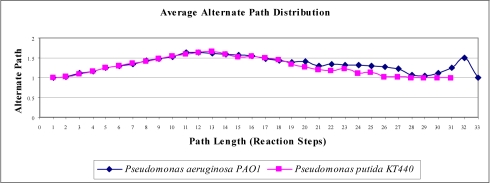
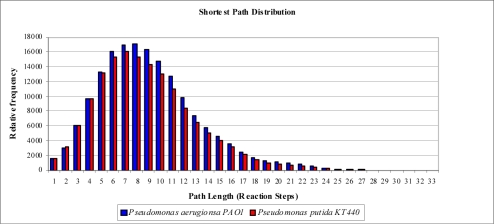
Metabolic network provides a unified platform to integrate all the biological information on genes, proteins, metabolites, drugs and drug targets for a comprehensive system level study of the relationship between metabolism and disease. In recent times, drug-target identification by in silico methods has emerged causing a phenomenal achievement in the field of drug discovery. This paper focuses on describing how microbial drug target identification can be carried out using bioinformatic tools. Specifically, it highlights the use of metabolic 'choke point' and 'load point' analyses to understand the local and global properties of metabolic networks in Pseudomonas aeruginosa and allow us to identify potential drug targets. We also list out top 10 choke point enzymes based on the load point values and the number of shortest paths. A non-pathogenic bacterial strain Pseudomonas putida KT2440 and a related pathogenic bacteria P.aeruginosa PA01 was selected for the network anlaysis. A comparative study of the metabolic networks of these two microbes highlights the analogies and differences between their respective pathways. System analysis of metabolic networks will help us in identifying new drug targets which in turn will generate more in-depth understanding of the mechanism of diseases and thus provide better guidance for drug discovery.
 分享
分享



 京公网安备 11010802042870号
京ICP备2023020795号-1
京公网安备 11010802042870号
京ICP备2023020795号-1


 求助内容:
求助内容: 应助结果提醒方式:
 扫码关注我们
