{"title":"PinX1 regulation of telomerase activity and apoptosis in nasopharyngeal carcinoma cells.","authors":"Xiao-Fen Lai, Cong-Xiang Shen, Zhong Wen, Yu-Hong Qian, Chao-Sheng Yu, Jun-Qi Wang, Ping-Neng Zhong, Hai-Li Wang","doi":"10.1186/1756-9966-31-12","DOIUrl":null,"url":null,"abstract":"<p><strong>Background: </strong>Human interacting protein X1 (PinX1) has been identified as a critical telomerase inhibitor and proposed to be a putative tumor suppressor gene. Loss of PinX1 has been found in a large variety of malignancies, however, its function in inhibiting telomerase activity of tumor cells is not well documented. Here we show that PinX1 is essential for down-regulation telomerase activity of nasopharyngeal carcinoma.</p><p><strong>Methods: </strong>Expression vectors of human PinX1 (pEGFP-C3-PinX1) and its small interfering RNA (PinX1-FAM-siRNA) were constructed and transfected into NPC. Their effects on mRNA of telomerase catalytic subunit (hTERT), telomerase activity, cell proliferation, cell migration, wound healing, cell cycles and apoptosis were examined using semi-quantitative RT-PCR, stretch PCR, MTT assay, Transwell, scratch assay and flow cytometry, respectively.</p><p><strong>Results: </strong>Transfection of pEGFP-C3-PinX1 and PinX1-FAM-siRNA increased and reduced PinX1 mRNA by 1.6-fold and 70%, respectively. Over-expression of PinX1 decreased hTERT mRNA by 21%, reduced telomerase activity, inhibited cell growth, migration and wound healing ability, arrested cells in G0/G1 phase, and increased apoptotic index. In contrast, down-regulation of PinX1 did not alter the above characteristics.</p><p><strong>Conclusions: </strong>PinX1 may play important roles in NPC proliferation, migration and apoptosis and has application potential in tumor-targeted gene therapy.</p>","PeriodicalId":50199,"journal":{"name":"Journal of Experimental & Clinical Cancer Research","volume":"31 ","pages":"12"},"PeriodicalIF":12.8000,"publicationDate":"2012-02-08","publicationTypes":"Journal Article","fieldsOfStudy":null,"isOpenAccess":false,"openAccessPdf":"https://sci-hub-pdf.com/10.1186/1756-9966-31-12","citationCount":"2","resultStr":null,"platform":"Semanticscholar","paperid":null,"PeriodicalName":"Journal of Experimental & Clinical Cancer Research","FirstCategoryId":"3","ListUrlMain":"https://doi.org/10.1186/1756-9966-31-12","RegionNum":1,"RegionCategory":"医学","ArticlePicture":[],"TitleCN":null,"AbstractTextCN":null,"PMCID":null,"EPubDate":"","PubModel":"","JCR":"Q1","JCRName":"ONCOLOGY","Score":null,"Total":0}
引用次数: 2
Abstract
Background: Human interacting protein X1 (PinX1) has been identified as a critical telomerase inhibitor and proposed to be a putative tumor suppressor gene. Loss of PinX1 has been found in a large variety of malignancies, however, its function in inhibiting telomerase activity of tumor cells is not well documented. Here we show that PinX1 is essential for down-regulation telomerase activity of nasopharyngeal carcinoma.
Methods: Expression vectors of human PinX1 (pEGFP-C3-PinX1) and its small interfering RNA (PinX1-FAM-siRNA) were constructed and transfected into NPC. Their effects on mRNA of telomerase catalytic subunit (hTERT), telomerase activity, cell proliferation, cell migration, wound healing, cell cycles and apoptosis were examined using semi-quantitative RT-PCR, stretch PCR, MTT assay, Transwell, scratch assay and flow cytometry, respectively.
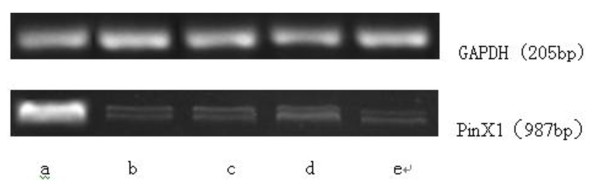
Results: Transfection of pEGFP-C3-PinX1 and PinX1-FAM-siRNA increased and reduced PinX1 mRNA by 1.6-fold and 70%, respectively. Over-expression of PinX1 decreased hTERT mRNA by 21%, reduced telomerase activity, inhibited cell growth, migration and wound healing ability, arrested cells in G0/G1 phase, and increased apoptotic index. In contrast, down-regulation of PinX1 did not alter the above characteristics.
Conclusions: PinX1 may play important roles in NPC proliferation, migration and apoptosis and has application potential in tumor-targeted gene therapy.
期刊介绍:
The Journal of Experimental & Clinical Cancer Research is an esteemed peer-reviewed publication that focuses on cancer research, encompassing everything from fundamental discoveries to practical applications.
We welcome submissions that showcase groundbreaking advancements in the field of cancer research, especially those that bridge the gap between laboratory findings and clinical implementation. Our goal is to foster a deeper understanding of cancer, improve prevention and detection strategies, facilitate accurate diagnosis, and enhance treatment options.
We are particularly interested in manuscripts that shed light on the mechanisms behind the development and progression of cancer, including metastasis. Additionally, we encourage submissions that explore molecular alterations or biomarkers that can help predict the efficacy of different treatments or identify drug resistance. Translational research related to targeted therapies, personalized medicine, tumor immunotherapy, and innovative approaches applicable to clinical investigations are also of great interest to us.
We provide a platform for the dissemination of large-scale molecular characterizations of human tumors and encourage researchers to share their insights, discoveries, and methodologies with the wider scientific community.
By publishing high-quality research articles, reviews, and commentaries, the Journal of Experimental & Clinical Cancer Research strives to contribute to the continuous improvement of cancer care and make a meaningful impact on patients' lives.




 京公网安备 11010802042870号
京ICP备2023020795号-1
京公网安备 11010802042870号
京ICP备2023020795号-1

 分享
分享
 求助内容:
求助内容: 应助结果提醒方式:
 扫码关注我们
